Heat Pump Hot Water Noise: How Loud Are They and What Can You Do About It?
heat pump hot water noise: How loud is a heat pump hot water system? Typical decibel levels, where noise comes…

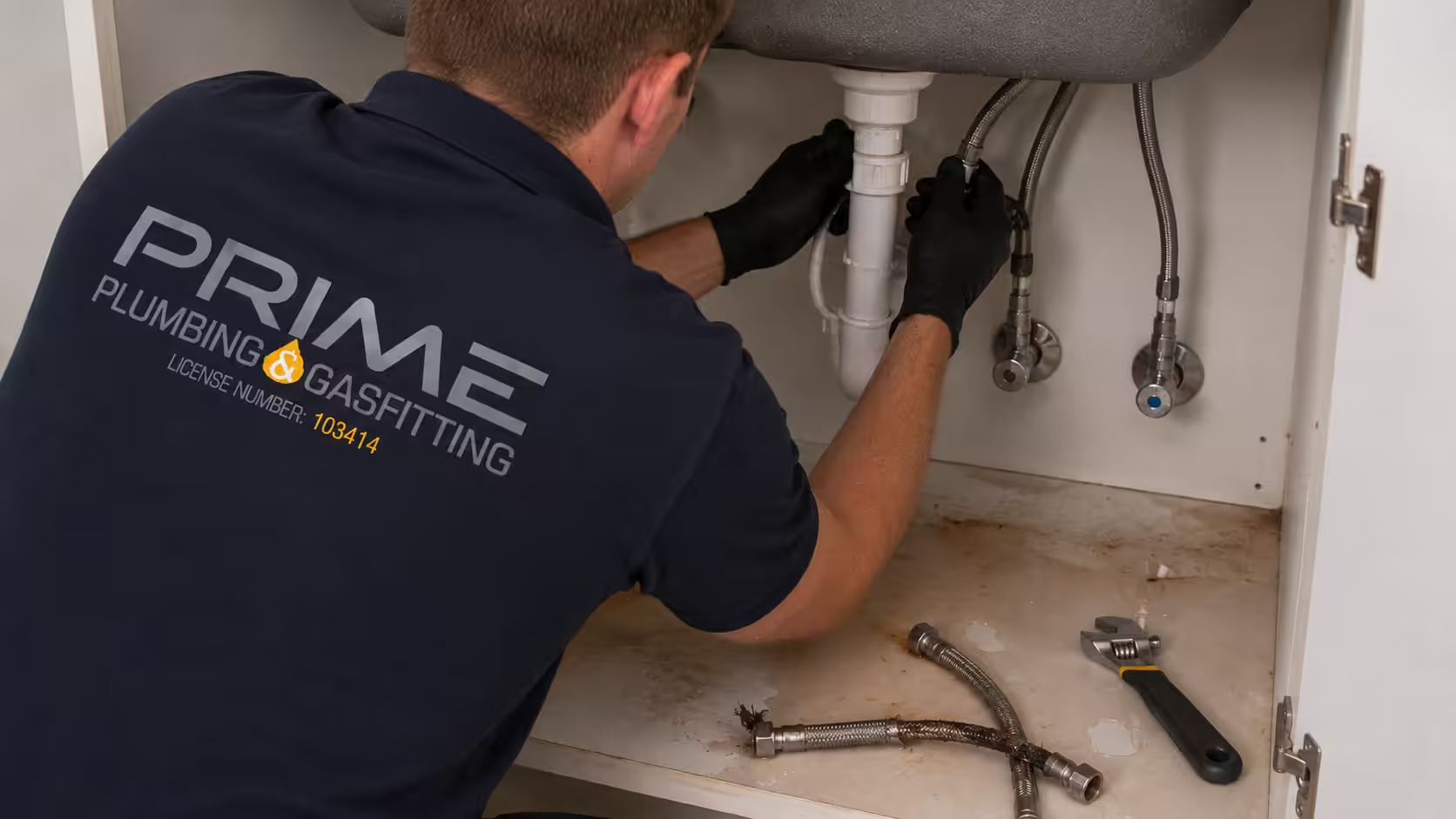
Most of the serious water damage jobs we attend in Melbourne start with a part that costs less than $30: the braided flexible hose under a sink. A hose lets go while nobody is home, water runs at mains pressure for hours or days, and the repair bill runs into the tens of thousands. Insurers have repeatedly named burst flexible hoses among the biggest causes of internal water damage claims in Australian homes.
This guide covers what flexible hoses are, why they fail, how to spot a failing one before it bursts, and what replacement actually costs.
A standard flexi hose is an inner rubber tube wrapped in twisted stainless-steel braiding. The braiding adds strength so the hose can handle pressurised water; the inner rubber tube carries the actual water. They replaced rigid copper supply pipes from the late 1990s onwards because they’re cheaper to install, easier to fit in tight spaces, and don’t need a plumber to bend or solder copper to exact dimensions.
You’ll find flexi hoses behind almost every fixture in your home that needs water:
Most Melbourne homes have somewhere between 8 and 15 flexi hoses installed. Each one is a potential leak point, and they all age at roughly the same rate.
Three failure modes account for almost all real-world hose bursts.
The “stainless” steel braiding isn’t rust-proof, it’s rust-resistant. In humid spots (under-sink cabinets next to detergent bottles, cleaning chemicals, or condensation from cold water lines) the braiding develops surface rust over years. Once the braiding rusts through, the unsupported inner rubber tube expands under pressure and bursts.
You can spot this failure mode early. Rust streaks, orange staining, or visible flaking on the braiding mean the hose needs immediate replacement. Once you see rust, it’s only a question of time.
Even with intact braiding, the inner rubber can fail from:
The brass or chrome-plated fittings at each end of a flexi hose can develop dezincification (the brass leaches its zinc, leaving brittle metal that cracks), loosen through repeated hot water expansion and contraction cycles, or fail because they were over-tightened at install and the seal was stressed from day one.
Flexi hoses sold in Australia must carry WaterMark certification under AS/NZS 3499, the standard covering flexible hose assemblies for plumbing. Look for the WaterMark logo (a tap with a tick) stamped on the hose or fitting. Without WaterMark, the hose isn’t legal to install in an Australian home.
Within the WaterMark range, quality still varies a lot. Generic hoses meet the minimum spec but often fail within 3 to 5 years. Better brands are typically rated for 8 to 12 years, and the rating is usually stamped on the collar.
Open the cabinet under your sink, basin or laundry trough. With a torch, look at each flexi hose for:
The inspection takes about 2 minutes per fixture. Doing it every 6 months catches almost every failure before it becomes a flood.
The standing recommendation from insurers and hose manufacturers is proactive replacement roughly every 5 years for budget hoses, or at the rated life stamped on the collar for better ones. The reasoning is simple:
If you’ve just moved into a Melbourne home and don’t know the age of the existing hoses, replacing them all is cheap certainty. A whole-house replacement typically costs less than a single insurance excess.
Many home and contents policies have exclusions or reduced cover for water damage from failed flexi hoses, particularly when the hose was well past its rated life, was installed by an unlicensed person, showed visible damage that was ignored, or the property was unoccupied for an extended period when it failed.
Read the “escape of water” or “burst pipe” section of your specific policy. Plenty of homeowners discover the exclusions only after the claim.
For a typical Melbourne residential job in 2026:
Replacing a single flexi hose is technically simple. The tool list is an adjustable spanner.
That said, a lot of the failed hoses we replace failed because of installation errors: over-tightened fittings that cracked the brass, hoses kinked into tight bends, or mismatched thread types forced together with sealant tape.
For a single hose, DIY is fine if you’re confident. For whole-house replacement, a licensed plumber is the better call, and you get the work documented for your insurer.
If water is actively flowing and you can’t stop it, our guide on what to do in the first minutes of a burst pipe covers the immediate steps, and our burst and leaking pipe repair service handles the fix itself.
The Building and Plumbing Commission maintains a plumbing licence search. Verify any plumber you’re considering before booking work.
Call 0475 407 670 or send through a flexible hose inspection request. Tell us how many fixtures need checking, the age of the home, and whether you’ve spotted any of the warning signs above, and we’ll quote on actual scope. While we’re under the sink we can also sort a dripping tap in the same visit.
For more information, please contact Prime Plumbing & Gasfitting on 0475 407 670 or email admin@primeplumb.com.au.