Childcare plumbing Melbourne is constrained by two things most commercial plumbers underestimate: a current Working with Children Check is non-negotiable for any tradie on site during contact hours, and the warm-water set point sits 5°C below the AS 3500 default. Prime Plumbing & Gasfitting holds current WWCCs across the team, calibrates TMVs to the centre's policy (not the trade default), and runs compliance work in the early-morning, post-closing or Saturday-morning windows that don't collide with the educator planning day. BPC #103414, Type A gasfitter, ACECQA-format reporting.

Quick answer: Childcare centre plumbing has two hard constraints: work has to happen around session times, and every tap children reach must deliver tempered water with current TMV test records ready for assessment. Prime Plumbing & Gasfitting tests and certifies TMVs, schedules non-urgent work outside operating hours, and provides the records your service needs. Fixed written quotes and Compliance Certificates for every notifiable job.Education and Care Services National Regulations require any person other than approved staff or volunteers to hold a current Working with Children Check before contact with children. Most general-trade plumbers carry public liability insurance and a White Card; very few hold a current WWCC. The centre director either books a Saturday-morning visit (no children on site, no WWCC trigger) or denies access until the trade can produce the card. Prime Plumbing & Gasfitting holds current WWCCs across the team, childcare plumbing Melbourne work runs during contact hours when the centre needs it, not just on weekends.
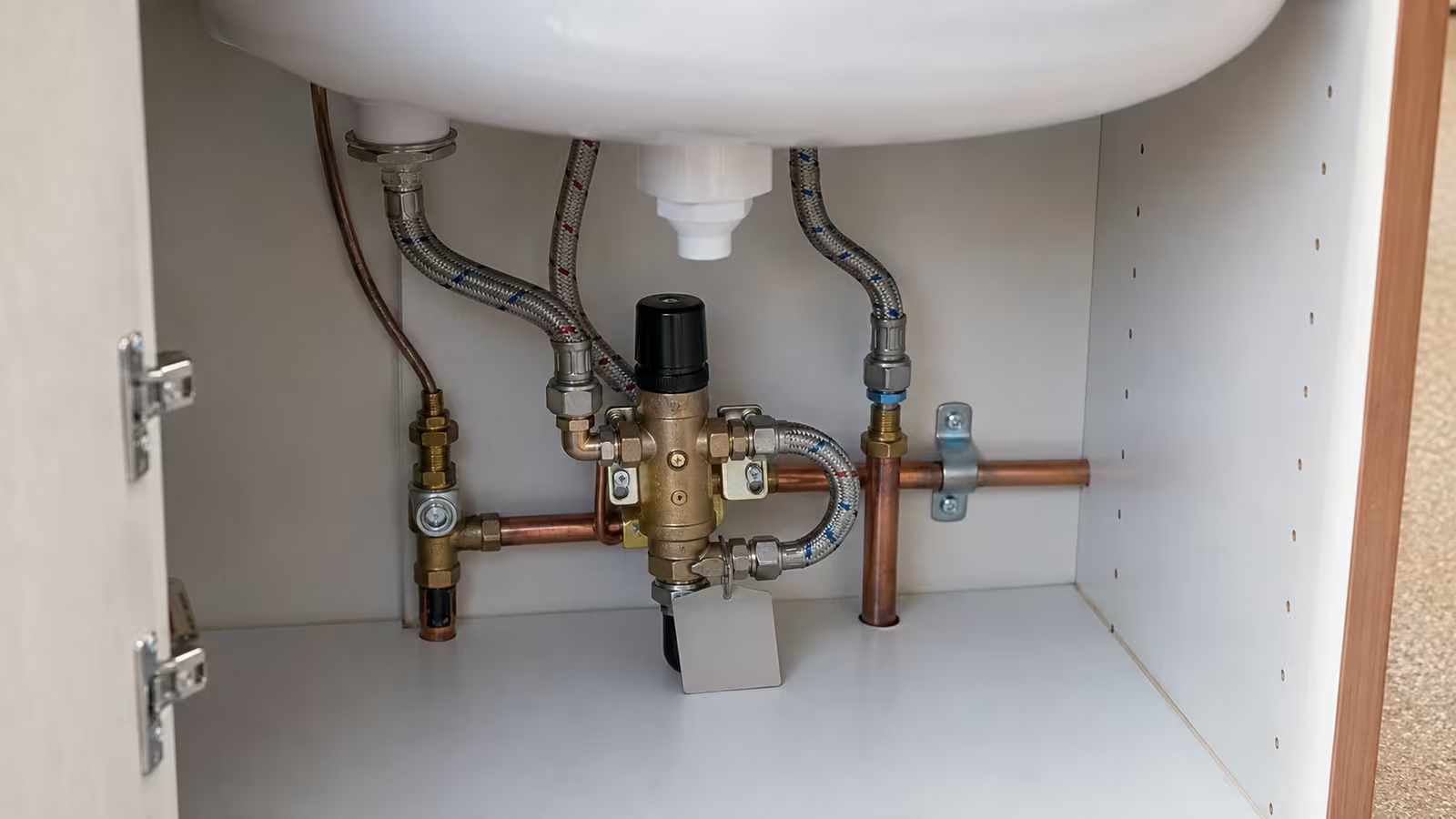
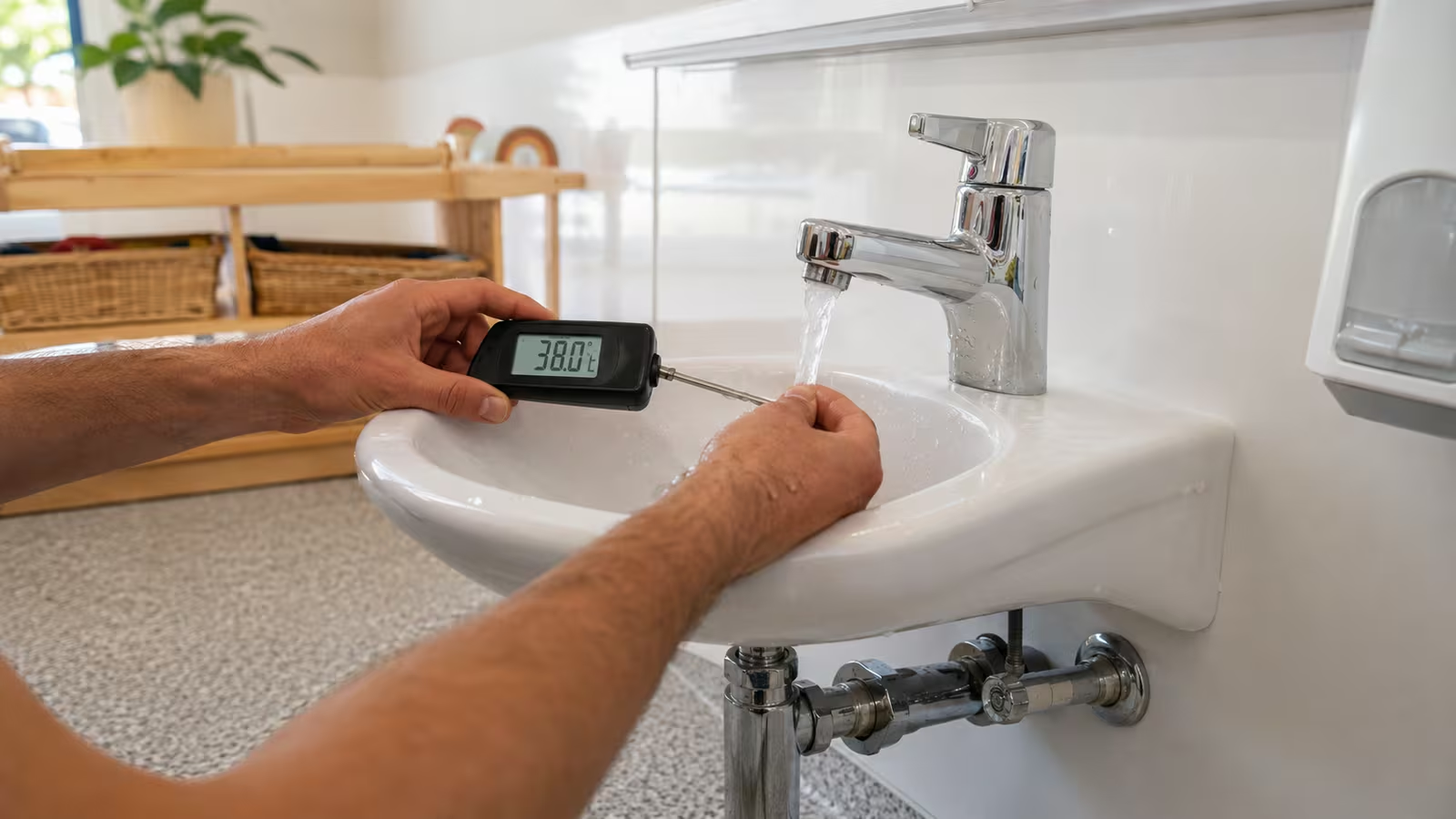
A TMV that calibrates to 38°C in May will drift. Inlet-pressure shifts, cartridge wear, scale build-up on the warm-water side, and the seasonal cold-water inlet temperature change between Melbourne winter and summer all push the set-point upward. A single annual test catches drift at the moment of the test, and misses everything between.
Childcare set points sit below the AS 3500.4 ceiling for a reason. AS 3500.4 caps accessible warm water at 45°C; the standard's scald-injury data was derived for adult skin. Toddler skin scalds at lower temperatures and shorter exposure than adult skin, the centre risk-management policy reflects that, usually setting delivered temperature at 38°C with a 43.5°C hard ceiling.
The practical answer is mid-year spot checks on the highest-risk outlets: nappy-change wash bays, child-accessible basins, and any outlet inside a reach where a toddler could turn a tap. Mid-year drift catches before the November-to-March warm season pushes the set-point further.
The sandpit hose. Hose-end fitting submerged in standing sandpit water, fertiliser run-off from the next-door garden bed, or muddy puddle around the sandpit edge, every one of these is a Class 4 cross-connection back into the centre's drinking water if a pressure-drop hits the main while the hose is on. Single-check device on the sandpit hose tap, minimum.
Nappy-change wash bay. Single-check device on the wash-bay sink, dedicated separation from the food-prep zone, and a periodic test to confirm the device isn't passing reverse flow. Centres without the device get flagged at NQS Quality Area 3 (Physical Environment).
Art-room sink. Watercolour pigment, glue, modelling-clay slurry, Class 3 (medium-hazard) at minimum, sometimes Class 4 depending on what the staff actually use. Many centres don't realise the art-room sink falls under backflow scope at all.
Drinking fountains (NHMRC 2018). Centres in pre-1980 buildings or with bubblers installed before 2014 may carry lead in the drinking-water supply. NHMRC's 2018 lead-safe update requires testing and replacement of non-compliant fittings.
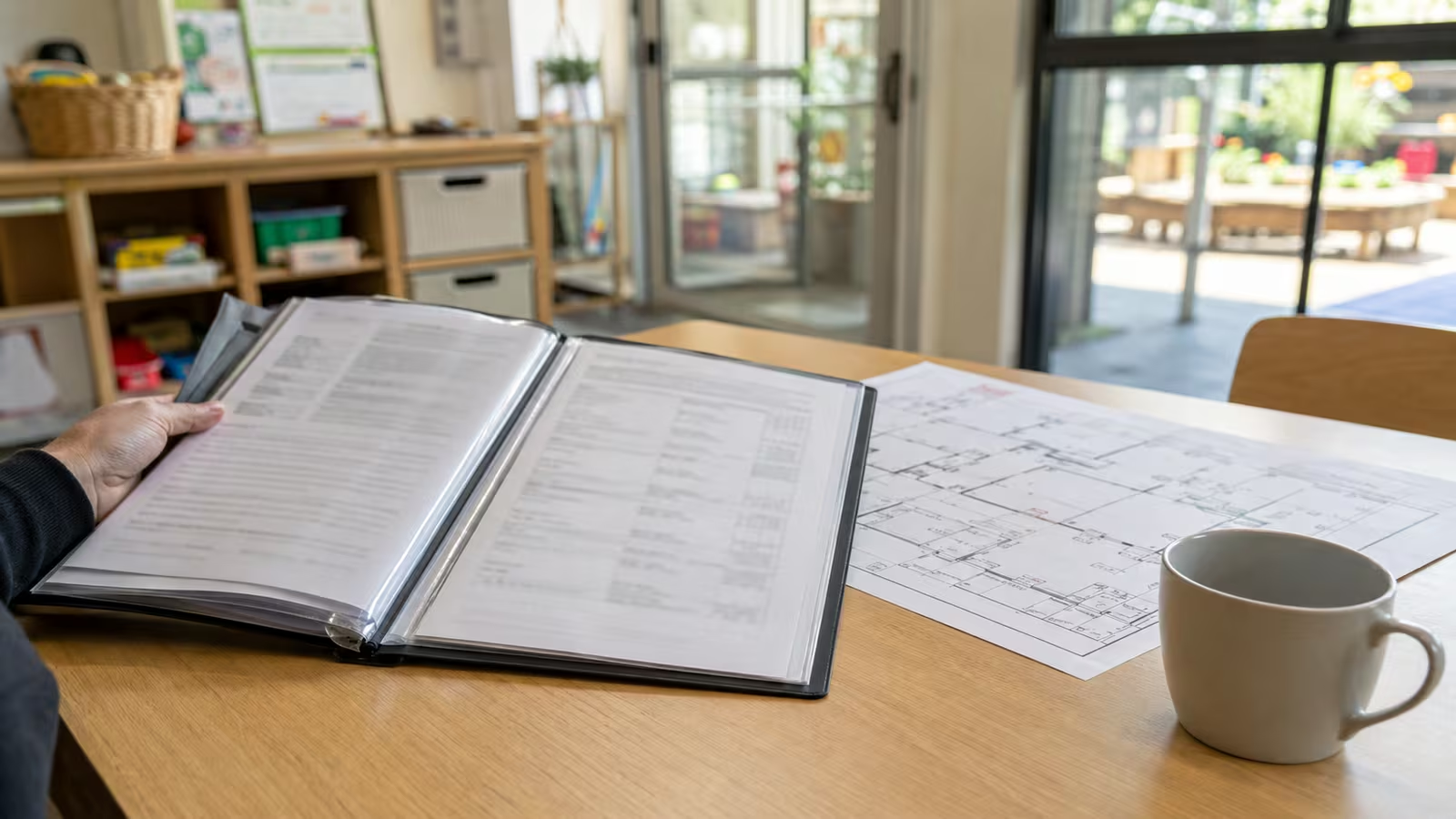
NQS Quality Area 3 (Physical Environment) is the section ACECQA assessors and Department of Education and Training assessors open first when they pull the plumbing-and-water file. The per-outlet TMV report needs set point, measured temperature, pass/fail and tester sign-off for every accessible warm-water outlet. Missing outlets get flagged.
RPZD or DCV per-device sheets, signed and dated, plus the lodgement receipt from Yarra Valley Water, South East Water or City West Water confirming the report was filed. Lodgement receipt is the document NQS assessors actually check, without it, the test itself doesn't count as evidence.
The contractor compliance entry on the NQS file should list the WWCC number for each tradie who has been on site during contact hours. Centres that produce the testing report but not the WWCC trail still draw an NQS finding.
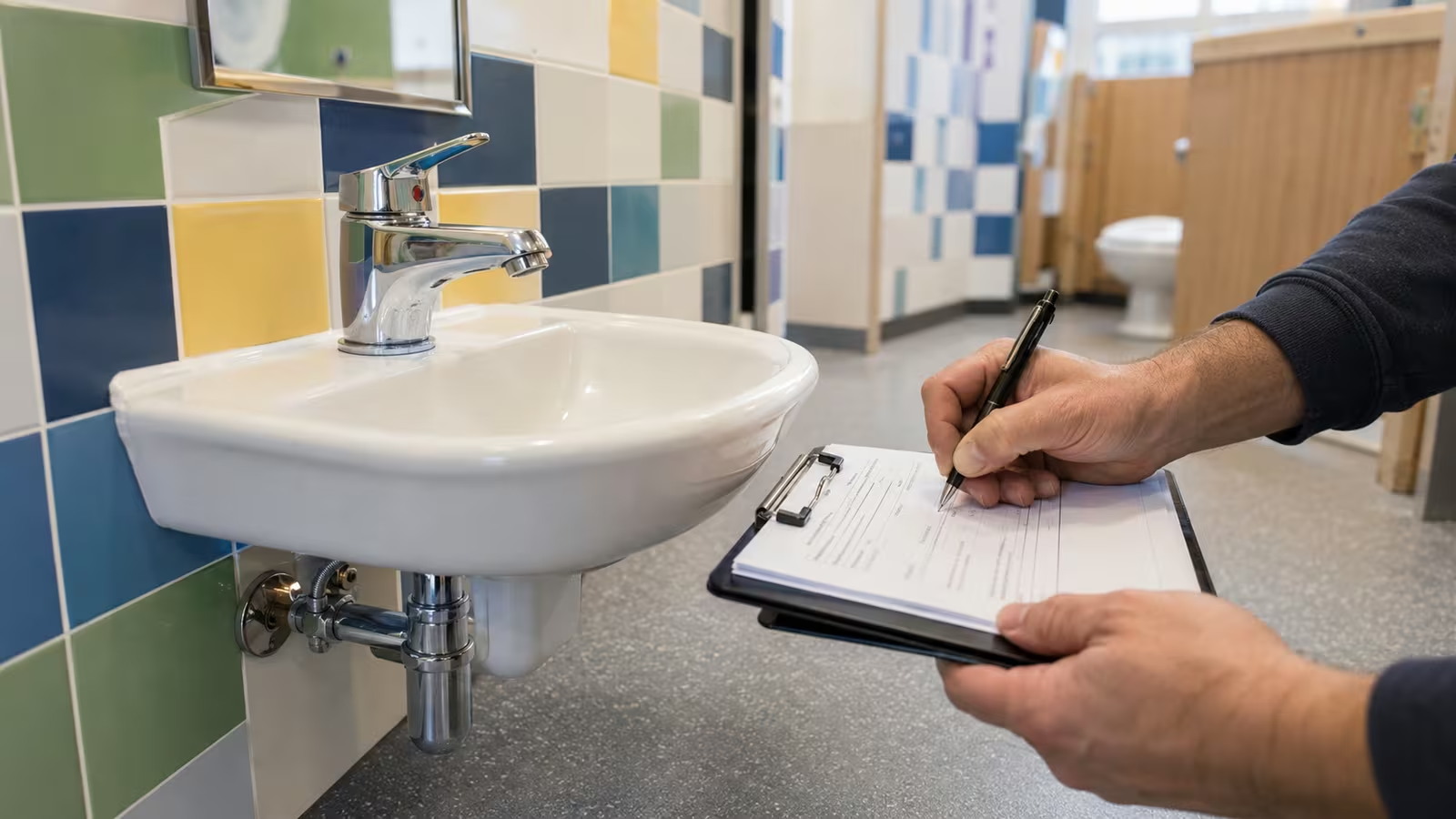
Empty centre, no WWCC trigger, no impact on the educator team's Friday planning day. Saturday 7-11am is the working default for the annual TMV + backflow + gas cycle for most LDC and ELC centres.
The educator team typically arrives at 6:30 for a 7am opening. A 6-6:30 pre-opening test slot fits the brief outlets that can't be deferred to Saturday, kitchen TMVs that need testing before the morning bottle wash, or a backflow device that triggered a notice.
Christmas-January closure and the Term 2 / Term 3 holiday weeks are the windows for larger plant works, calorifier swap, hot-water plant replacement, riser-section rework. Booked into the centre's annual maintenance calendar at the previous contract renewal.
Backflow reports lodge electronically with the water authority within 5 business days of the test. You don't chase paperwork; we send the confirmation receipt once YVW accepts the lodgement.
Annual reminder sent to your nominated facility or strata manager one month before next year's test is due. Removes the risk of a missed test deadline that would put the property out of compliance.
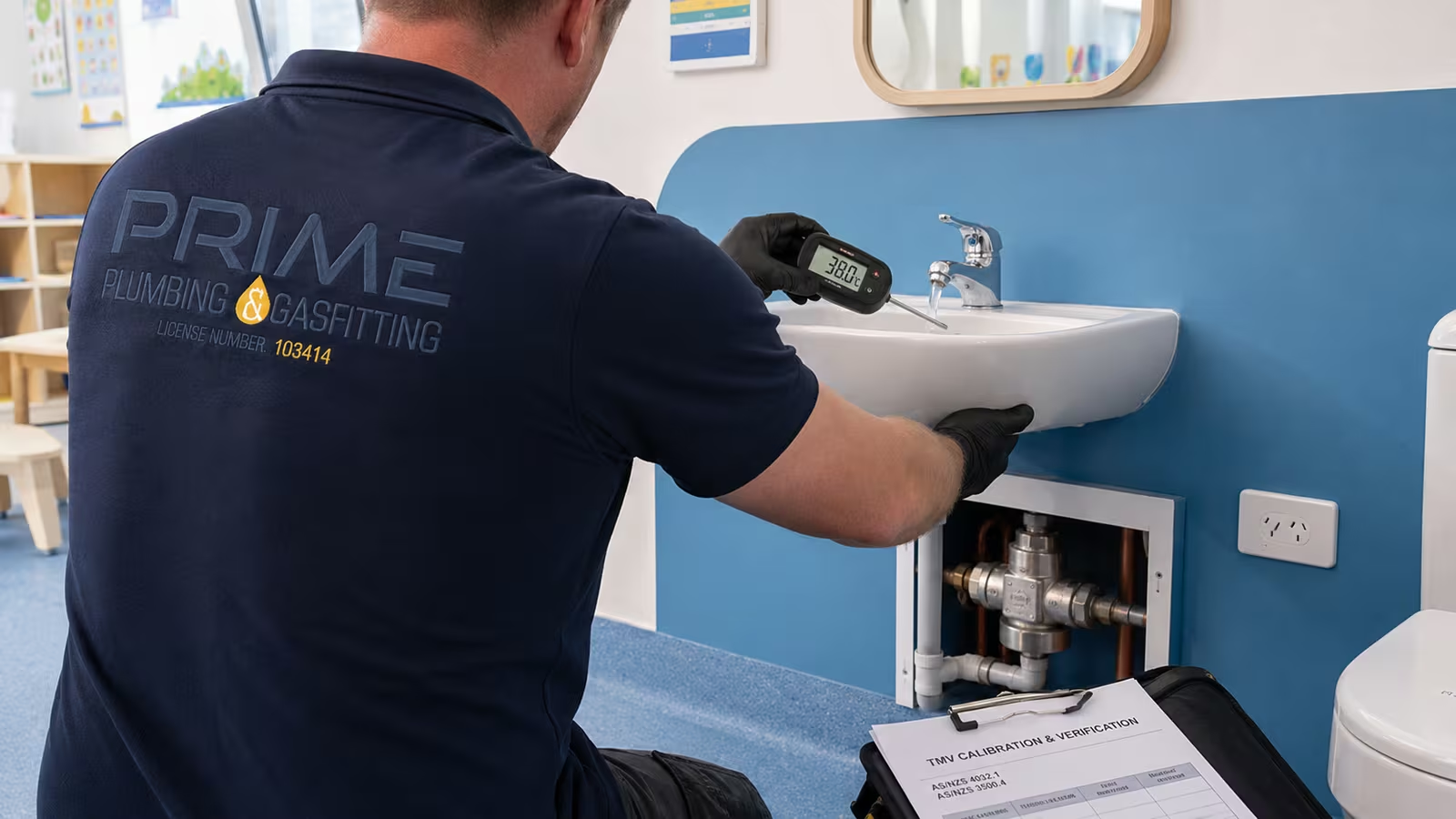
Three steps from first contact to your first childcare plumbing Melbourne compliance visit. Total clock time is normally two weeks for a single-site centre.
Licensed places drives outlet count (TMVs, basins, nappy-change wash bays). Current reports become the year-zero baseline. Send what you have, we work with whatever the previous contractor handed over.
Per-device pricing, locked for the year ahead. WWCC reference included on the quote so the approved provider can clear it on the same finance line.
First visit covers the full annual compliance suite plus a centre walkthrough so we know the actual device count for renewals. Documentation pack delivered within five business days, ready for the NQS folder.
Plant rooms, backflow pits and shared service cupboards sometimes need keyed access. Confirm the site contact, key handling, and any contractor-induction requirements before the first visit so the test can run uninterrupted.
Every tradie present on site during contact hours needs a current WWCC. The Education and Care Services National Regulations don't distinguish between a 'lead tradie' and an apprentice, any person other than approved staff or volunteers having contact with children needs the check. Prime carries WWCC across the team; we don't sub-contract to plumbers who don't.
It can, with WWCC current and the centre director's sign-off. But it's rarely the best brief. Toddlers wander into corridors when they hear unfamiliar voices, and TMV testing involves running warm water that needs to stay isolated from child access during the test itself. Saturday-morning visits are the standard for that reason, with pre-opening 6am slots reserved for outlets that genuinely can't be deferred.
Yes, and it's typically the highest-risk Class 4 device on a childcare site. A garden tap with a hose end that can be submerged in standing water, fertilisers or organic matter creates a cross-connection back into the drinking water if mains pressure drops. Minimum is a single-check device on the tap; high-risk sites (fertilised garden adjacent, sandpit drainage to the tap zone) sometimes need a DCV.
AS 3500.4 sets the absolute upper limit at 45°C for accessible warm water in early-childhood premises. That cap was derived from adult-skin scald data and is the legal hard ceiling. Most centre risk-management policies sit well below that, usually 38°C for delivered temperature with 43.5°C as the policy hard ceiling, because toddler skin burns at lower temperatures than adult skin. We calibrate to the centre's policy on the wall, not the standard's ceiling.
One contract, two site visits per year (one for each building) bundled at a multi-site rate. Same WWCC, same documentation format, but the per-outlet device register is kept separate per building so the NQS folder for each site has its own clean record.
Same-day for common RPZD and DCV sizes (DN20, DN25, DN32), we carry these on the van. Non-standard sizes are sourced and fitted within 5-7 business days. We notify the water authority of the failure and the planned replacement date so the lodgement record stays accurate.
Yes, Alister is a Type A gasfitter through Energy Safe Victoria, so commercial-kitchen gas appliances and gas hot water plant fall under the same annual contract as TMV/backflow work. BPC Compliance Certificate issued direct on any install or replacement. Single contractor on site, single PDF document pack for the NQS folder.


 Verified by Trustindex