
Commercial property plumbing Melbourne runs on the lease lifecycle, not the calendar year. Pre-lease compliance pack for the incoming tenant's solicitor, tenant-fitout backflow and gas coordination with the shopfitter, trading-hour testing that doesn't drag the property manager into a tenant complaint, and Section 32 plumbing disclosure when the building goes on the market. Prime Plumbing & Gasfitting works to the property manager's lease and sale calendar, with one consolidated annual contract across single buildings or whole portfolios. BPC #103414, Type A gasfitter, REA-portal-ready documentation.

Quick answer: For commercial property the plumbing questions follow the lease: who pays (landlord or tenant), make-good at exit, and compliance testing during the term. Prime Plumbing & Gasfitting works for landlords, agents and tenants across Melbourne, covering repairs, fit-out plumbing, backflow and TMV testing, with invoices and reports split the way the lease requires. BPC licence #103414, fixed written quotes.When a new commercial tenant signs a lease, their solicitor reads through the makegood clauses, the permitted-use schedule, and the existing-compliance representations. If the property manager can't produce a current backflow test report, a current gas Compliance Certificate for the tenancy, and a fitness-for-purpose plumbing condition statement for the tenancy services, the lease execution stalls. Prime's annual contract delivers the pack: current backflow lodgement receipt, BPC Compliance Certificate for any gas work in the tenancy, photographic condition record of base-building and tenancy plumbing services, and a fitness-for-purpose statement signed by Alister. Drops straight into the tenant solicitor's checklist without the property manager chasing three contractors for three documents.
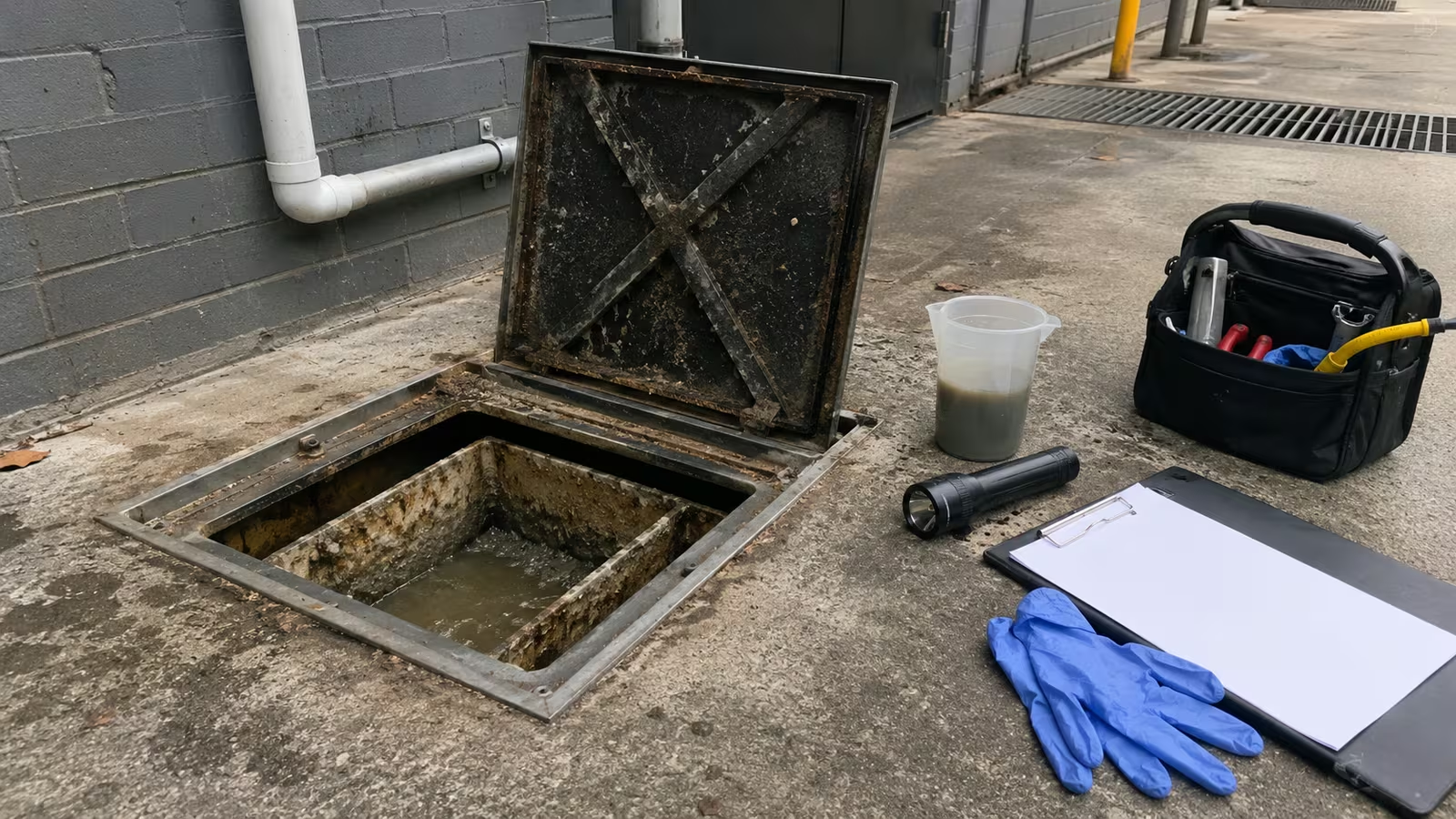
The handover-day surprise. Shopfitter installs a kitchenette in a new café tenancy without coordinating the backflow scope with the property manager. Council backflow audit a few months later flags the cross-connection from the food-prep sink. Property manager wears the audit non-conformance because the lease made the backflow scope the property manager's responsibility, not the tenant's.
The Prime fitout coordination brief. When a new tenancy enters fitout, we sit between the shopfitter, the property manager and the incoming tenant to scope the backflow, gas connection, hot-water service and tenancy waste connections. Fixed-price quote against the fitout drawings, signed off by Alister, BPC Compliance Certificate delivered on completion. Tenant's opening date holds, property manager has clean documentation, council audit has nothing to flag.
Where shopfitters get it wrong. Most fitouts forget Class 4 backflow on food-prep tenancies, single-check on cleaner's sinks, and the dishwasher waste tundish detail under AS 3500.2. We pick these up in the fitout-scoping walk-through before the shopfitter starts.
What Section 32 requires for commercial property. Vendor disclosure under the Sale of Land Act covers known defects, existing notices and current compliance status. For plumbing, that means backflow lodgement records, gas Compliance Certificates, any council or water-authority notices, and any known plumbing defect the vendor is aware of. Most property managers compile this in the week before the campaign launches, too late to remediate anything that turns up.
The pre-sale plumbing audit. Six to eight weeks before a building is scheduled to go on the market, we run a Section 32-focused audit: backflow status, gas safety status, riser-stack and base-building condition, any open notices. Findings sit in two buckets, disclose-as-is (factor into the asking price) or remediate-before-listing (small spend that lifts the disclosure cleanliness).
The auction-day call. Where a buyer's building inspector flags a plumbing item on inspection day, the vendor's agent often rings us for a same-day cost-to-remediate so the price negotiation has a real number, not an estimate.
For agencies and corporate property teams running 5+ buildings, we quote the portfolio as a single contract with per-building line items the PM can recover through the recovery clause on each lease. One annual renewal cycle, one invoice schedule, one document pack per building stored in the agency's file system.
Documentation is stored against the building, not the individual PM. When the PM role changes hands (and it does, frequently in commercial agency), the new PM inherits a clean compliance trail without needing to re-build it from scratch.
Portfolios get priority after-hours response across all buildings. Single mobile number, escalation to the on-call BPC-registered plumber where Alister isn't available, agreed-in-advance isolation procedures stored against each building so the BM can run the first step before our truck arrives.
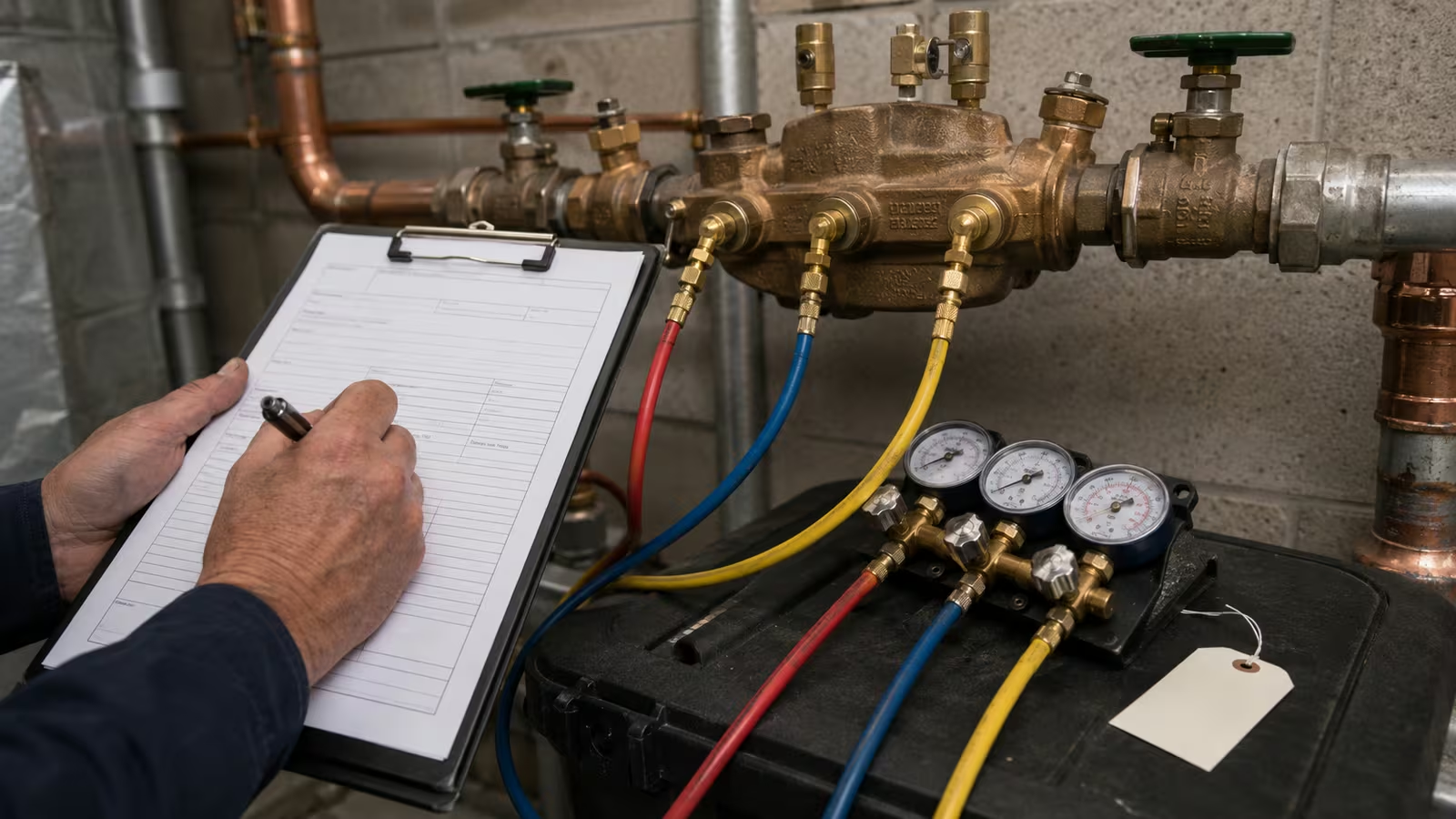
Office buildings can lose end-of-trip facility access for an hour at 6am without a tenant complaint; retail can't lose the customer toilets between 9am and 5pm. We schedule backflow and TMV testing to fit the trading-hour pattern of the actual tenant mix, not a default 8-4 trade calendar.
Modern A-grade and B-grade buildings have a BMS that monitors backflow isolation events. We coordinate the test isolation window with the BM so the BMS alarm panel doesn't fire mid-test and pull the BM out of bed at midnight.
Where the contract scope includes tenant-facing services (end-of-trip showers, retail customer toilets, food-court tenant supply), our metric is zero tenant complaint emails to the property manager. Three contracts at Prime have run multi-year zero-complaint, and we use that record as a contract-renewal differentiator.
Backflow reports lodge electronically with the water authority within 5 business days of the test. You don't chase paperwork; we send the confirmation receipt once YVW accepts the lodgement.
Annual reminder sent to your nominated facility or strata manager one month before next year's test is due. Removes the risk of a missed test deadline that would put the property out of compliance.
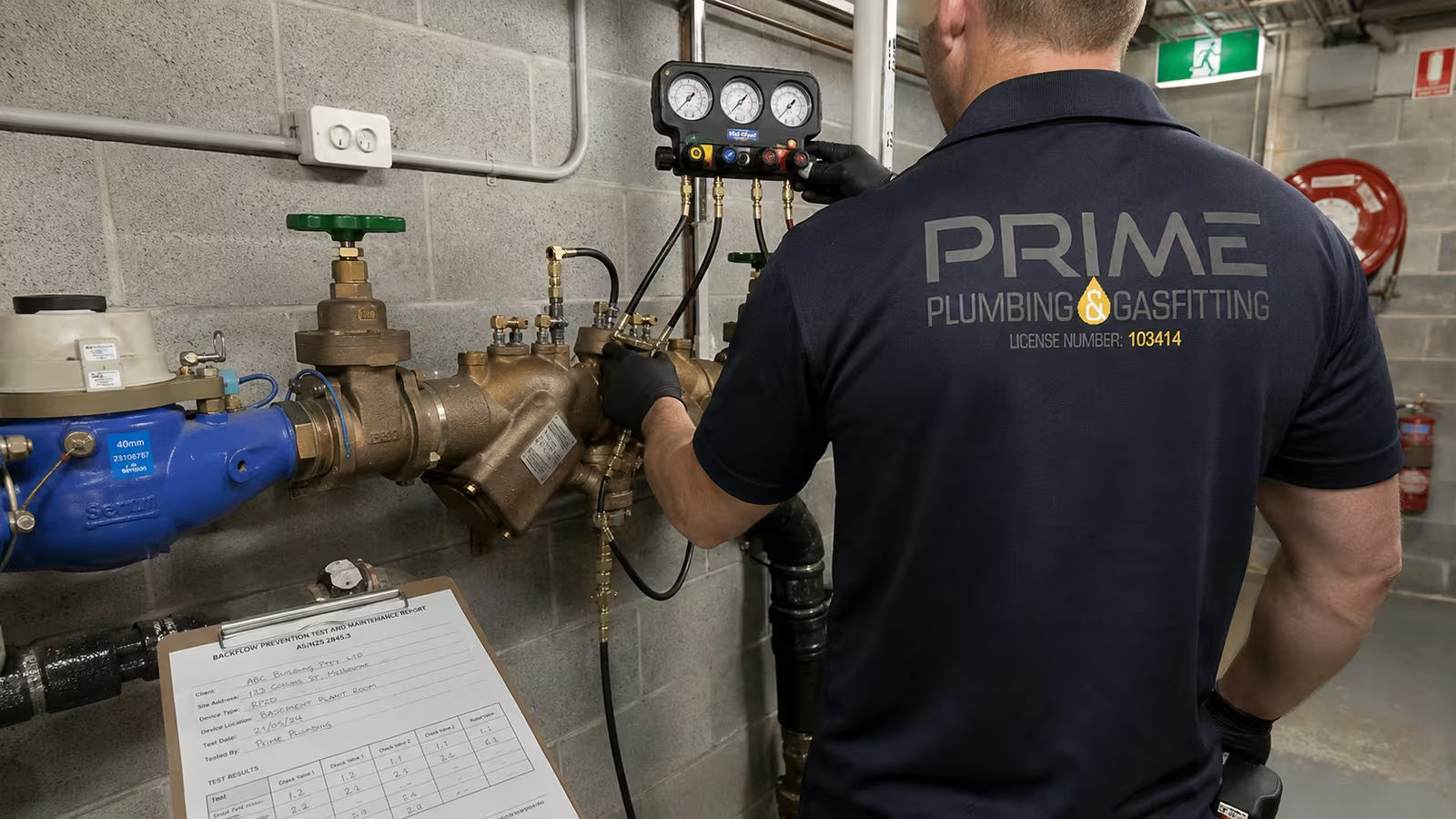
Two onboarding paths: single-property brief (typical for a new instruction to an existing agency) and portfolio brief (typical for an agency-wide contractor consolidation). Both take 2-4 weeks from first contact to first compliance visit.
Lettable area drives the device count baseline; current reports become the year-zero baseline. PM contact details and BM access calendar go on the contract face sheet.
Whole portfolio onboards in a single contract face sheet with a per-building schedule. We attend a sample of buildings (typically 3-5) for the initial walk-through, and the contract terms apply uniformly across the portfolio with per-building line-item pricing.
Per-property or per-portfolio walk-through within 5 business days of brief receipt; fixed-price quote 5 business days after walk-through. PM has the spend number locked before the next owner-reporting cycle.
First visit covers base-building backflow + gas + condition record. Documentation pack delivered within 10 business days, stored against the building in the agency's preferred system (most agencies use ReLeased, Property Tree, MRI or a custom REA portal, we deliver in whichever format the PM nominates).

Current backflow lodgement receipt from the water authority, BPC Compliance Certificate for any gas work in the tenancy, fitness-for-purpose plumbing condition statement, and any open notice or non-conformance status. The annual base-building contract keeps the first three current; the fourth is a same-day check we can run on request.
Read the lease carefully, most commercial leases assign "plumbing within the tenancy" to the tenant and "plumbing servicing common areas and the building main" to the property manager. The boundary is usually the tenancy's isolation valve. Backflow devices INSIDE the tenancy (food-prep sink, cleaner's sink, dishwasher) are tenant; the building's main RPZD is base-building. We can issue a written scope opinion on a specific tenancy if the lease language is ambiguous.
Pre-opening at 5am, after-trading at 9pm, or a coordinated isolation window with the BMS-monitoring brought offline for the test. Three or four 30-minute windows across a week is usually enough for a base-building backflow test on a mid-size B-grade building, without any tenant losing trading access.
Yes. Standard brief is 6-8 weeks before campaign launch: backflow status check, gas safety review, base-building condition report, open-notice check. Findings split into disclose-as-is items (factor into asking price) and remediate-before-listing items (small spends that clean up the disclosure pack). Cost is typically $1500-4000 depending on building size; saves multiples of that at the negotiation table.
Yes, whole-portfolio contracts are our standard brief for any agency or corporate team running 5+ buildings. Per-building line-item pricing the PM recovers through the lease recovery clause, single quarterly invoice schedule across the portfolio, per-building documentation stored against the building in your preferred system.
Tenant-fitout works are quoted per-tenancy against a published schedule of rates that's part of the master contract. PM or BM rings, we attend the fitout-scoping walk-through within 48 hours, fixed-price quote against the fitout drawings, and the work runs through to BPC Compliance Certificate at handover. Schedule of rates means the PM can give the incoming tenant an indicative number at lease negotiation without waiting for a full quote.
We deliver documentation in whichever format your agency's portal accepts, PDF upload, structured JSON via REST where available, or direct email-to-portal for older systems. Each document is tagged with the building reference, the lease/tenancy reference where applicable, and the job number from your work-order system. PM doesn't re-key data; the portal stays clean.
Standard after-hours flow: agent rings Prime's direct mobile, we either dispatch immediately or coordinate the tenant's safe-shutdown with the BM, depending on the failure type. For a gas leak in a base-building appliance, ESV requires immediate isolation; we handle the isolation, the make-safe, and the next-day repair, with the BPC Compliance Certificate issued on completion. PM has the documentation for the building file and the tenant has the answer for the lease-clause record.



 Verified by Trustindex