
Apartment plumbing Melbourne sits at an awkward intersection: owners corporations don't want to pay for what looks like a lot-owner problem, lot owners don't want to pay for what runs through common property, and the strata agent is in the middle catching emails from both sides. Prime Plumbing & Gasfitting works the Owners Corporations Act 2006 (Vic) split, documents every job against the right cost centre, and gives the strata agent or building manager a single common-property compliance contract that covers the year ahead. BPC #103414, Type A gasfitter, after-hours direct mobile.

Quick answer: For apartment buildings the split matters: owners corporation assets (risers and shared drains) versus lot-owner fixtures inside the apartment. Prime Plumbing & Gasfitting works on both sides. OC managers get compliance testing and common-property repairs with reports; owners and tenants get in-unit repairs booked direct. BPC licence #103414, written fixed-price quotes, Compliance Certificates on notifiable work.Most apartment plumbing disputes start the same way: water appears in lot 312's bedroom ceiling, the lot owner calls the strata agent, the strata agent sends a plumber, the plumber finds the leak is from lot 412 upstairs, except the actual failure point is the riser stack between the two slabs. Whose problem? Lot 412's tap is private property. Lot 312's damaged ceiling is private property. The riser stack is common property. The Owners Corporations Act 2006 (Vic) and the building's Plan of Subdivision draw the boundary at the centreline of the slab in most schemes, but the practical answer depends on the original developer's strata documents. The trade that documents the failure point against the boundary saves the strata agent a fortnight of email back-and-forth between the OC and the lot owner's insurer.
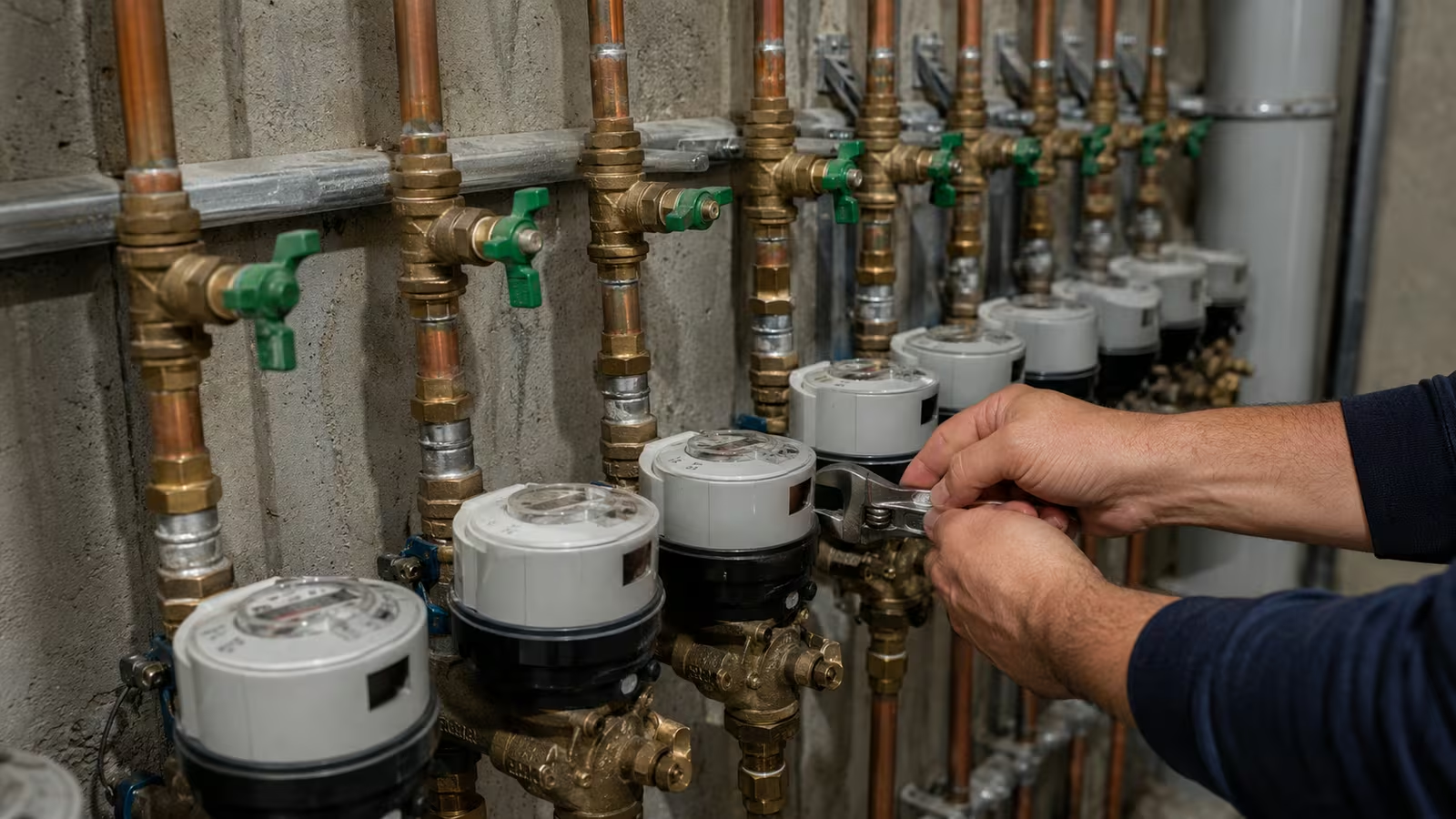
Riser stacks fail slowly. A pinhole leak in a level-12 horizontal branch becomes a stain on level 11's ceiling six weeks later, and a recurring damp patch on level 10 by month four. By the time the OC commissions a full-stack inspection, the remediation cost is several multiples of what a planned maintenance walk-through would have caught at year zero.
A common-property condition report, done at year zero of a new apartment plumbing Melbourne contract, then refreshed every 3-5 years, gives the OC a documented baseline. We map every visible joint, every isolation valve, every fire-rated penetration collar, every dead-leg branch, and flag the high-risk segments with a prioritised remediation schedule sized to the OC budget over multiple years.
For buildings older than 25 years, where the original galvanised stacks are reaching end-of-life, we plan the segmental replacement around the AGM cycle so the OC can pre-fund the spend across two or three annual budgets.
Building manager coordination. Keyed plant rooms, riser cupboards, rooftop and basement carpark access. Many BMs prefer the trade to call ahead by an hour and use the after-hours mobile for unscheduled access. We work to the BM's preference at contract setup.
Strata agent reporting. Agency-managed buildings get one consolidated PDF per building per year, plus per-job invoice notes against the BM's job number system. No chasing for paperwork at the next AGM.
OC committee comms. Where the committee runs the building without an external agent, we report direct to the committee chair (or the designated maintenance committee member) at the cadence the OC prefers, monthly, quarterly or just at AGM.
Lot-owner referrals where appropriate. When a lot-owner plumbing issue surfaces during a common-property visit, we tell the BM, and they tell the lot owner. We do not contact the lot owner direct or quote work outside the OC scope without the BM's sign-off.
Annual renewal quotes go out six weeks before the building's AGM date so the BM has time to include the spend in the budget pack going to the committee. No surprise renewals dropped on the OC after the budget is locked.
Where riser-stack replacement, oil-water separator capital works or other multi-year jobs are flagged, we provide a 3-5 year capital plumbing plan with annual budget allocations the OC committee can pre-fund out of the sinking fund or special-resolution levy.
Common-property work that needs a special resolution (typically >$10K depending on the OC by-laws) gets a documentation pack the BM can attach to the resolution paperwork, scope, fixed price, timeline, contractor licence references, insurance certificates.
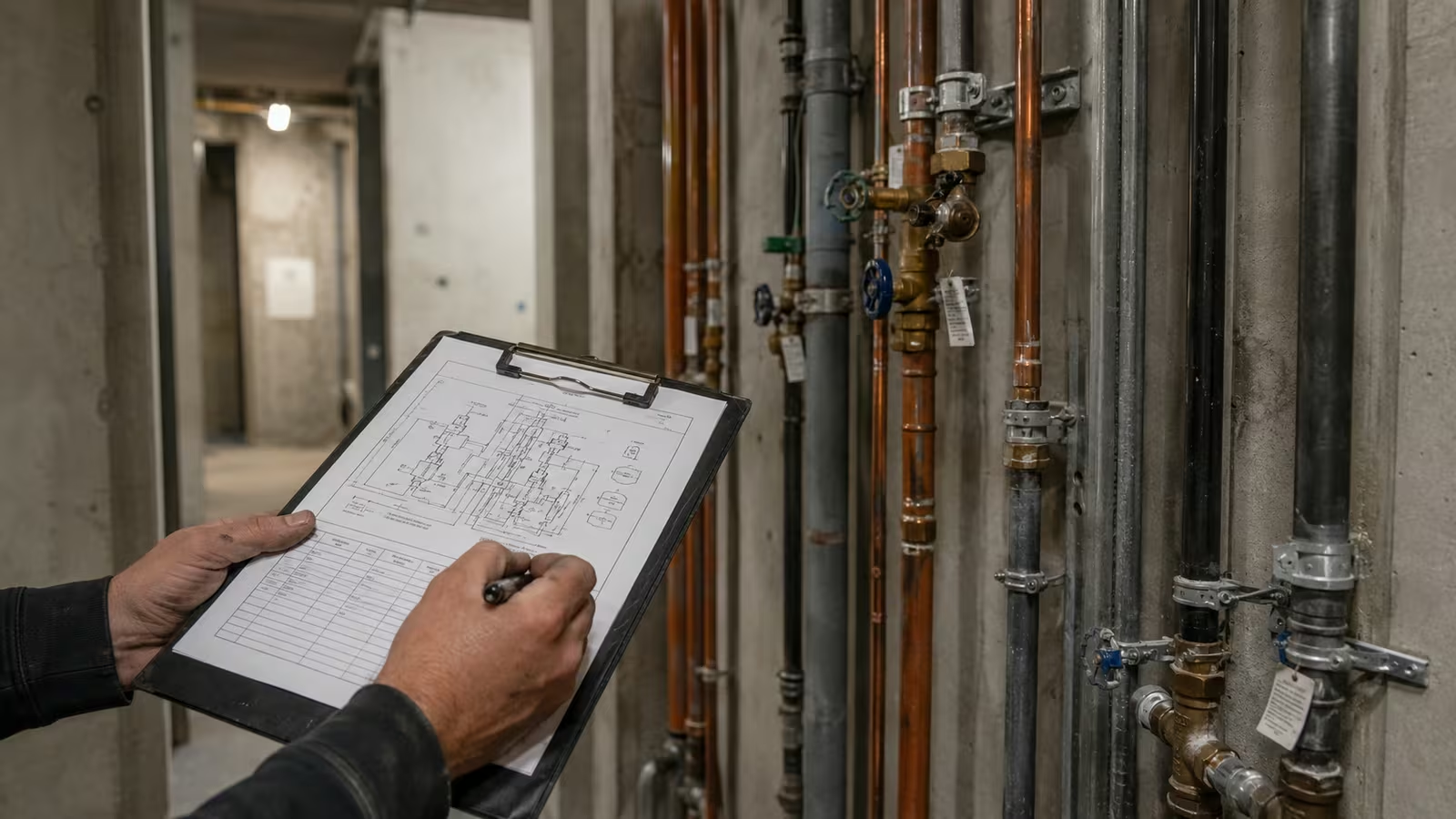
Strata insurers reward documented preventative maintenance. Backflow tested annually, common-property gas certified, riser-stack baseline on file, the insurer sees the building as well-managed and the excess load on water-damage claims drops. Buildings without the documentation pay a higher excess on every claim, and a denial risk if the failure traces to a maintenance lapse.
Before, during and after photos on every common-property job, with the report timestamped against the BM's job number. Insurer asks for the evidence; we already have it filed against the building.
Most strata policies require notification of a water-damage event within 48-72 hours. We'll give you an honest arrival time when you call. On site we start the isolation, photograph the failure point and email the BM the assessment so it can go to the insurer inside the notification window.
Backflow reports lodge electronically with the water authority after the test. You don't chase paperwork; we send the confirmation receipt once YVW accepts the lodgement.
Annual reminder sent to your nominated facility or strata manager one month before next year's test is due. Removes the risk of a missed test deadline that would put the property out of compliance.
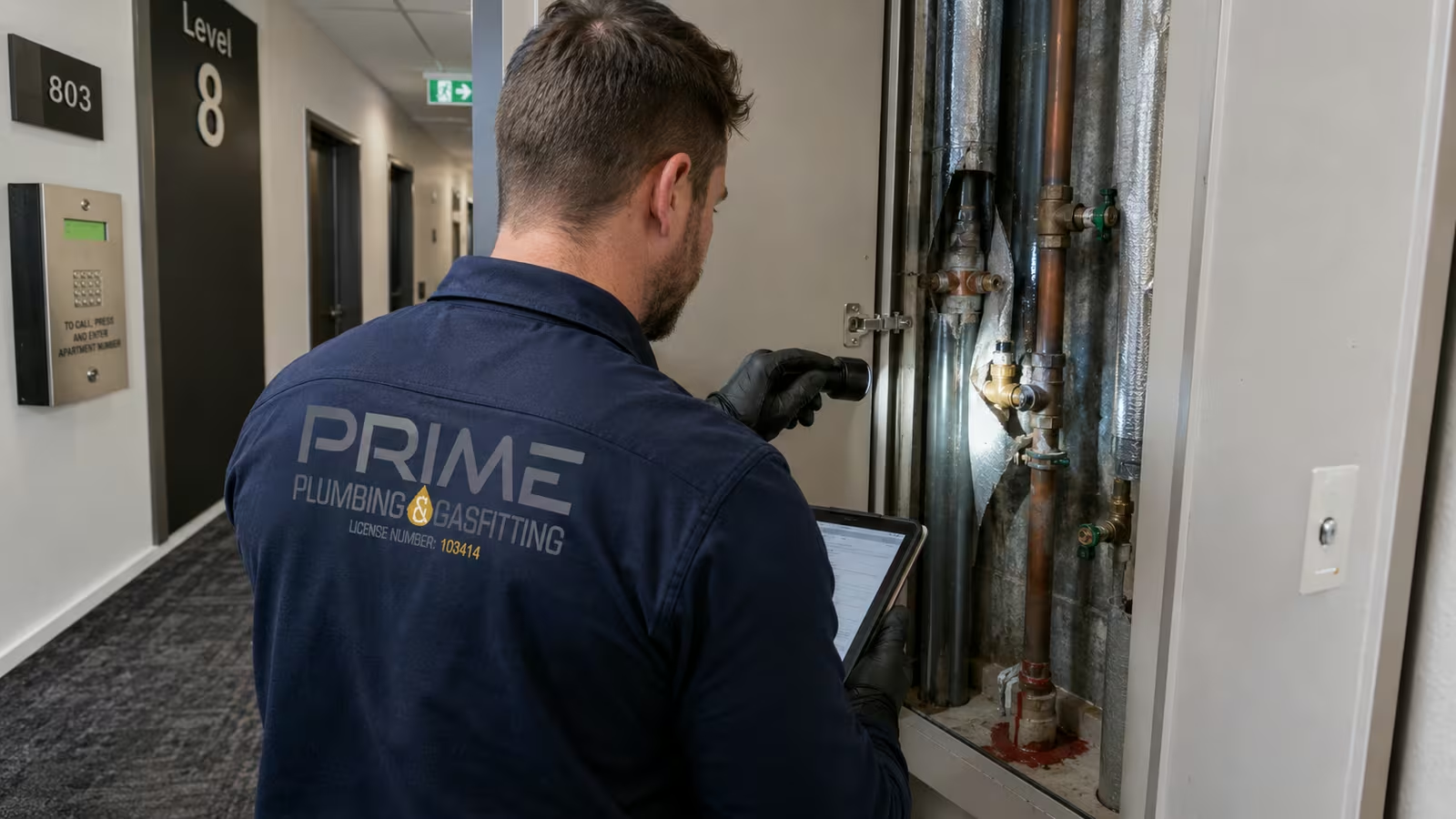
For OCs and strata agents changing plumbing contractors, the steps below fit standard agency-onboarding paperwork without the BM needing to chase the trade for documentation.
Lot count drives the common-property scope. Current backflow reports, gas certificates and any OWS pump-out records become the baseline. Strata agent contact details (email + after-hours mobile for the BM) go on the contract face sheet.
A walk-through with the BM, usually 30-60 minutes, covers plant rooms, riser cupboards, rooftop, basement, oil-water separator and main backflow. Identifies the actual device count and any unknown-condition items the OC inherited.
Per-device, locked for the year ahead. Quote covers the year-ahead spend plus any flagged capital items as a separate line.
First visit covers the full annual compliance suite plus the condition report. Documentation pack delivered after the visit, ready for the next AGM agenda.
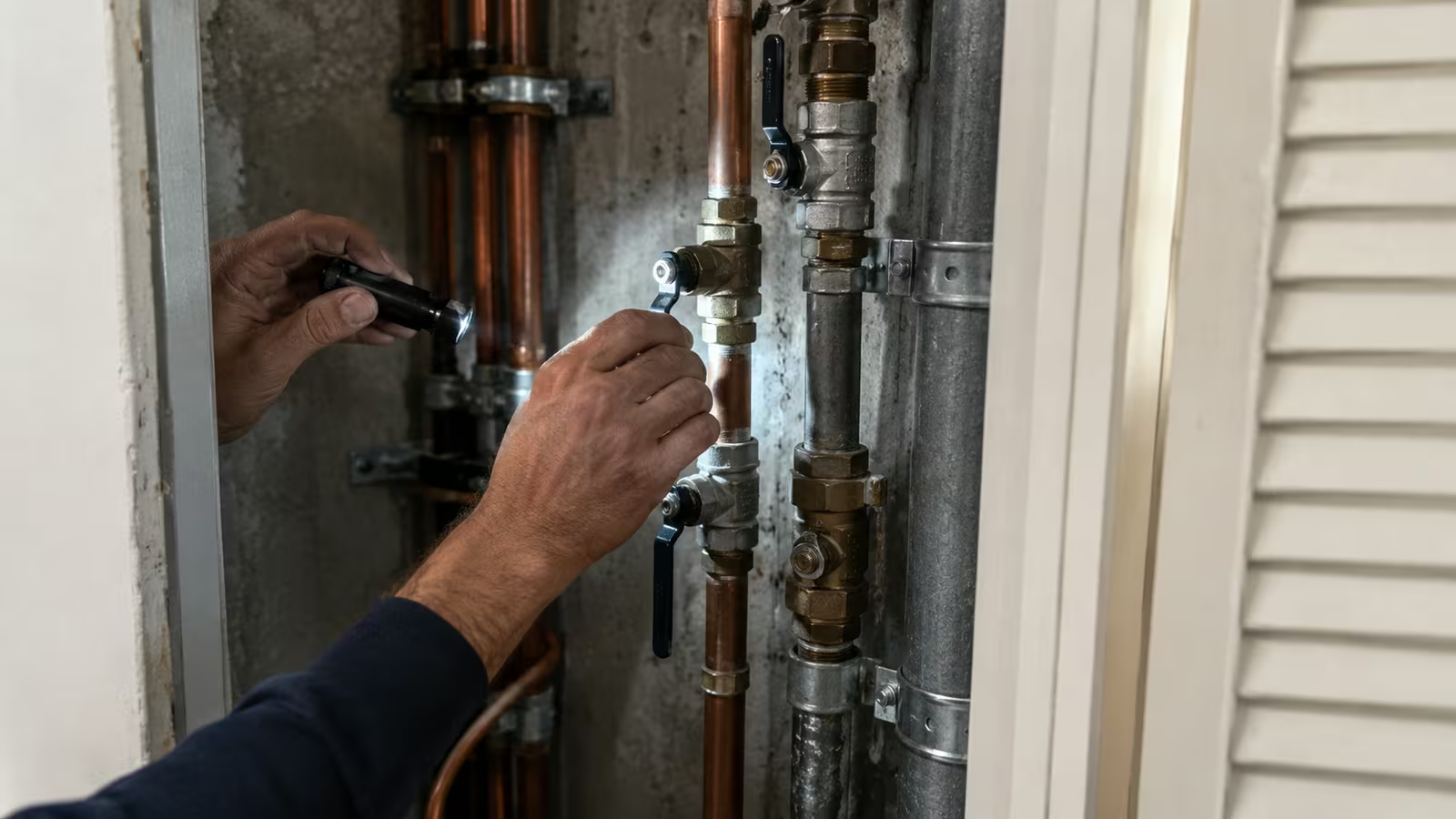
Under the Owners Corporations Act 2006 (Vic), failure inside common property is the OC's cost; damage to lot-owner property caused by that failure is typically the lot owner's strata insurance claim, with subrogation back to the OC if the OC was negligent. The fast answer for the BM: get the plumber on site, document the failure point, photograph the boundary, and let the two insurers sort it. The plumber's job is the documentation, not the legal call.
Galvanised stacks typically last 30-50 years depending on the water quality and the original install quality. At 18 years you're not in the danger zone yet, but a baseline condition report now gives the OC a year-zero benchmark to compare against in 5 years. We'd recommend the condition report at the next annual visit and revisit the capital-plan question once the report identifies any segments showing early wear.
Whichever the OC nominates. For agency-managed buildings, Prime can report direct to the BM (or the agency's facilities-coordinator inbox) and the agency relays to the committee through the AGM pack. Self-managed OCs typically have the committee chair on the contract face sheet. We work to the OC's nominated comms path, not our default.
Ad-hoc callouts cost more per job, no preventative coverage, no year-zero baseline, and no documentation trail for strata insurance or AGM reporting. The annual contract bundles all four common-property compliance streams (backflow, gas, OWS, fire isolation), gets the building condition-mapped at year zero, and gives the OC a fixed annual spend they can budget.
Pump-out is EPA-regulated and we coordinate the licensed waste contractor for the actual fluid removal. The annual plumbing contract covers the OWS inspection, the report to the EPA where required, and the BM's documentation pack. Pump-out cost is a separate line on the invoice tied to the actual volume removed.
Yes, capital projects come in two forms: a fixed-price quote for a defined scope (e.g. replace one identified failing segment), or a schedule-of-rates contract for a multi-year phased replacement program. Either way, we provide the documentation pack the BM needs for the special-resolution paperwork: scope, price, timeline, licence references, insurance certificates. The OC vote happens on a complete package, not a verbal estimate.
Mixed-use buildings typically have separate OCs for the apartment block and the retail strip (and sometimes a third for the shared basement carpark). Each OC gets its own contract scope and its own annual report, with the shared-infrastructure items (the building main, the shared fire system, the basement carpark) cost-allocated per the building's Plan of Subdivision. The BM gets a consolidated three-OC view; each individual OC sees only its allocated cost.
Direct mobile to Alister, no call-centre triage. For a burst common-property riser, the immediate priority is isolation at the nearest valve to stop the loss, then assessment, then BM and strata-agent notification inside the strata insurer's notification window (typically 48-72 hours). The year-zero walk-through documents the isolation procedure so the BM can run the first isolation step before we arrive.



 Verified by Trustindex