Prime Plumbing & Gasfitting

Apartment vs House Plumbing in Caulfield: How Strata-Shared Services Change Maintenance

Licensed Prime Plumbing & Gasfitting tradesperson, Apartment vs House Plumbing in Caulfield: How Strata-Shared Services Change Maintenance

Apartment vs House Plumbing in Caulfield, a Prime Plumbing & Gasfitting plain-English guide to apartment plumbing caulfield for owners and renters in Caulfield's mixed housing stock. Below we cover the strata-vs-private boundary, who pays for what, and the maintenance patterns specific to apartments and townhouses.

Quick answer: In a Caulfield apartment or strata-titled townhouse, the plumbing splits at your front door (roughly): anything inside your unit is your responsibility, anything outside is the body corporate's. The catch is that this line gets blurry in three places, the toilet stack and waste line (your toilet is yours, but the vertical stack it drains into is shared), the hot water unit (sometimes yours, sometimes a central building system), and any pipework that runs through walls or floors to reach common areas (the pipe is shared, the fixture it feeds is yours). Before you book any work that involves opening a wall, breaking into a stack, or replacing anything connected to building infrastructure, check your strata bylaws and notify your body corporate. Most apartment plumbing failures cost the body corporate more in time and process delays than they cost in repair dollars.

The strata boundary, explained simply

In most Victorian strata schemes, the rule of thumb is:

Your responsibility (inside the boundary)

  • Every tap, mixer, basin, shower, bath, toilet pan, and cistern inside your unit
  • The visible pipework that runs to those fixtures from the wall
  • The hot water unit IF it's a unit-specific tank or instantaneous heater in your apartment
  • The washing machine inlet/outlet hoses
  • Drain traps under sinks and basins
  • The toilet wax seal and inlet flexi

Body corporate responsibility (outside the boundary)

  • Water mains from the street to the meter
  • Risers (vertical pipes carrying water up the building)
  • Common drainage stacks (vertical wastewater pipes serving multiple units)
  • Stormwater and sewer connections to the council main
  • Hot water IF the building has a central system
  • Gas service from the meter to the building
  • Common-area fixtures (basement laundry taps, garden taps)

The grey zone

Where things get murky:

  • Pipework inside YOUR wall but feeding a SHARED riser, usually shared, but bylaws vary
  • A blockage in the stack below your unit, shared, but might be blamed on your unit if you're the closest
  • Damage from a unit above (their burst pipe floods your ceiling), their insurance, but resolving takes weeks
  • Strata-managed hot water billing, you pay for usage, body corp owns the infrastructure

How a lot owner protects themselves from common-property surprises

Three habits that save lot owners from unexpected costs: (1) Annual under-sink check for slow leaks at flexi-hose connections, these are lot-owner responsibility and water damage to the unit below is usually your insurance excess. (2) Replace flexi hoses every 5-7 years even if they look fine, burst flexi hoses are the single biggest cause of in-apartment water damage claims. (3) Know where your individual lot isolation valves are (under each basin, behind the WC, on the hot water unit) so you can shut off your lot independently. For wider strata work see our apartment plumbing service.

Maintenance patterns specific to Caulfield apartments

1970s-80s walk-up buildings (the most common style around Caulfield Station)

Caulfield's older apartment stock, the brick walk-ups on streets like Hawthorn Road, Glen Eira Road, Balaclava Road, was built between 1965 and 1985. Common plumbing issues:

  • Original copper plumbing with lead-soldered joints (any building pre-1989). Lead testing is worth doing if you live in one.
  • Cast iron stacks that are now 40-50 years old and starting to corrode internally. Slow drains across multiple units in a single column usually point to stack issues.
  • Galvanised hot water lines in older buildings. These restrict flow as they age.
  • Single-glazed bathroom windows creating condensation issues that compound minor leaks.

2000s, present mid-rise apartments

Newer Caulfield apartments along Dandenong Road and the developments around the racecourse precinct. Issues are different:

  • PEX pipework with crimp or push-fit connections. PEX itself is robust; the connections are the failure point.
  • Concrete-slab construction with copper running through slab. Slab leaks are hard to detect early and expensive to fix.
  • Centralised hot water systems, one large unit serving multiple apartments. When it fails, multiple units lose hot water simultaneously.
  • Strata-managed sub-meters, your hot water usage is metered and billed, separately from cold water.

Who pays for what, the common scenarios

Scenario 1: Tap dripping in your kitchen

Your cost. The tap and its connection to the wall are yours. Schedule 4 of the Plumbing Regulations 2018 permits homeowner washer replacement, but mixer cartridge replacement is licensed work.

Scenario 2: Toilet keeps running, can't stop

Your cost. The cistern and inlet are inside your unit. The water wasted comes off your unit's water bill (or off the body corp budget if the building has a single meter, in which case other owners notice and want it fixed).

Scenario 3: Water dripping through your ceiling from the unit above

Their insurance, your problem to resolve. The leak source is in their unit; the damage to your ceiling is yours to claim under either their public liability or your contents/building cover. Practically: notify them immediately, notify the body corporate, document everything, get a quote for the repair, then negotiate or claim.

Scenario 4: Slow drainage in your bathroom only

Your cost. The localised waste line from your fixture to the building stack is yours. Plunger or auger first (Schedule 4 permits both); if that doesn't clear it, licensed plumber required.

Scenario 5: Slow drainage in your bathroom AND the units above/below have the same issue

Body corporate. Multiple units affected on the same stack = blockage is in the shared infrastructure. Notify body corp; they'll arrange the work. Don't pay for stack work yourself and try to recover later, the body corp's chosen plumber will do it as part of building maintenance.

Scenario 6: No hot water in your apartment, neighbour still has hot water

Your cost. If your unit has its own hot water system, that's your responsibility. Replacement costs the same as a house ($1,500, $3,500 for storage gas, more for instantaneous or heat pump). Permission from body corp usually needed if the new unit needs different ventilation, gas line, or external installation.

Scenario 7: No hot water in the whole building

Body corporate. Centralised system has failed. Body corp arranges repair; you usually don't pay directly (though it comes out of body corp levies indirectly).

Related reading

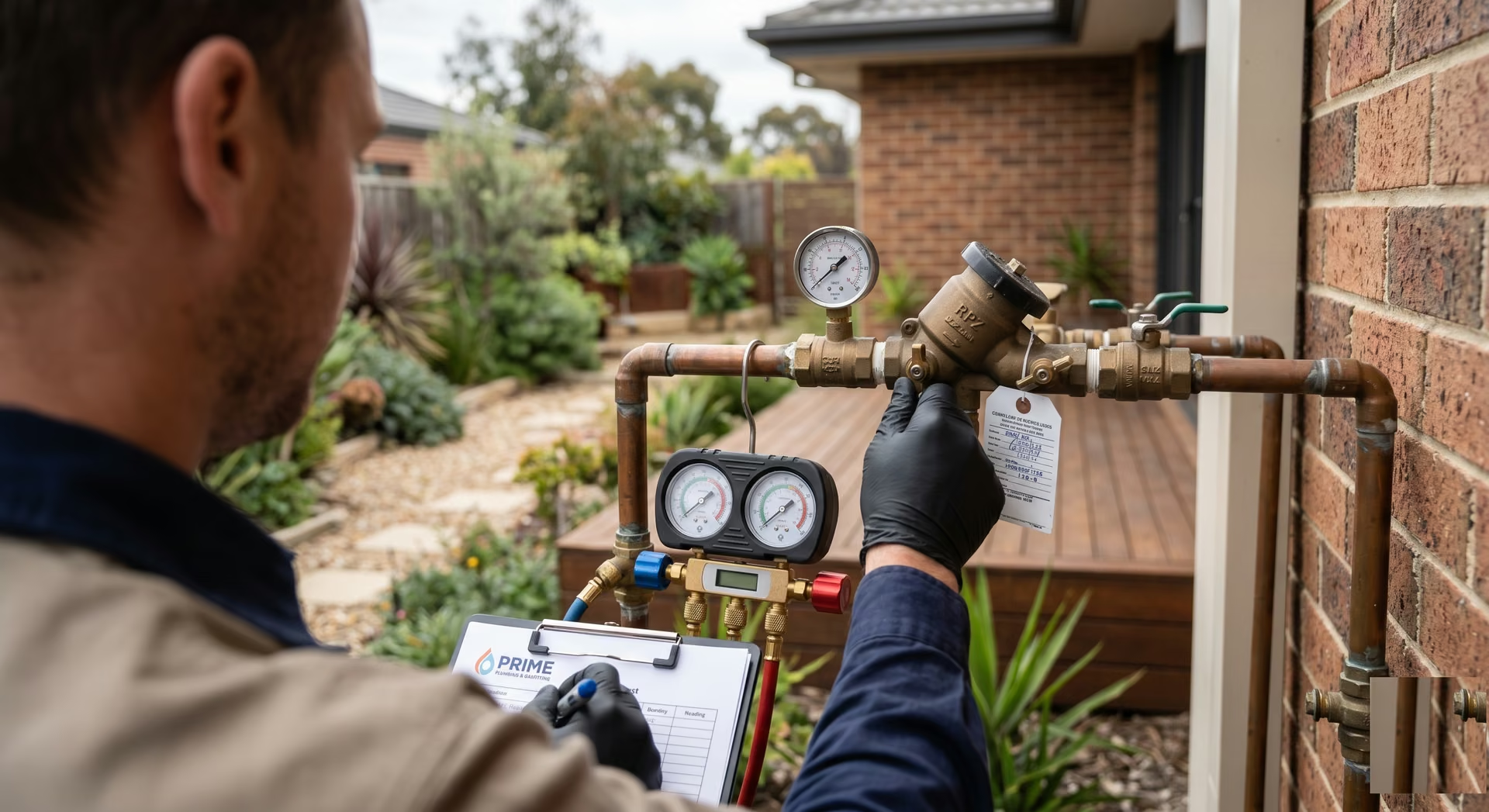
Who pays for what, the common scenarios, Prime Plumbing & Gasfitting job-site photograph

Before you do plumbing work in your apartment

For anything beyond a tap washer or plunger clearing, run through this checklist before booking work:

  1. Check your strata bylaws. Most schemes specifically address plumbing work, some require body corp notification before any work, others require approval, some only for work that affects common property.
  2. Notify the body corporate (or strata manager). Even if not strictly required, a courtesy notification protects you if something goes wrong. Body corp records show due diligence.
  3. Check the building's preferred plumber list. Some buildings have a list of plumbers already familiar with the building's infrastructure. Using them is often faster and cheaper.
  4. Confirm the work is licensed. Any plumbing in a strata-titled property has compounding consequences if done unlicensed, not just insurance issues but body corp dispute potential. Compliance Certificate is your protection.
  5. Ask about working hours. Most Caulfield strata schemes specify weekday business hours for non-emergency work. Saturday morning often OK; Sunday usually not.
  6. Plan for access if pipework is in shared walls. The plumber may need access to a common area or another unit. Body corp facilitates this.
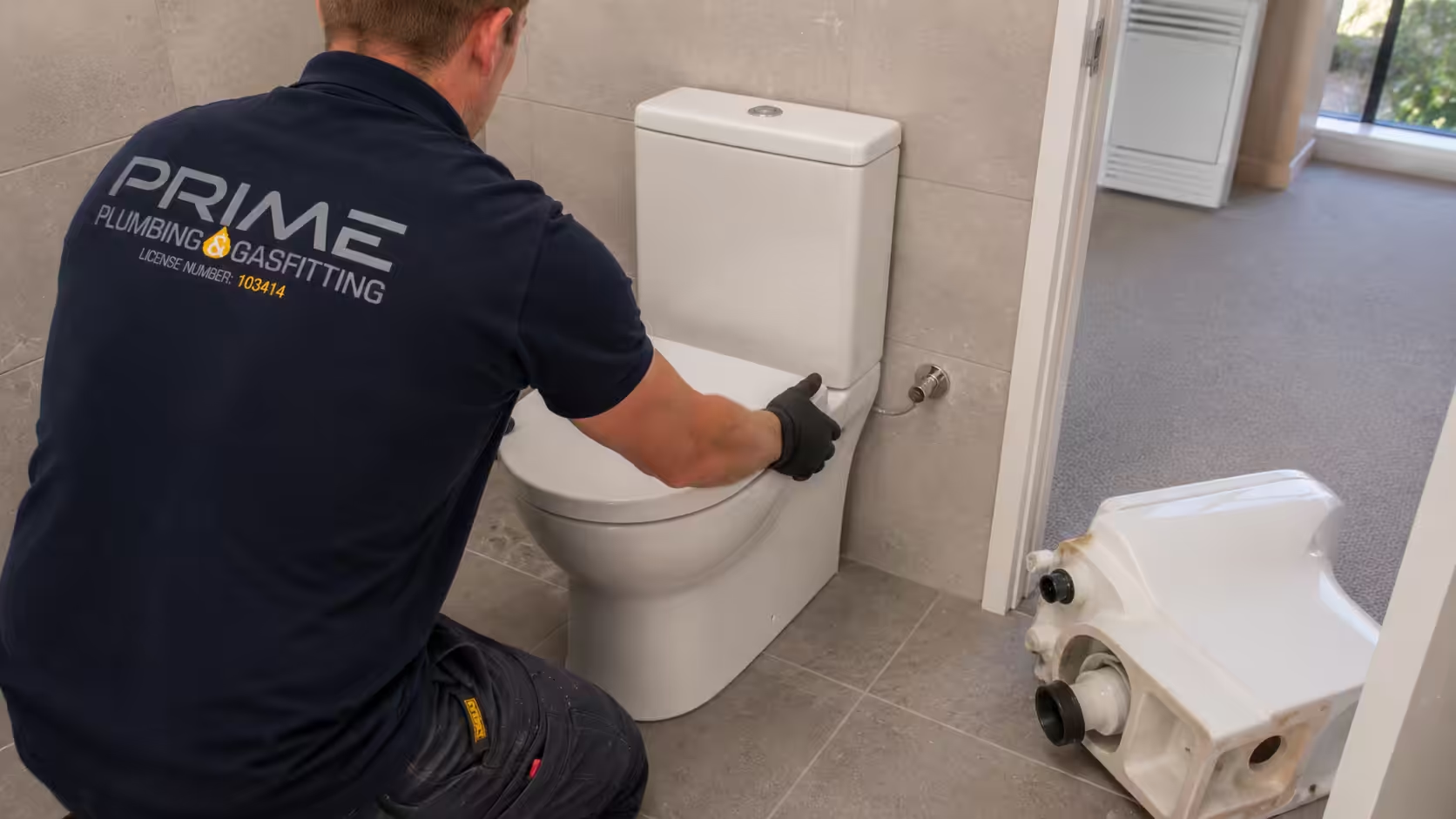
Before you do plumbing work in your apartment, Prime Plumbing & Gasfitting job-site photograph

Renting an apartment, what you're responsible for

If you rent in Caulfield, the responsibility split changes again. Under the Residential Tenancies Act 1997 (Vic):

  • Landlord pays for: structural repairs, hot water system failures, supply pressure issues, anything in common infrastructure, plumbing fixtures wearing out
  • Renter pays for: damage they caused (blockage from inappropriate items down the drain, broken fixture from misuse), basic cleanliness
  • Grey area: a slow blockage that's been building over time and finally fully blocks. Usually landlord, but if there's evidence of food scraps or sanitary items the renter contributed, it can shift.

For a renter, the practical rule is: notify the agent in writing immediately when you spot an issue, and let them book the repair. Don't book your own plumber and try to claim costs back, that almost always ends in dispute.

Renting an apartment, what you're responsible for, Prime Plumbing & Gasfitting job-site photograph

Common-area emergencies and the response chain

Common-area emergencies and the response chain, Prime Plumbing & Gasfitting job-site photograph

For an active emergency in a strata building, the response is slightly different from a single-family house:

  1. If it's contained within your unit: shut off your unit's water at the isolation valve (usually inside the front door or in a meter box on the level), then call a licensed plumber.
  2. If it's affecting common property or other units: shut off your unit's isolation if you can, then call the body corp's emergency line. Most schemes have a 24/7 line for genuine building emergencies.
  3. If a unit-wide isolation isn't possible: body corp can shut off water to the whole building or just your wing. The decision is theirs.
  4. Document everything: photos before any clean-up, written notes of when each step happened, who you called, who responded.

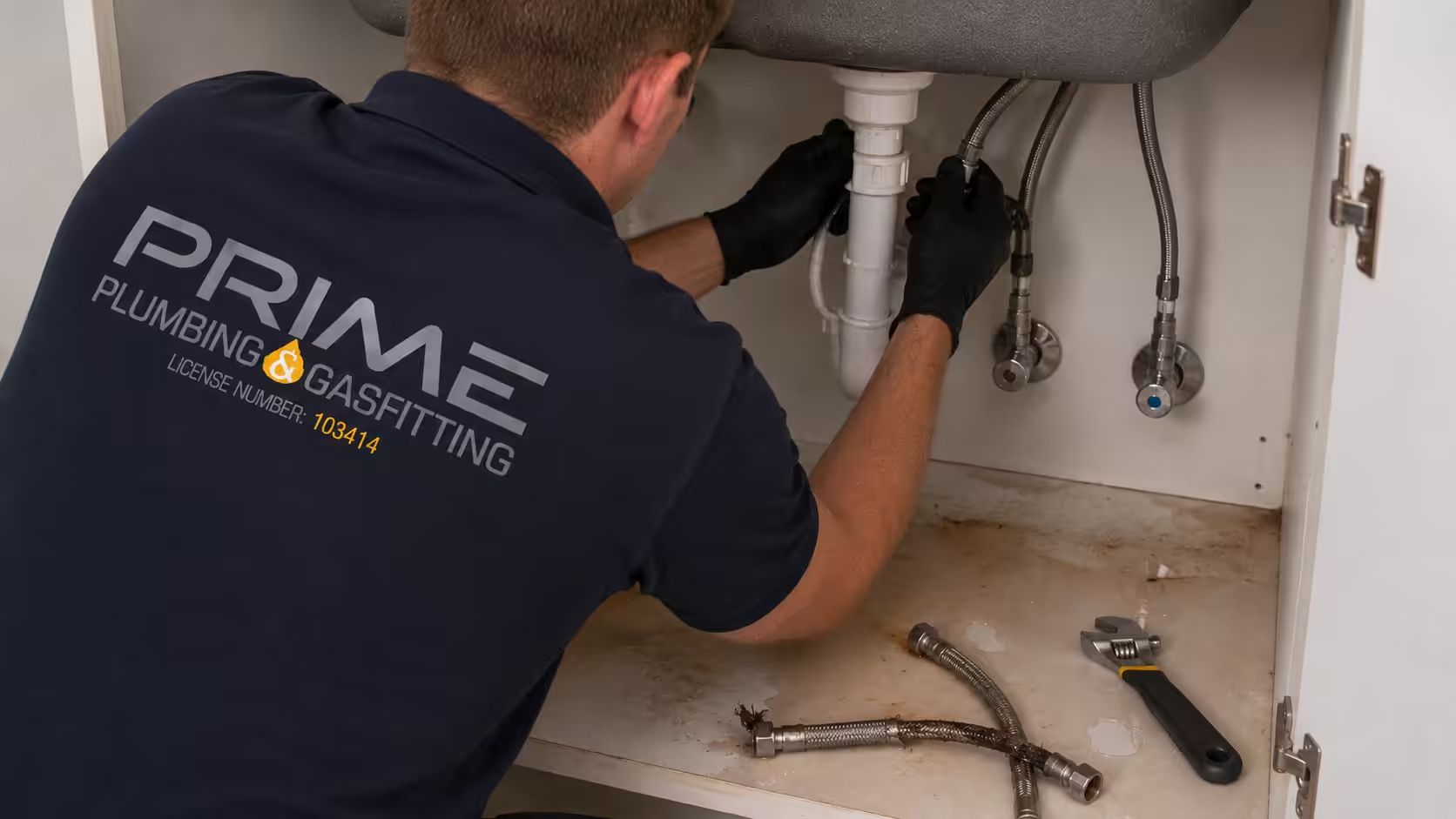
The most common Caulfield apartment emergency: a flexi hose under a kitchen or bathroom sink fails (flexi hoses have a 10-year service life and fail catastrophically when they go). The cabinet floods, water goes through the floor to the unit below. The repair itself is $200, $400; the water damage claim is the bigger issue.

When to involve the body corporate vs handle it yourself

A rough decision tree for Caulfield apartment plumbing issues:

  • Issue is in a single fixture inside your unit, no other units affected, your plumber, your cost
  • Issue affects multiple units on the same stack/riser, body corporate, their plumber
  • Issue is in a wall shared with common property, body corporate first, they may approve your contractor
  • Major work involving access to common areas, gas, or structure, body corp approval required before any work begins

When in doubt, notify the body corporate in writing before booking work. The 24-hour delay is almost always worth it to avoid a dispute later.

Frequently asked questions about Caulfield apartment plumbing

Yes, washer replacement is on Schedule 4 of the Plumbing Regulations 2018 and you don't need a licence. Strata bylaws don't override the regulations. If the issue is a mixer cartridge (not a washer), that's licensed work and needs a plumber.

Their insurance covers your damage in principle, usually through their public liability or building cover. Practically: notify them, notify the body corp, photograph everything, get repair quotes. The resolution can take weeks to months depending on insurer involvement. Document the inconvenience too (rooms you couldn't use, alternative arrangements), some policies include loss-of-use coverage.

Usually yes if the unit is your own (not building-supplied), because the installation often affects external ventilation, gas connection, or common-area access. Notify the body corp in writing before booking. Like-for-like replacement in the exact same location is usually approved quickly. Switching from gas to heat pump (or vice versa) involves more approval steps because the connection types change.

Body corporate. Multiple units on the same drainage stack = the issue is in the shared infrastructure, not your private waste lines. Notify body corp in writing; they'll arrange a licensed plumber to inspect the stack (often via CCTV) and quote sectional repair or cleaning. Don't book your own plumber for this, body corp won't reimburse and you won't have authority to access the shared stack anyway.

Gas storage and continuous flow: every 2 years (combustion check, sediment flush, anode inspection for storage). Electric storage: anode inspection at year 5, no annual service required. Heat pump: per manufacturer interval, usually annual or biennial. Centralised building hot water is the body corp's service schedule, not yours.

For work entirely inside your unit and not affecting common property, no. You can choose any licensed plumber. For work that affects common property, plumbing risers, stacks, or building gas/water connections, yes, they can require their nominated contractor. The licensing requirement (BPC licence number on the Compliance Certificate) protects everyone regardless.

What to check before signing a strata-managed plumbing quote

If the body corporate has booked work that affects your unit (riser replacement, stack cleaning, central hot water service), verify these before signing off:

  • Who is the licensed plumber and what's their BPC licence number? (Should be visible on the quote)
  • Will your unit's water/gas/hot water be off during the work, and for how long?
  • Are alternative arrangements provided (e.g. portable toilet, alternative shower access)?
  • What's the work hours window? (Most strata schemes restrict to weekday business hours)
  • Is a Compliance Certificate being issued, and will body corp share a copy?
  • What's the warranty on the work and who carries it?
  • Does the work affect any private property in your unit (wall opening, fixture relocation)?
Alister Williams, founder of Prime Plumbing & Gasfitting
Please enable JavaScript in your browser to complete this form.
Click or drag files to this area to upload.You can upload up to 20 files.
You can upload files like: JPG, JPEG, PNG, HEIC.

Related blogs

Prime Plumbing & Gasfitting
Prime Plumbing & Gasfitting, Melbourne’s trusted name in professional plumbing and gas services. I’m Alister Williams, a licensed plumber with over ten years of industry experience, proudly serving homes and businesses across Melbourne.

Support

  • Melbourne
  • admin@primeplumb.com.au
  • 0475 407 670
Copyright © 2026 Prime Plumbing & Gasfitting. All rights reserved.