Heat Pump Hot Water Noise: How Loud Are They and What Can You Do About It?
heat pump hot water noise: How loud is a heat pump hot water system? Typical decibel levels, where noise comes…

How to Replace a Tap Washer (Step-by-Step Guide for Australian Homes), a Prime Plumbing & Gasfitting plain-English guide to tap washer replacement for Melbourne homeowners. Below we cover what works, what doesn't, and when to call a licensed plumber.
Tap washer replacement is the cheapest, fastest fix for a dripping compression tap, and one of the few plumbing jobs Victorian homeowners can legally do themselves on their own home. This guide walks you through the full tap washer replacement process step by step, the tools you need, and the signs that mean the job has grown past a simple washer swap.
Quick answer: Tap washer replacement is a 15-30 minute job on a compression tap (the older style with two separate hot + cold handles, each turning multiple full rotations). You need an adjustable shifter, a Phillips screwdriver, a small assorted-size washer pack (around $8 at Bunnings), and access to the supply isolation valve. Stop before you start if: your tap has a single handle that lifts up and rotates (that's a mixer, needs a cartridge replacement, not a washer), the leak is at the base of the tap rather than the spout (different fix), you can't shut the water off cleanly, or the tap body is corroded inside when you open it. The full step-by-step is below.
A new tap washer only fixes one type of tap: the compression tap. Identify yours before you start:
If your tap is a mixer or ceramic disc, the washer won't fix it. Stop here and read our how-to-fix-a-leaking-tap guide for the cartridge process.
The rest of this article assumes you have a compression tap.
If you're missing the right washer size, take the old washer to the hardware shop and they'll match it. Don't guess.
Short answer: yes, in your own home. Under Victorian plumbing regulations (Plumbing Regulations 2018 + Building Act 1993), tap washer replacement on an existing tap is treated as minor maintenance, not regulated plumbing work. An owner-occupier can do it in their principal place of residence without a plumber's licence.
Where the law draws the line:
One insurance gotcha worth knowing: if a DIY tap repair fails and causes water damage, some home insurers will decline the claim on the basis the work wasn't done by a licensed tradesperson. Policies vary across Victorian insurers. Worth a 30-second check of your PDS before starting if the tap is on a line that could cause significant damage if it fails.
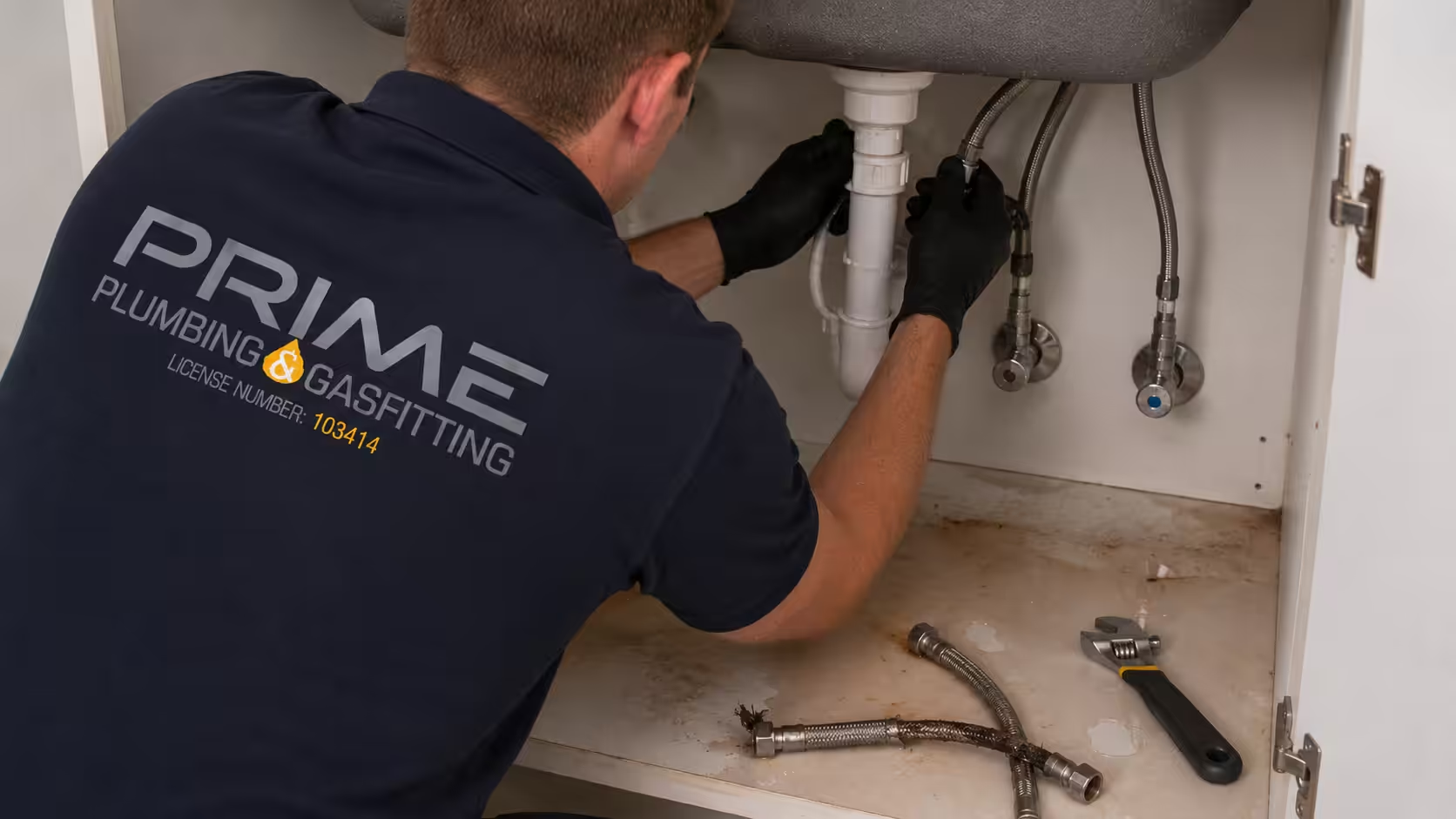
Look under the basin or sink for an isolation valve on the supply pipe, a small in-line tap. Turn it perpendicular to the pipe (off).
If there's no isolator, turn off the mains tap at the meter. If neither works cleanly, stop here: a plumber needs to fit an isolator before this job can be done safely.
Open the tap you're working on fully so water trapped between the isolator and the tap drains out. A bit will continue to weep when you open the tap body, have the towel ready.
Most compression taps have a small button or decorative cap on top of the handle. Pop it off with a fingernail or a flat screwdriver. Underneath is a Phillips-head screw, undo it, lift the handle off.
If the handle is stuck (years of corrosion under the cap), give it a careful tap from below, never lever from the top, you'll crack it.
Under the handle is a hex-shaped gland nut holding the spindle assembly (the "headworks") in the tap body. Use the shifter to undo it anti-clockwise.
If it's stuck: a few drops of penetrating fluid (RP7 or similar) and 5 minutes wait usually does it. Don't apply heat near plastic components.
Once the gland nut is free, lift the spindle assembly straight up out of the body. You'll see the jumper valve at the bottom, a small brass cup-shaped piece, and the worn black rubber washer sitting inside it.
The washer is held in the jumper valve by a tiny central screw or by being pressed in.
For a screw-held washer: undo the screw with a small screwdriver, lift out the worn washer, drop the new one in (matching the same size), reinstate the screw firm but not over-tight.
For a press-fit washer: prise the old washer out with the corner of a screwdriver, press the new one in with your finger or the flat of the screwdriver until it seats evenly.
Most household compression taps in Australia use a 12mm or 15mm washer. Bring the old one to the shop if you're unsure, they're cheap.
While the headworks is out, look down into the body of the tap with a torch. You should see a smooth brass ring at the bottom, the valve seat. The new washer presses against this when the tap is closed.
If the seat is smooth and round: you're good to reassemble.
If the seat is pitted, scratched or has a gritty ring around it: the washer can't seal against a damaged seat. You need a reseating tool (Bunnings, around $40-$60) to grind the seat smooth, OR the whole tap needs replacing. See the "When the washer fix won't last" section below.
Lower the headworks back into the body, making sure the spindle goes into its original orientation. Tighten the gland nut firm but not crushing, over-tightening cracks the body or strips the threads.
Put the handle back on, tighten the Phillips screw, push the decorative cap back into place.
Open the isolator gradually so trapped air doesn't hammer the line. Open the tap, let it run for a few seconds to flush any debris, then close it tight.
Wait a few minutes. Check the spout for drips (looks fine = washer is sealing). Check the gland nut and the base of the tap for weeps (looks fine = reassembly is right).
If a drip remains: see troubleshooting below.
Five signs a washer replacement won't be the right fix on its own:
A plumber typically charges $150-$280 to fix a leaking tap, including the diagnosis. Multi-tap jobs in the same visit attract a per-tap discount.
Reading this and thinking "I'll book a plumber instead" is a perfectly reasonable call. Most leaking tap repair jobs are under an hour, fixed-price quote at the door, and we carry the standard Australian washer + cartridge sizes on the van.
Call 0475 407 670 or send your address through the contact form, we'll quote a fixed price before any work begins.
The most common reason a washer replacement doesn't fix a leak is a damaged valve seat.
The seat is the brass surface the washer presses against. Over decades of use, the seat develops:
A new washer pressing against a damaged seat will leak: sometimes immediately, sometimes after a few weeks.
The fix: use a reseating tool. It's a hand-operated grinding tool that fits into the tap body, sits over the seat, and grinds it smooth in 20-30 turns. Tools cost $40-$60 at Bunnings.
If the seat is too badly damaged to reseat: the tap needs replacing. A new mid-range compression tap is $40-$100 + an hour's install. Trying to keep an old tap going past this point becomes false economy.
Some plumbing problems are DIY-friendly; others need a licensed professional under Victorian law.
Anything involving gas, sewer drainage, hot water units, backflow prevention, or work behind tiled walls must be handled by a licensed plumber or gasfitter.
Typically 5-10 years on a compression tap that's used normally. Hot-side washers wear faster than cold-side. Hard-water suburbs (some Melbourne areas have higher calcium levels) accelerate wear.
A tiny amount on the rim helps it seat smoothly the first time. Don't slather it on, too much grease attracts grit and shortens washer life.
That's exactly what a new washer fixes. The washer's job is to seal against the valve seat when the tap is closed.
Hot water is harder on rubber. The hot-side washer wears faster. Replace just the hot-side or do both at once, they're cheap.
Over-tightening compresses the gland packing past its sealing point. Loosen slightly. If it still leaks, replace the gland packing (a small ring of greased string or rubber sold in the same pack as washers).
If the body is over 15 years old or shows corrosion when you open it, replace the tap. A new mid-range compression tap is $40-$100 + an hour's install. Repeated washer fixes on an aging body become false economy.
No, they're entirely different mechanisms. A mixer cartridge belongs in a mixer tap. A compression tap needs a washer (or a new headworks if the spindle is also worn).
Across Melbourne, single tap washer replacement typically runs:
If the tap turns out to need a new headworks (the whole spindle assembly), a reseating, or a full tap replacement, the price goes up, but a proper plumber will quote that on-site before doing the work. Our leaking tap repair service covers all three scenarios, and we service most Melbourne suburbs including Toorak, Malvern, Brighton, Box Hill, Doncaster and surrounding areas.