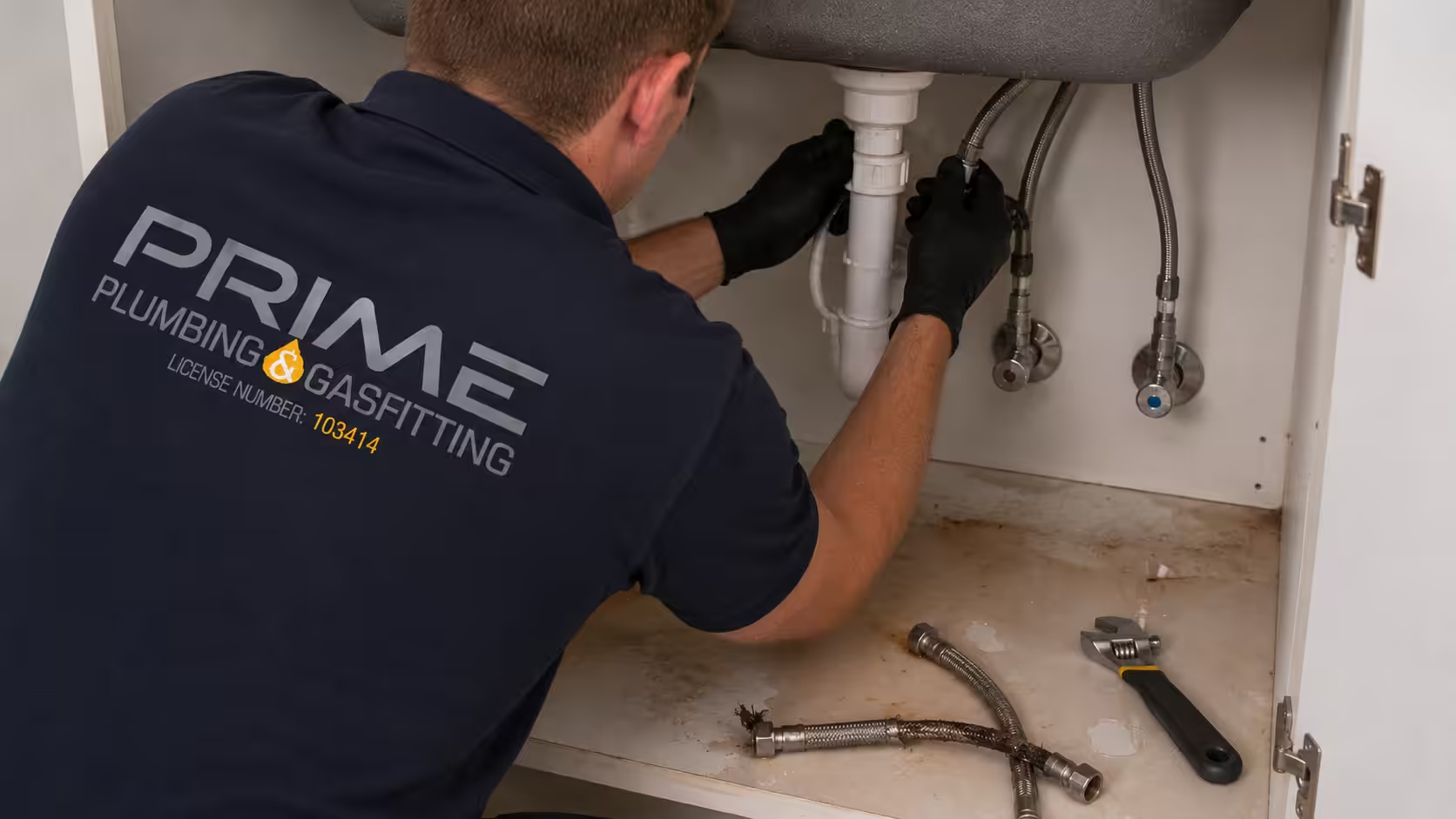
Burst Flexible Hose Under Kitchen Sink in Murrumbeena: Same-Day Repair
Burst flexible hose Murrumbeena case study. Same-day repair, replacement hose, insurance claim guidance and a Certificate of Compliance. Prime Plumbing…


Heat Pump Hot Water Noise: How Loud Are They and What Can You Do About It?, a Prime Plumbing & Gasfitting plain-English guide to heat pump hot water noise for Melbourne homeowners. Below we cover what works, what doesn't, and when to call a licensed plumber.
Quick answer: A modern residential heat pump hot water unit produces around 45-55 dB(A) of noise at the outdoor unit during operation, roughly the volume of a household fridge or a normal indoor conversation. Noise drops by about 6 dB for every doubling of distance, so at 5m away it's typically 35-45 dB (quiet living room). Most complaints aren't about the absolute volume but about placement: units installed close to bedroom windows, against shared boundary walls, or in echo-prone alcoves can sound substantially louder than the spec sheet suggests. Solutions: vibration-isolation mounting pads, location selection during install, acoustic enclosures with adequate airflow, and choosing inverter-driven units which run quieter at part-load. Heat pumps are not silent, but properly installed they're far quieter than older split-system air conditioners.
The published spec sheet for a heat pump usually quotes a sound power level (LWA) and/or sound pressure level (LpA) in decibels. Common numbers you'll see:
For context:
| Sound level | Comparable to |
|---|---|
| 30 dB | Whisper, very quiet bedroom |
| 40 dB | Quiet library, fridge from 5m away |
| 50 dB | Quiet office, normal fridge close-up, light rainfall |
| 60 dB | Normal conversation at 1m, dishwasher running |
| 70 dB | Vacuum cleaner, busy traffic from 10m away |
| 80 dB | Garbage disposal, alarm clock |
A modern heat pump at 45-50 dB sits in the "quiet appliance" range, noticeable when you're standing next to it, easily ignored from across the yard.
A heat pump has three potential noise sources:
The refrigerant compressor is the primary noise source. Modern scroll and rotary compressors are much quieter than older reciprocating designs, but they still produce a low-frequency hum during operation. Compressor noise typically peaks during start-up, then settles to a steady hum.
Inverter-driven compressors (variable speed) run at lower RPM most of the time, producing less noise during normal operation. Single-speed compressors run at full speed whenever they're on, so they're at peak noise level for the entire on-cycle.
The outdoor fan blowing air across the evaporator coil produces airflow noise, a consistent whoosh similar to a small room fan. Fan noise varies with fan speed (most modern units have variable-speed fans) and with airflow restriction (a unit with restricted airflow has to work harder).
Fan noise is usually less intrusive than compressor noise because it's higher frequency and less penetrating. But in a quiet outdoor space (rear yard, courtyard) it can still be audible.
This is the noise source that catches people out. A unit with sound-on-paper of 45 dB can sound like 60 dB if it's transmitting compressor vibration through a hollow timber deck, a cavity wall, or a thin concrete pad bonded to a building.
Vibration becomes structure-borne noise, felt through the floor or wall as a low-frequency rumble or buzz. It's particularly noticeable in adjacent rooms (especially bedrooms behind a wall the unit is mounted on) and at night when ambient noise is low.
A properly-installed unit on a vibration-isolation pad (rubber or neoprene) transfers minimal vibration to the building structure. A unit bolted directly to a deck or wall is a recipe for noise complaints.
Almost always one of:
Diagnostic step: stand at the affected location (often a bedroom window) and listen during a known compressor on-cycle. Then walk to the unit. If the unit at 1m sounds quieter than the bedroom location, you've got a structure-borne or reflection issue.
This is sometimes a noise complaint and sometimes a misinterpretation. Heat pumps cycle on and off based on tank temperature; the on-cycles can extend overnight in cold conditions or after heavy evening hot water use. Two scenarios:
If your heat pump is running for more than about 8-10 hours total in a 24-hour period, something's worth checking.
Common with installs near a shared boundary. The receiving side (your neighbour's bedroom) hears the noise differently than your side because of distance, intervening structures, and ambient noise levels.
Practical checks:
Victorian residential noise regulations don't have specific dB limits for hot water units in most circumstances, but EPA Victoria's general noise nuisance provisions apply if a neighbour can demonstrate unreasonable disturbance. Most disputes resolve through informal discussion + practical changes rather than formal complaint.
Heat pump compressors typically produce a brief louder pulse at start-up, a thump, click, or higher-pitched whine for 1-3 seconds before settling to steady running noise. This is normal and isn't a fault.
If start-up noise lasts longer (10+ seconds of unusual sound), or if there's a metallic rattle or grinding, that's worth a service call, could be a loose mounting, debris in the fan, or an early fault sign.
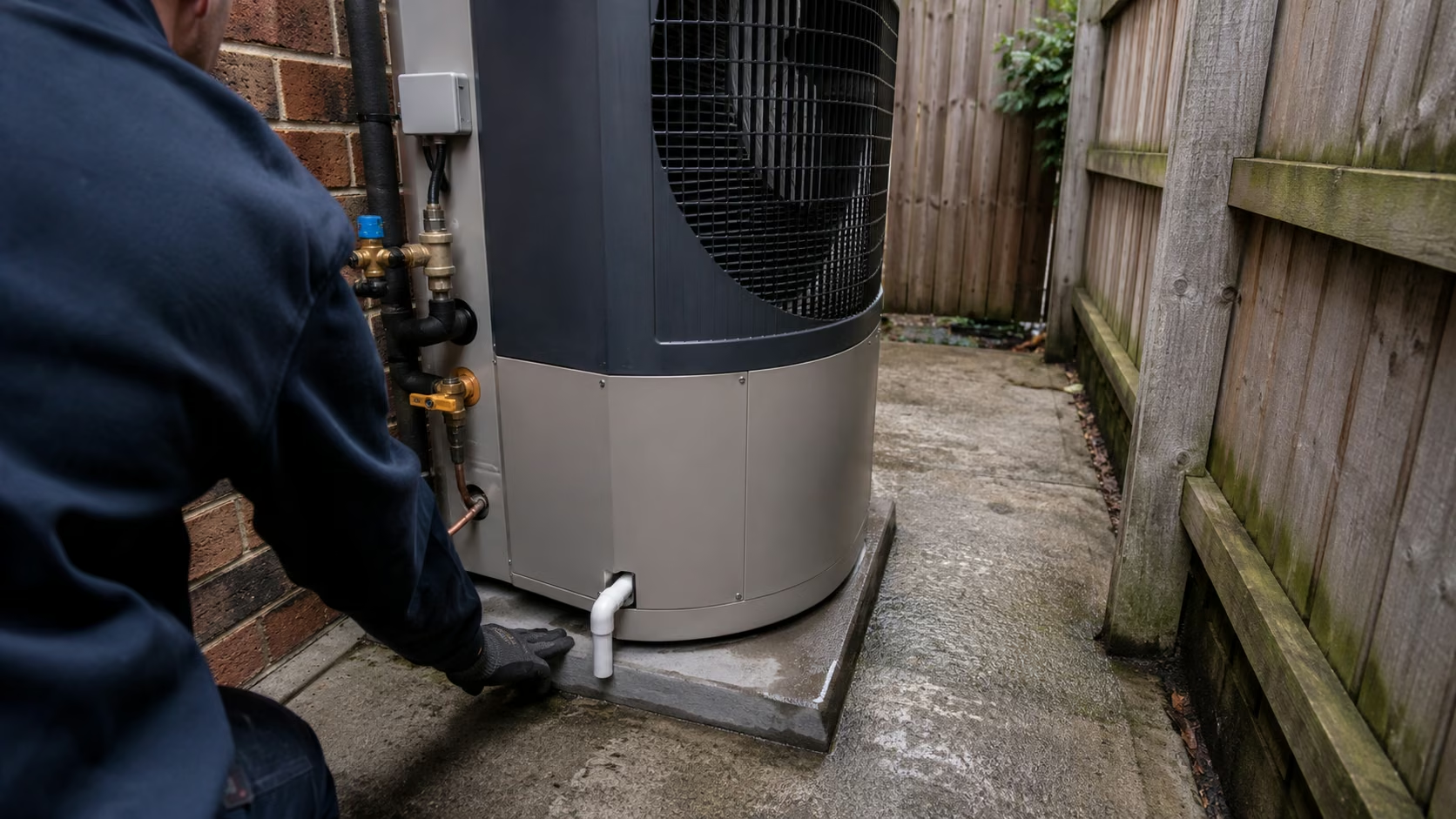
For new installs, the quietest models cost slightly more upfront but solve a lot of problems before they start. When comparing units:
The single highest-leverage step is mounting the unit on a vibration-isolation pad, typically rubber or dense neoprene, sized to the unit's footprint. Costs $20-$80 added to the install. Reduces structure-borne noise by 5-15 dB.
Some units come with isolation feet built in; many don't. If yours doesn't, ask the installer to add the pad.
For situations where the unit is already installed and noise is an ongoing issue, a purpose-built acoustic enclosure is sometimes the answer. The key constraint is airflow: the heat pump needs unrestricted air supply to the evaporator and unrestricted exhaust away from the condenser. Block either and the unit can't function.
Acoustic enclosures done right have: louvred panels facing the airflow direction, sound-absorbing inner lining, and adequate clearance from the unit walls. Typical cost: $400-$1,500 supplied and installed. DIY attempts at enclosure are usually a bad idea, restrict airflow unit overheats and faults.
Most modern heat pumps have programmable schedulers. Setting the unit to run during the warmer middle of the day rather than overnight reduces noise impact during sleep hours and slightly improves efficiency (warmer outdoor air = better COP). Discuss with your installer at commissioning.
If the unit is louder than expected and the install was done correctly, a refrigerant pressure check by a licensed refrigeration mechanic can catch undercharge or overcharge issues that cause compressor strain and increased noise. Not common, but worth ruling out if other solutions haven't helped.
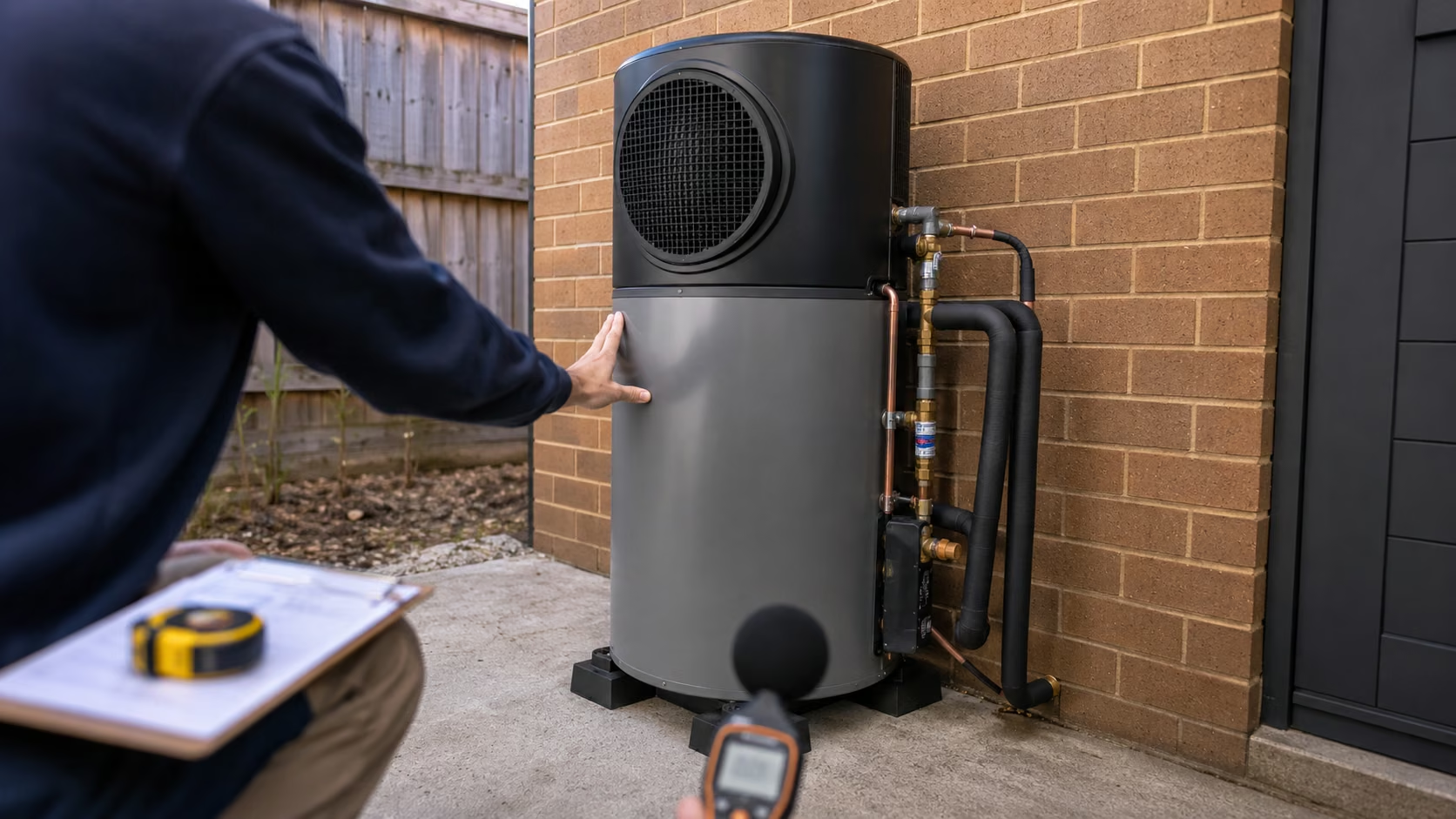
Prime Plumbing & Gasfitting installs and services heat pumps with attention to noise placement across Melbourne's eastern, south-eastern, inner-east, and bayside suburbs. See all suburbs we service
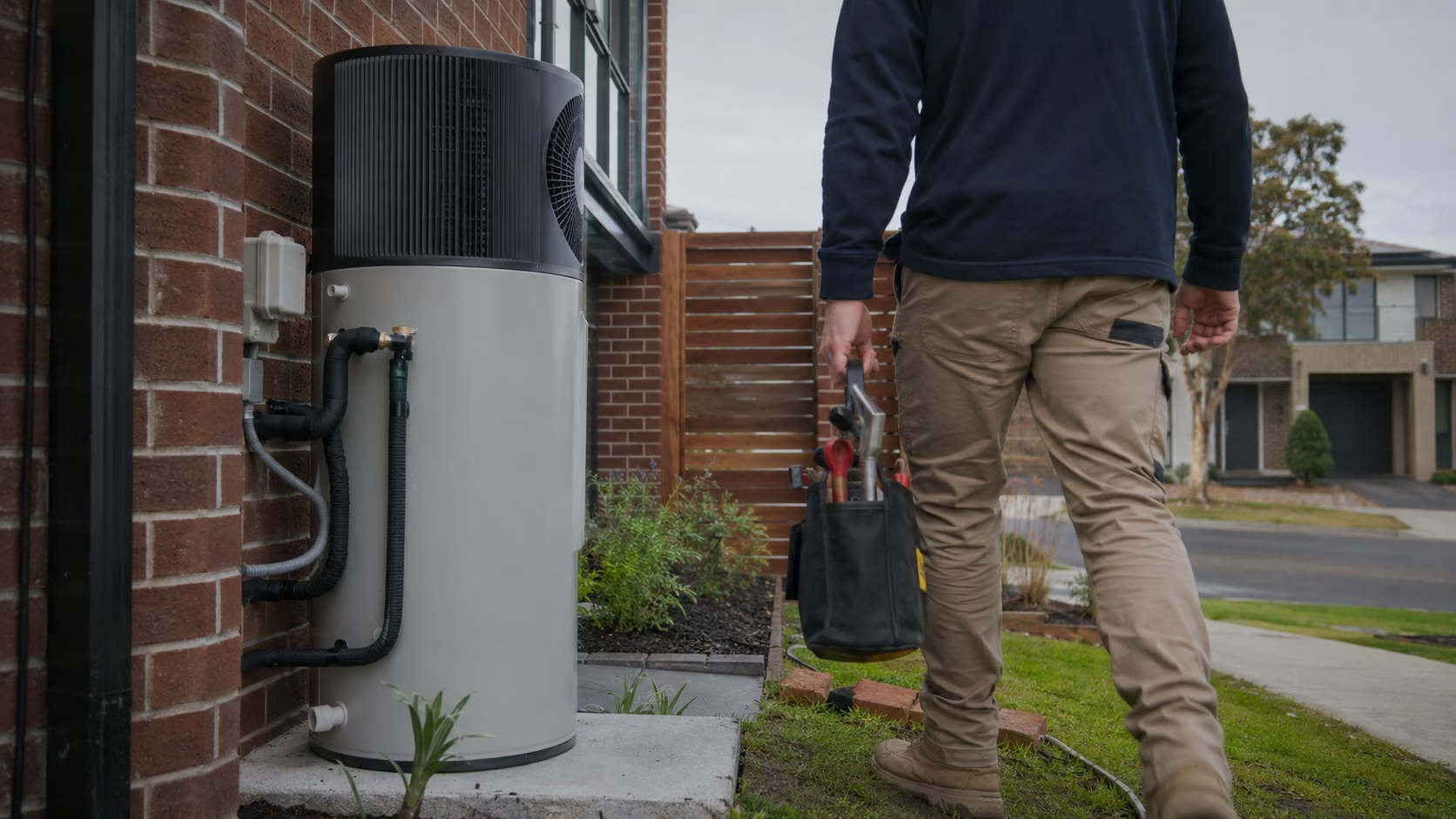
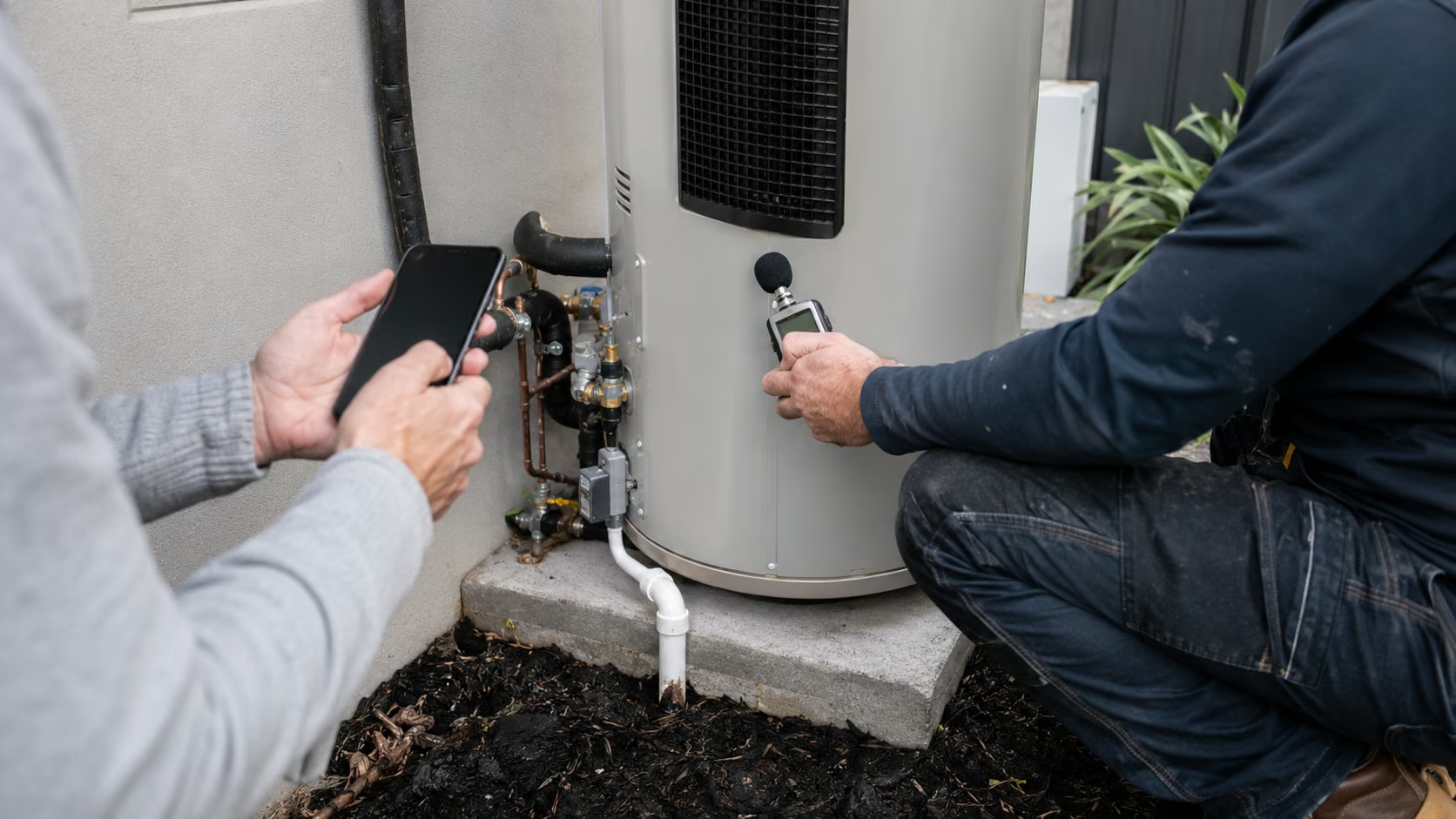
Call 0475 407 670 or send through the contact form. Tell us your situation, new install with quiet-placement priority, existing install with a noise issue, or comparing models for noise, and we'll quote with the noise considerations factored in.
Verify any plumber via the Building and Plumbing Commission licence search before booking.
Residential. Heat pumps for hot water are domestic appliances, treated similarly to air conditioners under most Victorian council bylaws. EPA Victoria's general residential noise framework applies, noise that's unreasonable in time or volume can be a nuisance issue, but there isn't a specific dB cap for individual heat pump units.
Technically yes; pragmatically maybe not. Unreasonable noise that disturbs neighbours during sleep hours can become a nuisance complaint regardless of whether your own household is unaffected. Setting the unit to run during the day or evening (avoiding 11pm-6am) is good practice unless you have a specific reason to run overnight.
Yes, modestly. A solid fence (Colorbond, fence panels, brick) typically reduces noise by 5-10 dB on the receiving side compared to no fence. Lattice or open-style fencing is much less effective. A solid fence plus distance plus vibration isolation is the practical noise-management combination for boundary installs.
First step is a friendly conversation, many noise issues resolve when the owner is aware. If that doesn't work, council noise officers can attend, measure, and assess against EPA Victoria reasonable-use guidelines. Formal nuisance complaints exist as a last resort but are typically slower than negotiated solutions.
Yes. As of 2026, Sanden CO2 and Reclaim units are widely rated as the quietest residential heat pumps. Mid-range Rheem, Rinnai, Stiebel Eltron units sit in the middle. Cheaper imported units tend to be louder, particularly older designs without inverter-driven compressors. The published dB rating is a reasonable guide; reviews and field data add useful context.
Slightly. Compressor mounts and vibration pads can age and compress, allowing more vibration transfer. Bearings in fans wear and can develop bearing noise. Refrigerant charge can drift, affecting compressor load. Annual or biennial service catches these before they become noise complaints.
Some modern units have a quiet-mode setting that runs the compressor and fan at lower speeds. This trades efficiency for noise reduction, slower output means longer running time. Useful overnight if scheduling around daytime isn't an option. Not all models have this feature.
A quick checklist to share with your plumber when you book: