Heat Pump Hot Water Noise: How Loud Are They and What Can You Do About It?
heat pump hot water noise: How loud is a heat pump hot water system? Typical decibel levels, where noise comes…
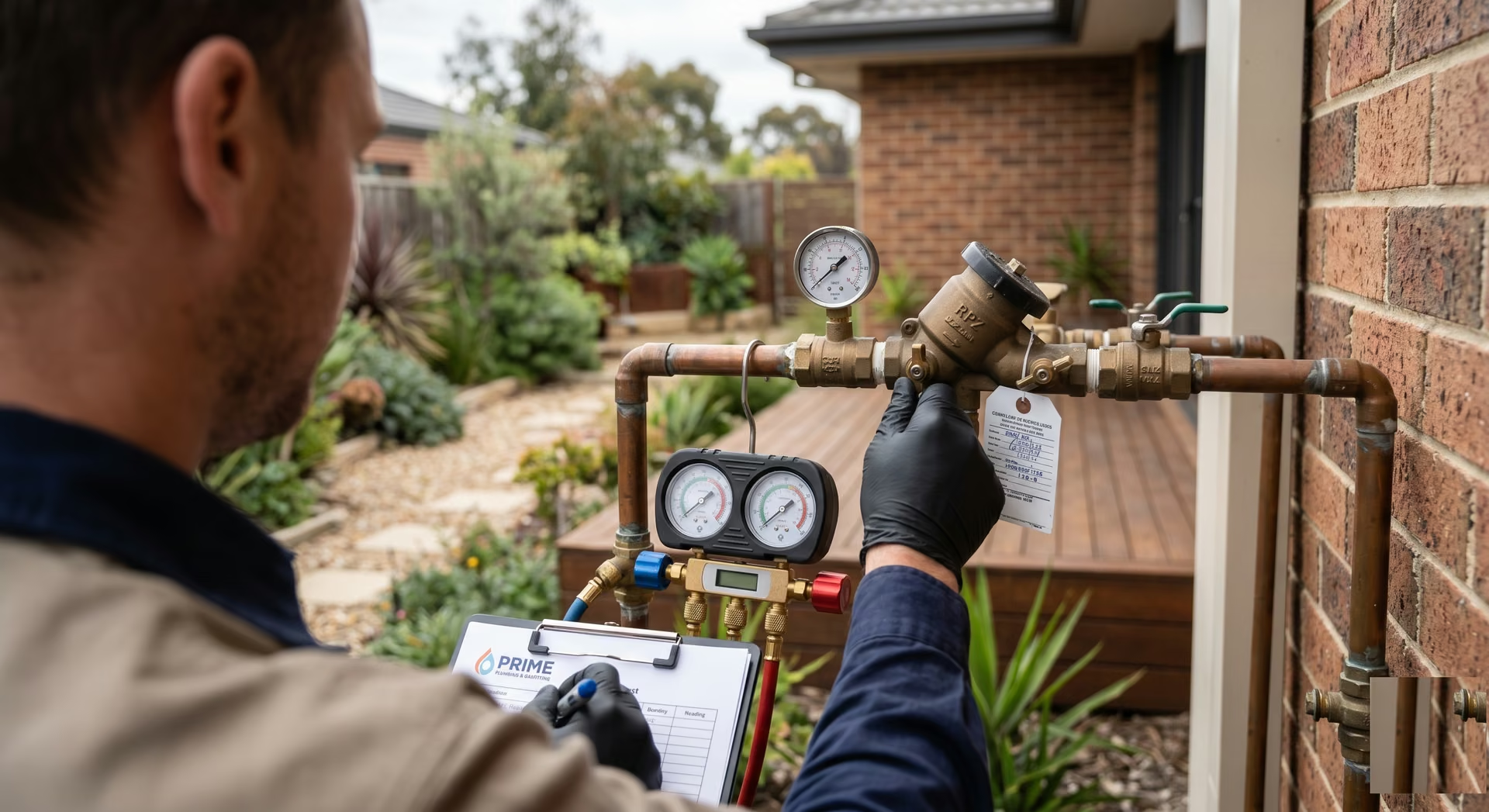
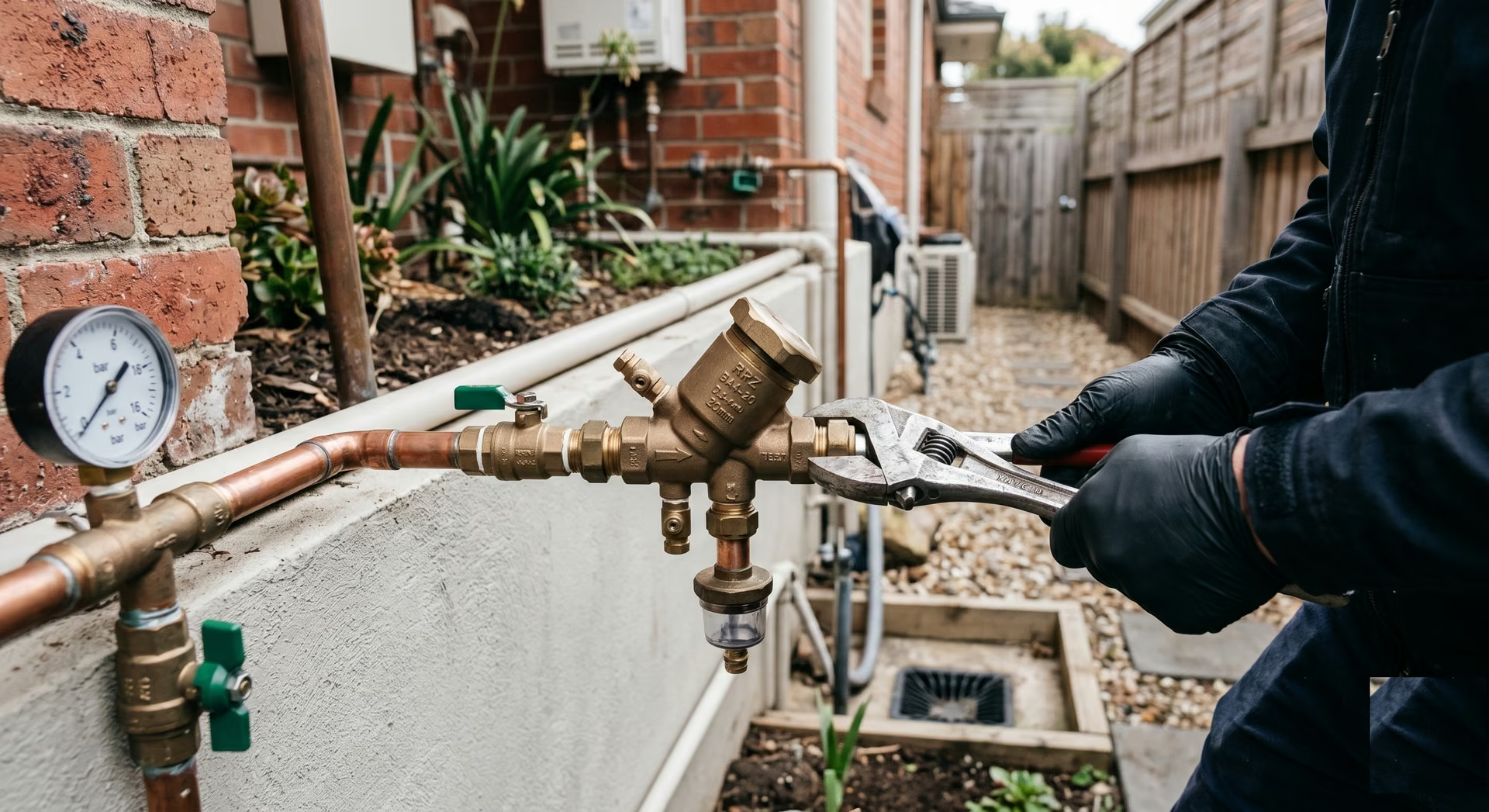
How Often Does Backflow Need to Be Tested in Victoria?, a Prime Plumbing & Gasfitting plain-English guide to how often does backflow need to be tested victoria for Melbourne homeowners. Below we cover what works, what doesn't, and when to call a licensed plumber.
Quick answer: Australian Standard AS 2845.3 requires annual testing of all testable backflow prevention devices (RPZ and DCV types) by an accredited plumber. The test report must be lodged with your water retailer: Yarra Valley Water, South East Water, or City West Water in Melbourne. If you skip testing, the retailer will issue compliance notices and can ultimately disconnect your water service. Failed devices must be repaired or replaced before being returned to service. Most commercial properties and many residential properties (with irrigation, fire service, or hazardous fixtures) need annual testing.
If your water retailer has sent you a backflow compliance notice or you're starting on a new commercial property, here's the testing schedule, what's involved, and what happens if you let it slip.
Australian Standard AS 2845.3, Water supply, Backflow prevention devices, Field testing and maintenance sets the testing frequency:
The 12-month frequency applies to every testable device on every property: not "any device, once a year" but each device tested annually on its own schedule.
Backflow devices wear over time. Common failure modes:
A device that passed last year may not pass this year. Annual testing is the regulator's chosen frequency to balance compliance cost against safety risk.
Your water retailer:
The retailer:
The Melbourne retailers are reasonably patient on compliance (1-2 reminder notices before escalation), but the test must eventually happen, there's no opt-out for a property with a registered device.
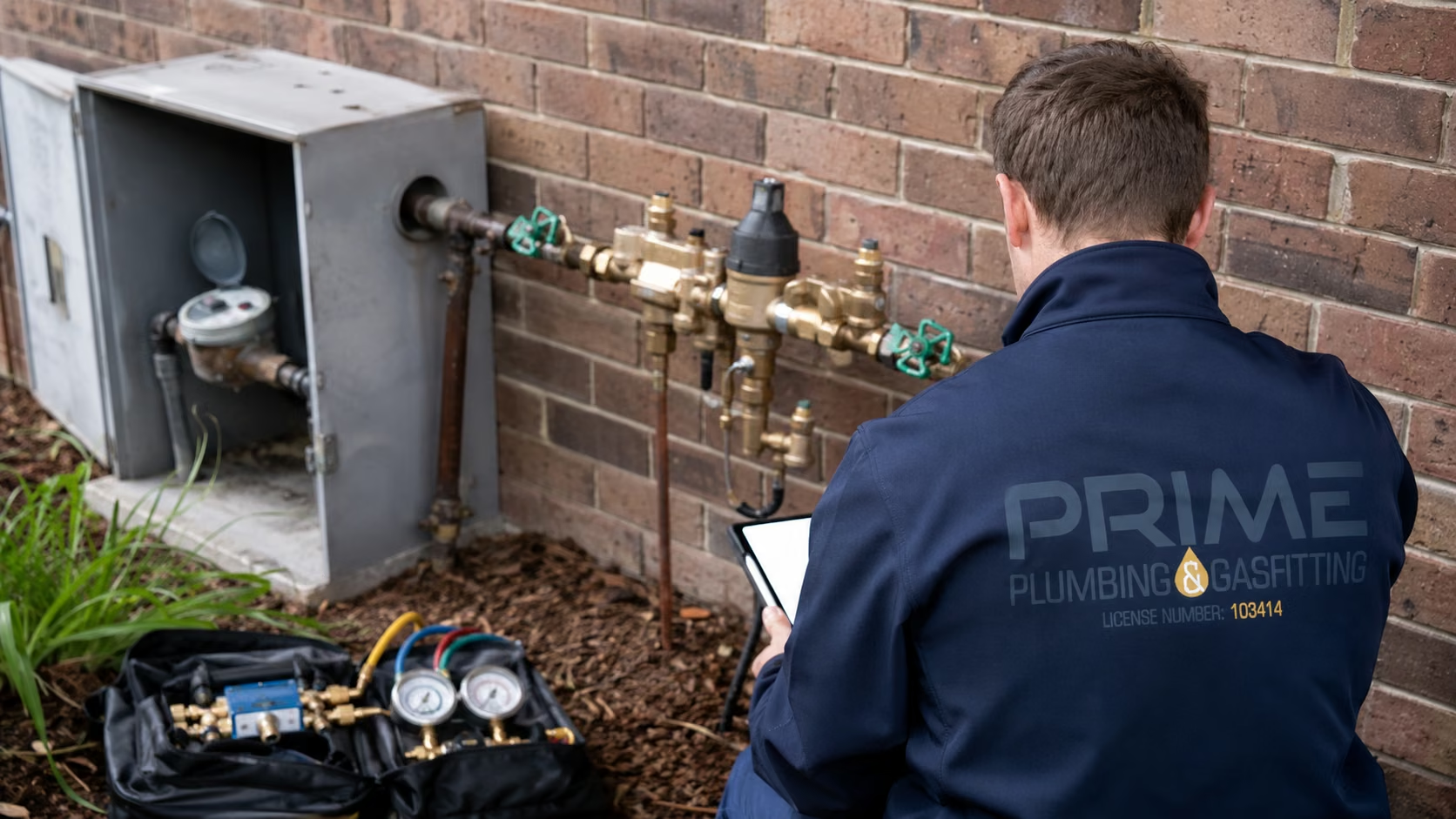
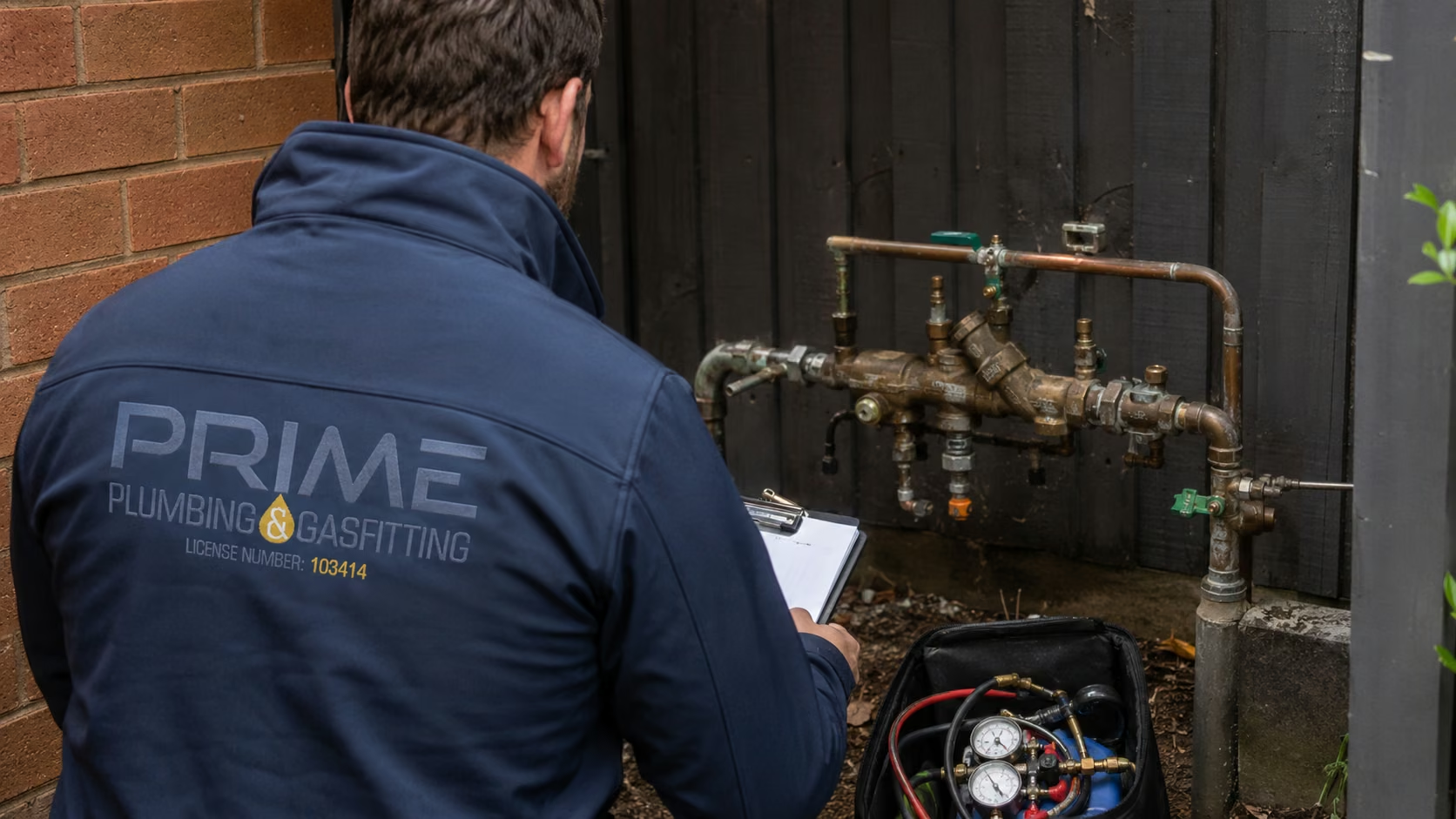
A typical RPZ test takes 15-25 minutes on-site once the plumber is in front of the device. The full sequence:
DCV tests are similar but skip the relief valve test (DCVs don't have one).
We see a few recurring patterns on properties that come to us mid-non-compliance:
New owner doesn't know about the device. Retailer notices go to the registered owner, if the records aren't updated promptly after settlement, notices go to the wrong person.
Fix: update your retailer with the new owner details promptly post-settlement, and book the next test as soon as the device is identified.
A previous tester retired or stopped offering the service, and the property never found a replacement. Notices accumulated unanswered.
Fix: book any backflow-accredited tester. Membership of the Backflow Prevention Association of Australia (BPAA) is a good baseline credential.
Lease ambiguity on whose responsibility it is. The default in most commercial leases is landlord pays for compliance testing on fixed plant; tenants pay for changes they trigger. But every lease is different.
Fix: read the lease carefully. If unclear, the property owner is the regulatory duty-holder regardless of recovery from tenant.
The plumber installed the device but didn't register it with the retailer. The retailer doesn't know it exists, so doesn't send testing notices, but the AS 3500.1 requirement to test still applies.
Fix: any new device install should include registration. We do this as part of new install jobs.
Book a backflow test if:
Prime Plumbing & Gasfitting performs AS 2845.3 backflow testing across Melbourne, across the South East Water service area (most of our work), Yarra Valley Water, and City West Water. See all suburbs we service
Send your address, retailer name (if known), and the device count and types (if known) through the contact form, or call 0475 407 670.
Related: What is backflow prevention? · Backflow Prevention Testing Melbourne · TMV Testing Melbourne
About the author
Alister Williams is the founder and lead plumber of Prime Plumbing & Gasfitting. He's been licensed under BPC #103414 for over a decade, is licensed for gasfitting with the Building and Plumbing Commission, is accredited with the Backflow Prevention Association of Australia, and is a member of the Master Plumbers Association of Victoria.
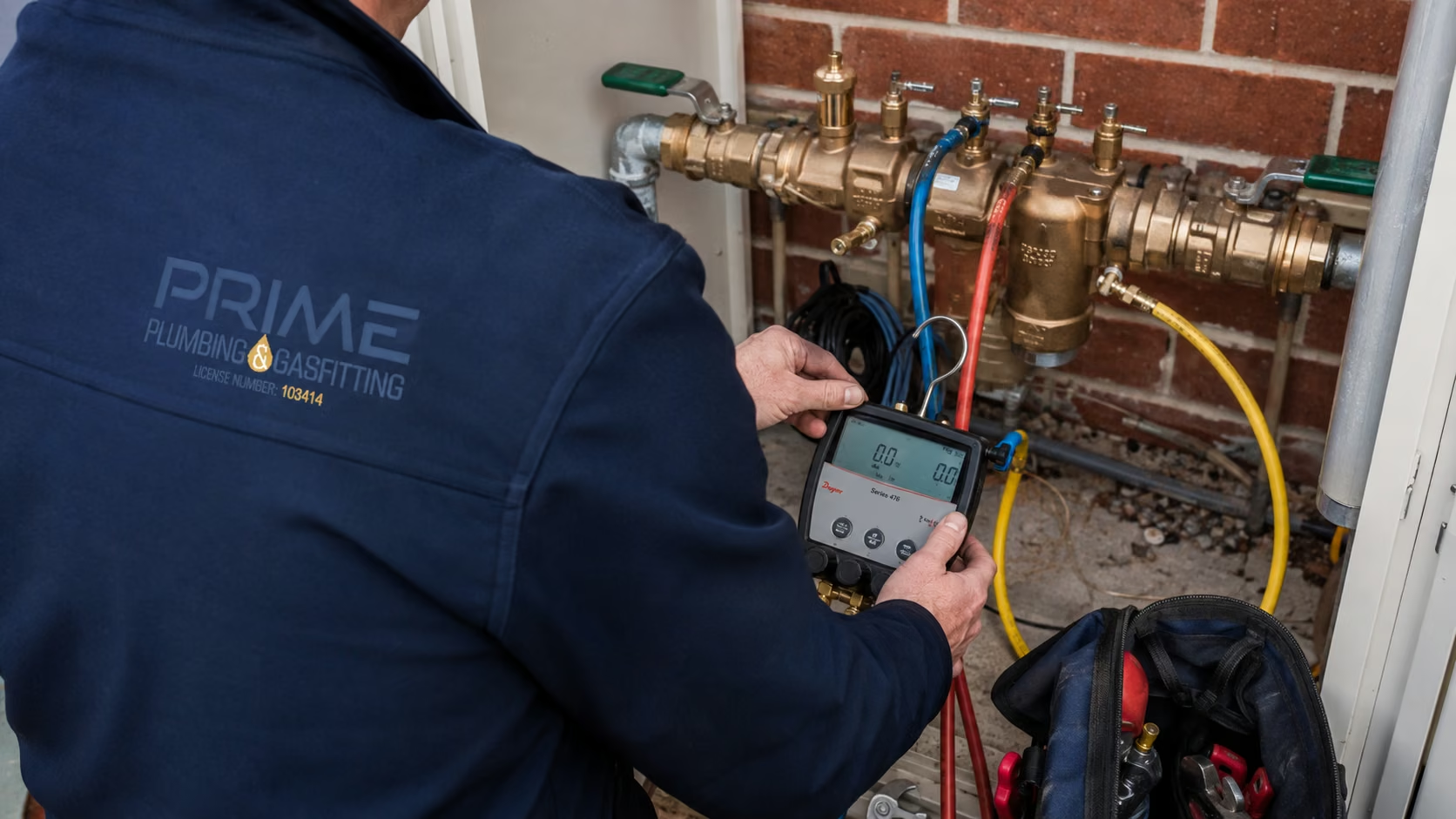
| Device type | Annual test? | Visual inspection? |
|---|---|---|
| RPZ (Reduced Pressure Zone) | YES, annual | Yes |
| DCV (Double Check Valve) | YES, annual | Yes |
| Single Check Valve | No formal test | Visual on plumbing visits |
| Atmospheric Vacuum Breaker | No formal test | Visual on plumbing visits |
| Hose Connection Vacuum Breaker | No formal test | Visual replacement at end-of-life |
| Pressure Vacuum Breaker | Optional (varies by hazard) | Visual minimum |
If you're not sure what type of device you have, the plumber can identify it on the first visit. The device usually has a visible nameplate showing make, model and type.
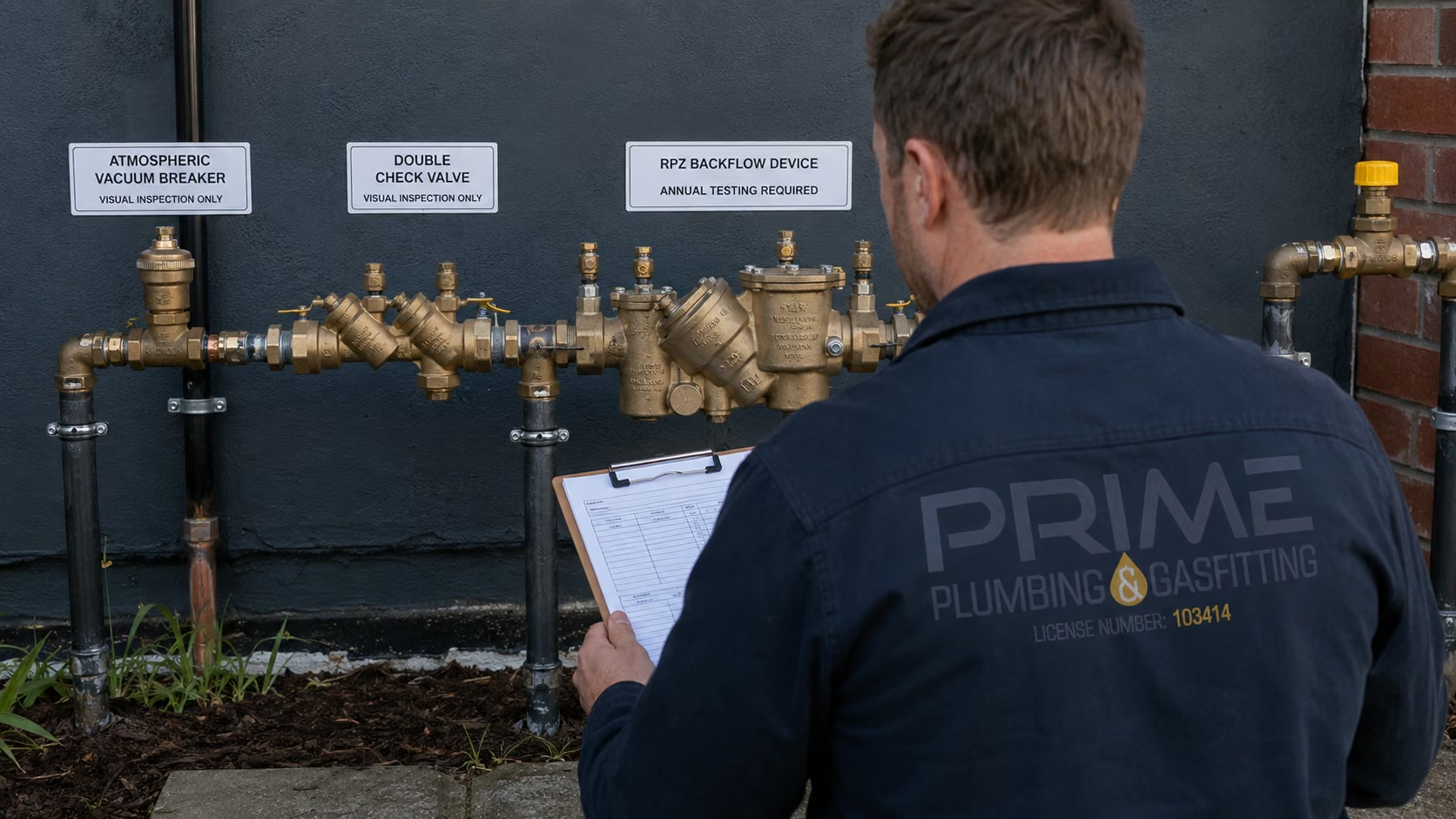
The escalation path Melbourne retailers typically follow:
In practice, most properties get tested somewhere between the courtesy reminder and the formal notice. If you've ignored a couple of notices, the retailer will eventually act.
Liability: beyond the regulatory side, a contamination event traced to a non-tested backflow device on your property is a serious liability issue. Insurance typically excludes consequences of non-compliance with regulated maintenance, and a public-water contamination claim is an enormous exposure.
Some plumbing problems are DIY-friendly; others need a licensed professional under Victorian law.
Anything involving gas, sewer drainage, hot water units, backflow prevention, or work behind tiled walls must be handled by a licensed plumber or gasfitter.
No. AS 2845.3 testing requires a plumber accredited by the Backflow Prevention Association of Australia (BPAA) or equivalent. Calibrated test equipment is also required (and recalibrated annually). The test report must be lodged through retailer-recognised channels.
Both, effectively. The retailer holds the central record by device serial number + property address. The local copy of the report is part of facility documentation. If you sell the property, the buyer's conveyancer can request the latest test report as part of due diligence.
Each tested annually. Most multi-device properties batch testing to a single visit per year, efficient for the plumber and for the property's record-keeping.
Yes, tests are valid for 12 months from the test date, so you can shift the cycle to align with your budget year by either testing slightly early one year or accepting a slightly longer gap once (with retailer notification).
It's taken out of service, repaired or replaced, re-tested, and the new test report lodged. If the device serves a critical function (e.g. fire service backflow), interim isolation may be required. Most repairs/replacements are completed within the same week as the failed test.
By postcode. Yarra Valley Water covers postcodes broadly NE of the Yarra; South East Water covers most of Prime's service area (3142, 3143, 3145, 3146, 3148, 3149, 3150, 3155, etc.); City West Water covers the inner west and CBD. Your existing water bill names the retailer.
Yes, most testing arrangements with us are ongoing annual contracts. You don't need to chase the next test; we book it on schedule based on the prior test date. Reduces admin and ensures no gap in compliance.
We don't list flat prices because:
Reasonable expectations:
We quote in writing first.

If you're unsure, Prime Plumbing & Gasfitting can inspect the issue and explain the options before any work starts. Call 0475 407 670 or request a quote online.