Prime Plumbing & Gasfitting

Burst Pipe? Here's Exactly What to Do Right Now

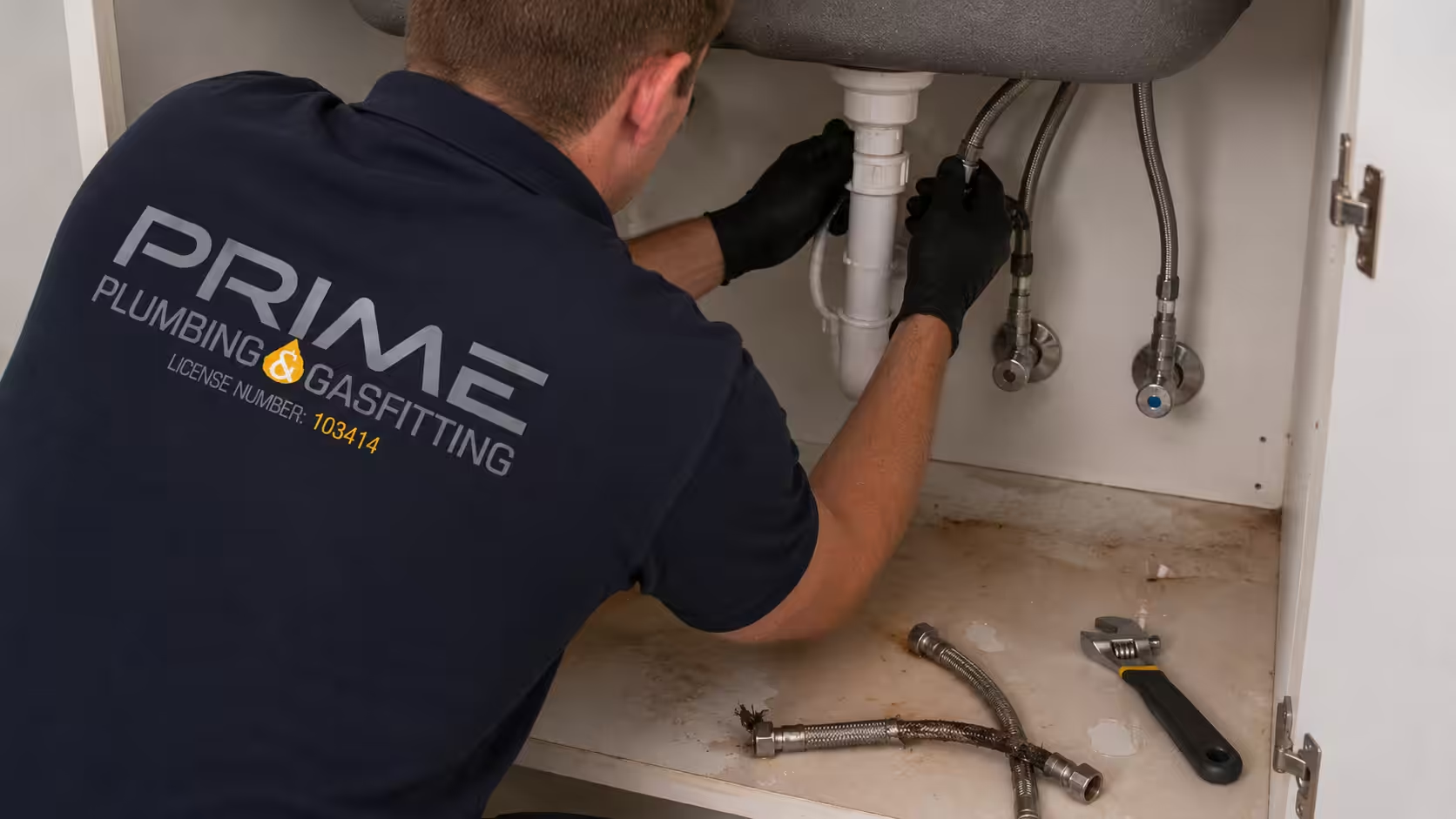
Australian licensed plumber working on burst pipe at a Melbourne home — Prime Plumbing & Gasfitting

Burst Pipe? Here's Exactly What to Do Right Now — a Prime Plumbing & Gasfitting plain-English guide to burst pipe what to do for Melbourne homeowners. Below we cover what works, what doesn't, and when to call a licensed plumber.

Quick answer: A burst pipe needs to be isolated within seconds, not minutes. Step one: shut off the water at the meter — turn the lever 90° clockwise. Step two: drain pressurised water by opening the lowest fixture (usually the laundry trough). Step three: isolate electricity if water has reached any electrical fixtures, switches, or appliances — kill the breaker rather than walking through wet rooms. Step four: move valuables away from where water is reaching. Step five: call a plumber with detail about location and what you can see. While you wait, photograph the damage for insurance, ventilate the area, and don't try to make repairs yourself — emergency clamps from a hardware store can fail under pressure and aren't a substitute for a licensed plumber's repair.

Stop the water first

If water is actively spraying or pouring into the house right now, the first 60 seconds matter more than anything else.

Find your water meter shut-off

The water meter is usually at the front of your property, near the boundary, in a small concrete pit with a plastic or metal cover. Lift the cover. The shut-off valve is the lever on the property side of the meter (the side closest to your house).

To shut off:

  • Turn the lever 90° clockwise, so it's perpendicular to the pipe
  • Water to the entire property is now off

Some older properties have a screwdriver-slot valve rather than a lever. Same principle — rotate clockwise until tight.

If you can't find or operate the meter shut-off:

  • Look for an internal shut-off (sometimes inside under the kitchen sink, in the laundry, or near the front door entry of the supply pipe)
  • For mains-supply emergencies, your water authority can shut your supply at the network — call them; in Melbourne it's Yarra Valley Water, South East Water, or City West Water depending on suburb

The mains shut-off stops new water arriving. Water already in the system will keep coming out of the burst until the system drains.

Drain the system

Once the mains is off, open the lowest fixture in the house — usually the laundry trough or an outside garden tap. This drains the pressurised water that's still in the pipes faster, reducing how much continues to leak from the burst.

Open multiple low fixtures if you can (laundry tap and outside tap), and leave the affected fixture open too. The system depressurises in 30-60 seconds with multiple drain points.

Isolate electricity if water has reached electrics

If water has reached:

  • An electrical outlet
  • A light switch
  • An appliance (washing machine, dishwasher, hot water unit)
  • A ceiling cavity above lights
  • Any wiring

Don't walk through the wet area. Go to the switchboard (usually outside near the front of the house, or in a meter box) and turn off the main switch — this kills all electricity to the house.

If you can't reach the switchboard without crossing a wet area, call 000 for an electrical emergency response. The fire brigade can isolate power safely.

This isn't an over-cautious step — water on electrical wiring is a real shock and fire risk, and turning off lights or switches as you walk through a wet room creates the spark that ignites a problem. Get to the switchboard via a dry path or get out of the house.

Move valuables and document

Once water is stopped and electrics are safe:

  1. Move valuables and documents away from where water has reached or might still drip
  2. Photograph everything — the burst itself, the surrounding damage, water levels, affected rooms. Insurance will want this.
  3. Open windows to start ventilation — wet drywall and timber dries faster with airflow
  4. Use towels/buckets to soak up standing water and slow the spread to dry rooms
  5. Lift any floor coverings (rugs, paper) that water might wick into

Do these things while you wait for the plumber, not before stopping the water.

Australian licensed plumber illustrating "move valuables and document" within Burst Pipe? Here's Exactly What to Do Right Now at a Melbourne home — Prime Plumbing & Gasfitting

What you should NOT do

  • Don't try to clamp the pipe yourself. Hardware-store emergency pipe clamps and self-amalgamating tape can hold momentarily but typically fail under sustained pressure, especially on copper or old galvanised pipes. The clamp gives you a false sense of security and a worse leak when it pops off.
  • Don't switch power back on until the affected wiring has been inspected by a sparky.
  • Don't pour drain cleaner down anywhere as a "fix" — caustic chemicals don't help burst pipe situations and can cause additional problems.
  • Don't flush toilets if the burst is on the supply line to a toilet — the cistern is empty, refilling will pull more water through whatever's broken.
  • Don't keep using fixtures elsewhere in the house — until the burst is repaired, the whole supply system is compromised.

Common causes of burst pipes

  • Frozen pipe (rare in Melbourne but possible in winter, especially in unheated cavities and under-floor pipes) — water expands as it freezes and splits the pipe
  • Old galvanised pipework — corroded internally over decades until the wall thickness fails
  • Old copper with internal corrosion or external damage from acid soils or condensation
  • Polypipe at compression fittings — joints can fail if not properly assembled or stressed
  • Water hammer damage — repeated shockwaves can stress fittings until they fail
  • External damage — nail through a pipe in the wall, screw into pipe behind a kitchen cabinet, vehicle running over a buried pipe
  • High water pressure — if your incoming pressure is over the AS/NZS 3500.1 limit (500 kPa), every pipe and fitting is stressed beyond design

Service area

Prime Plumbing & Gasfitting handles burst pipe emergencies across Melbourne's eastern, south-eastern, inner-east and bayside suburbs. See all suburbs we service →

Book emergency response

Call 0475 407 670 for active burst pipe emergencies. After-hours, expect honest ETA estimates rather than sales-pitch promises.

  • BPC #103414 — Plumbing Industry Commission licensed
  • Type A Gasfitter — registered with Energy Safe Victoria
  • 4.8 stars on Google
  • Compliance Certificate issued where the work requires one
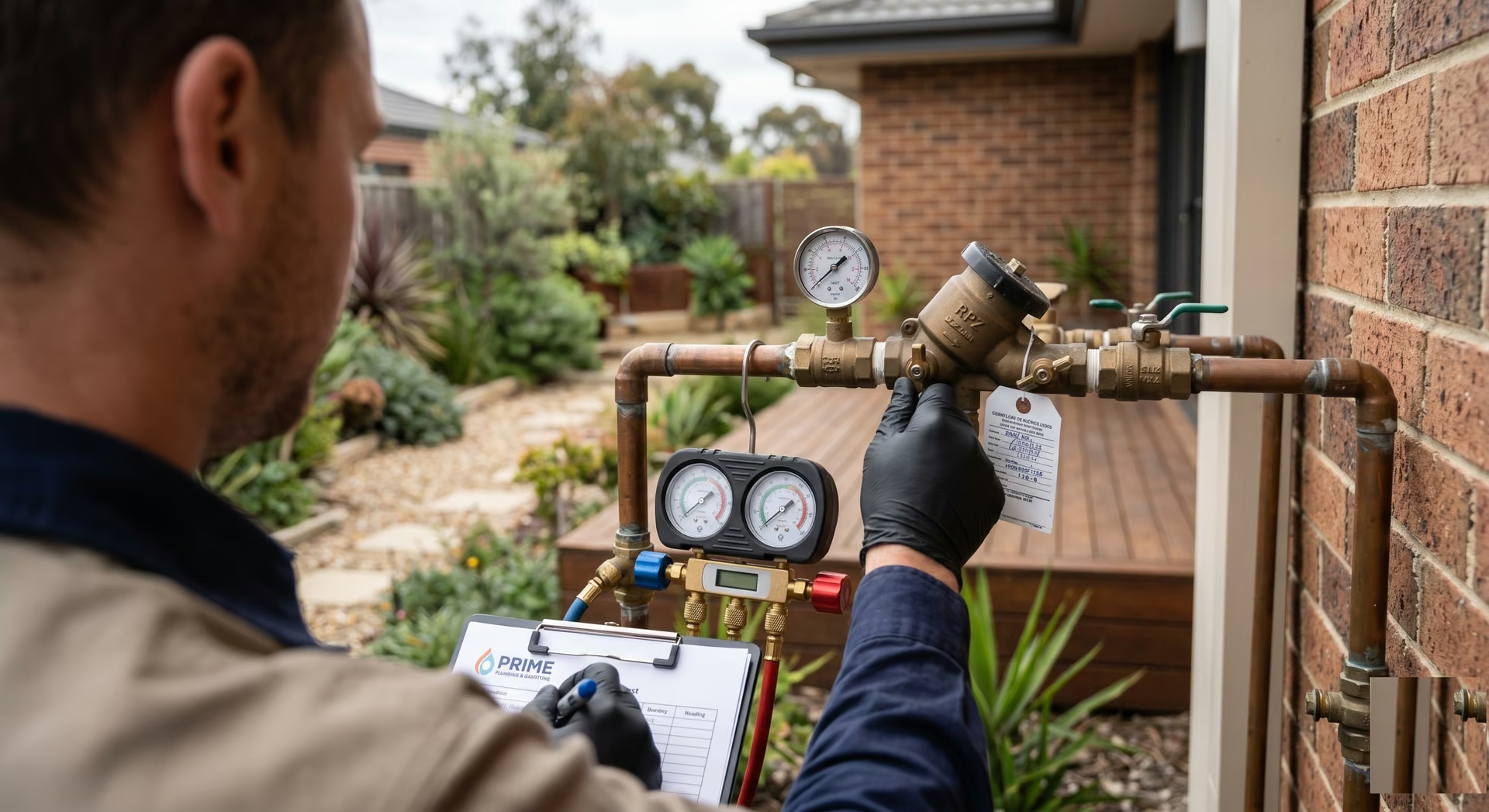
Australian licensed plumber illustrating "what you should not do" within Burst Pipe? Here's Exactly What to Do Right Now at a Melbourne home — Prime Plumbing & Gasfitting

Call a licensed plumber

When you call:

  • State location — "burst pipe in the laundry wall, water sprayed for 5 minutes before I shut the main"
  • State what you've done — "main is off, system drained, electricity isolated"
  • State urgency — actively flooding vs. controlled
  • Your address with cross-street if helpful
  • Your phone number for return calls

The plumber can give you a realistic ETA based on these details. They may also walk you through additional stabilisation steps over the phone while in transit.

For burst pipe response in Melbourne, our burst pipes service covers emergency callout, repair, and pipe replacement.

Australian licensed plumber illustrating "call a licensed plumber" within Burst Pipe? Here's Exactly What to Do Right Now at a Melbourne home — Prime Plumbing & Gasfitting

What a plumber will actually do

Australian licensed plumber illustrating "what a plumber will actually do" within Burst Pipe? Here's Exactly What to Do Right Now at a Melbourne home — Prime Plumbing & Gasfitting

Once on site, the typical sequence:

  1. Confirm the burst location and assess the surrounding damage
  2. Isolate the affected section — sometimes possible with sub-isolation valves rather than keeping the whole house off-water
  3. Cut out the failed section — copper, polypipe, or galvanised
  4. Replace with new pipe and fittings — usually copper or PEX depending on existing pipework and access
  5. Pressure test the repaired section before re-pressurising the whole system
  6. Restore mains and check for additional leaks (sometimes one burst signals other weak points)
  7. Quote any longer-term work — if the burst pipe is part of a wider issue (corroded galvanised, end-of-life copper), additional pipe replacement may be sensible

Total emergency repair time: typically 1-3 hours for a single accessible burst. Concealed bursts (in walls, under slabs, in roof cavities) take longer because the wall/ceiling/floor needs to be opened up.

When to call a licensed plumber

For an active burst pipe, immediately. For developing concerns:

  • A pipe section that's "weeping" slightly — early stage failure before the full burst
  • A pipe section that's making rumbling/cracking sounds — water hammer stress damage
  • A high water bill that the [meter test](/) confirms as a leak somewhere
  • A stained or damp section of wall or ceiling that's getting worse

The Victorian Building Authority maintains a plumbing licence search so you can verify your plumber is licensed.

Frequently asked questions

The water damage is usually covered by home/contents water-damage cover, subject to your policy. The pipe repair itself is sometimes covered (especially for sudden bursts caused by a definable event) and sometimes considered maintenance (especially for old pipes that gradually failed). Document everything with photos and a written description before clean-up. Submit your claim early and get the loss adjuster's view on what's covered.

Visible water mops up immediately, but structural drying (drywall, floor underlay, timber framing) takes 3-7 days with good ventilation, longer in winter. For significant damage, a restoration company with industrial dehumidifiers and air movers can speed it up. If the wet area is in a wall cavity, drying can take weeks — and trapped moisture leads to mould.

Not necessarily. If the pipe repair cost is below your excess and there's no damage to claim, paying out of pocket avoids a claim record on your policy. If the damage is significant, claim. Worth a quick call to your insurer to discuss without formally lodging.

Melbourne winters rarely freeze internal pipes, but exposed pipework in unheated areas (under-floor crawl spaces, external walls without insulation, exterior taps) can freeze in cold snaps. If you're going away in winter, consider leaving the heating on a low setting, dripping a tap to keep water moving, or having exposed pipes wrapped with foam insulation.

Lower urgency, but still book quickly. A "just dripping" pipe is a developing failure that often progresses to a full burst within days or weeks. Catching it at the drip stage means a cleaner repair, less water damage, and a planned visit rather than an emergency callout.

Not without a plumber's check. The pipe might appear to have stopped leaking because the water pressure dropped (system drained) — turning the mains back on re-pressurises and can produce more water flow than before. Get a plumber to inspect, repair, and pressure-test before re-pressurising.

Burst pipe repair on metallic pipework (copper, galvanised) requires soldering or compression fittings; on plastic (PVC, polypipe) it needs cement joining or compression. All of it requires licensed plumbing in Victoria for any work that affects the supply pressure system. Even if you're handy, the wrong repair often fails under pressure and produces a worse second burst. The cost difference between DIY parts and a professional repair is usually small compared to the consequences of a failed DIY repair.

How much does an emergency burst pipe repair cost?

Indicative ranges only — depends on burst location, accessibility, time of day, pipe type, and whether wall/ceiling repair is needed:

  • Simple emergency repair (visible pipe, daytime): typically $400-$800
  • Emergency repair (concealed pipe, daytime): typically $700-$1,500 (plus wall/ceiling reinstatement)
  • After-hours emergency: add typically $250-$450 callout fee plus elevated hourly rate
  • Pipe section replacement (a metre or two): typically $500-$1,200
  • Whole supply line replacement (where multiple bursts indicate end-of-life pipework): typically $3,500-$8,000+

We always quote in writing first. For after-hours work, the make-safe attendance is typically billed; the full repair often happens during business hours the next day.

  • When did the issue start?
  • Is it isolated to one fixture or multiple areas?
  • Are there any visible leaks, smells or unusual sounds?
  • Have you turned off the relevant isolation valve?
Alister Williams, founder of Prime Plumbing & Gasfitting
Please enable JavaScript in your browser to complete this form.
Click or drag files to this area to upload. You can upload up to 20 files.
You can upload files like: JPG, JPEG, PNG, HEIC.

Related blogs

Prime Plumbing & Gasfitting
Prime Plumbing & Gasfitting, Melbourne’s trusted name in professional plumbing and gas services. I’m Alister Williams, a licensed plumber with over ten years of industry experience, proudly serving homes and businesses across Melbourne.

Support

  • Melbourne
  • admin@primeplumb.com.au
  • 0475 407 670
Copyright © 2025 Prime Plumbing & Gasfitting. all rights reserved.
BPC Licence No. 103414  ·  ABN 12 721 359 467  ·  Fully Insured  ·  Serving Melbourne since 2014