Heat Pump Hot Water Noise: How Loud Are They and What Can You Do About It?
heat pump hot water noise: How loud is a heat pump hot water system? Typical decibel levels, where noise comes…

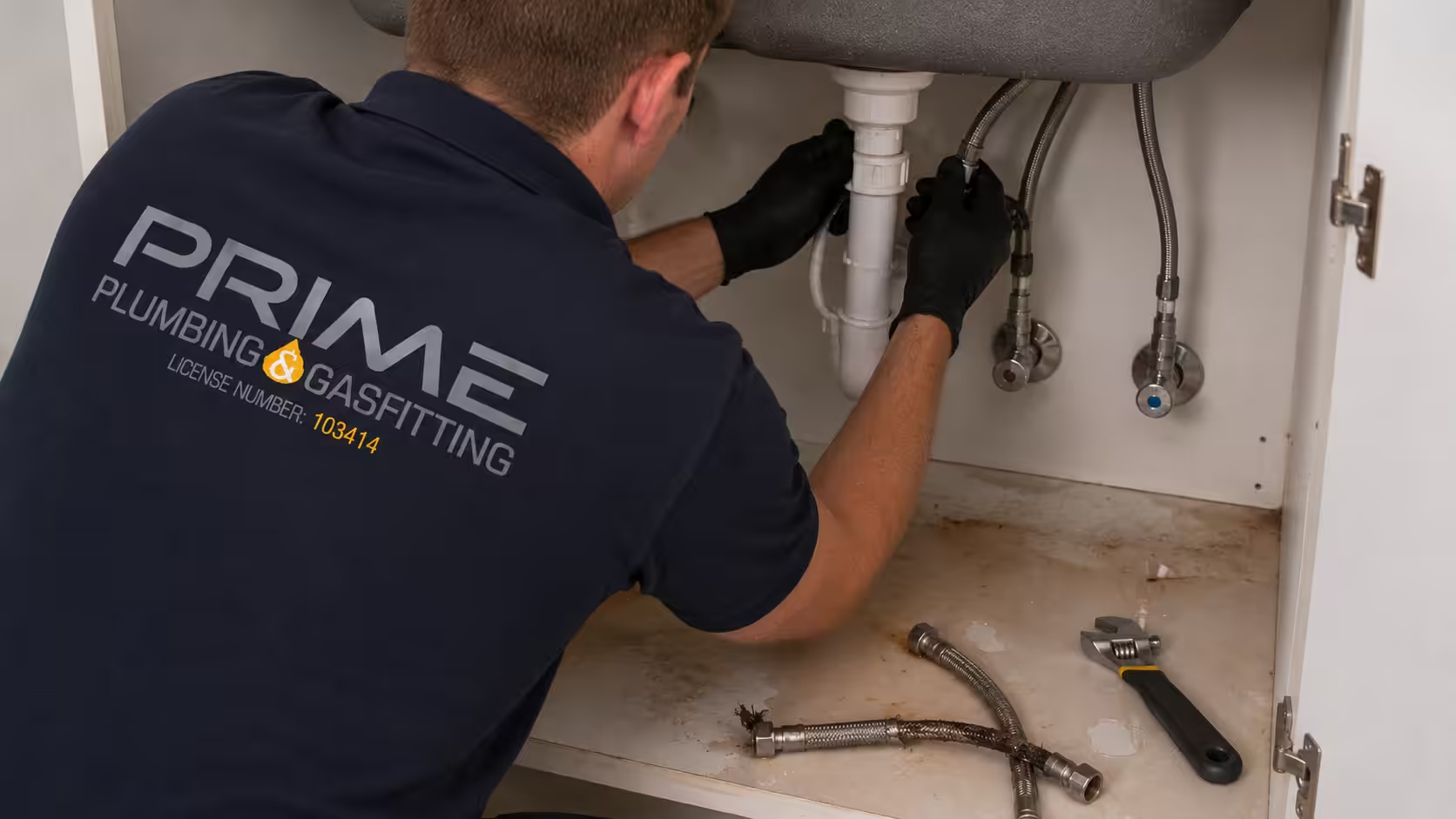
How to Fix a Leaking Tap (And When to Call a Plumber), a Prime Plumbing & Gasfitting plain-English guide to how to fix a leaking tap for Melbourne homeowners. Below we cover what works, what doesn't, and when to call a licensed plumber.
Knowing how to fix a leaking tap saves you a plumber's callout fee on a job that takes most people 15-40 minutes once you have the right parts. This guide covers the two main tap types you'll find in Australian homes, the step-by-step process for fixing each one, the tap washer replacement detail for compression taps, and the moments when DIY becomes a false economy.
Quick answer: Most leaking taps in Australian homes are fixed by replacing one of two parts: the rubber washer (in older compression taps) or the cartridge (in modern mixers). The whole job takes 15-40 minutes if you have a basic tool kit and the right part. Stop before you start if: the leak is at the base of the tap not the spout (different problem), the supply isolation valve is stuck or absent, the tap is on a mains-pressure line with no pressure-limiting valve, or you can't physically reach the supply isolators without shifting the cabinet. In those cases the time to call a plumber is now, not after you've made it worse.
Before you reach for a spanner, identify what type of tap you have. The fix is completely different for each, and most "tap leaks won't stop" forum posts come from people working on the wrong type.
Two handles, each turns a few times when you open and close it. Found in older Australian homes, laundry tubs, garden taps, and the cheaper end of bathroom basin taps. The fix is replacing the washer: a small rubber disc inside the tap that seats against the valve seat.
One handle that controls both temperature and flow. Standard in modern kitchen and bathroom fit-outs since ~2000. The fix is replacing the cartridge: a sealed unit inside the handle assembly that combines hot/cold mixing and on/off.
Single handle that turns just a quarter-turn from off to on. Less common in Australia. The fix is replacing the ceramic disc cartridge: similar to a mixer cartridge but a different form factor.
If the handle turns multiple full rotations to open or close, it's compression. If the handle lifts up and rotates, it's a mixer. If it's a quarter-turn-only handle, it's a ceramic disc tap.
Worth knowing before you start. Under the Plumbing Regulations 2018 (Victoria) and the Building Act 1993, repairing an existing tap on an existing fitting, washer replacement, cartridge swap, gland packing, is treated as minor maintenance, not regulated plumbing work. So as an owner-occupier in your own home, you're allowed to do it.
The lines you can't cross:
One thing worth knowing: if a DIY tap repair fails and causes water damage to floors or cabinetry, some Victorian home insurers will decline the claim because the work wasn't done by a licensed tradesperson. Policies vary, check your PDS before doing the work on any tap where a failure could flood the place.
Tools needed: adjustable shifter (or basin spanner for awkward bathroom taps), Phillips screwdriver, replacement washer (Bunnings and most hardware stores carry assorted-size packs for under $10).
Step 1: Shut off the water supply. Find the isolation valve under the basin/sink, a small in-line tap on the supply line. Turn it off. If there's no isolator, turn off the mains tap at the meter. If you can't shut the water off cleanly, stop here and call a plumber.
Step 2: Drain the tap. Open the tap you're repairing fully so the line behind it drains. A bit of residual water will weep out, have a towel ready.
Step 3: Remove the handle. There's usually a small button or cap covering a Phillips-head screw at the top of the handle. Pop the cap, undo the screw, lift the handle off.
Step 4: Undo the gland nut. Under the handle is a hex nut (the gland nut). Use the shifter to undo it anti-clockwise. Once it's free, lift out the headworks (the spindle assembly).
Step 5: Replace the washer. At the bottom of the spindle is a small jumper valve held with a screw, the washer sits underneath. Undo the screw, lift out the old washer, drop the new one in (same size, bring the old one to the shop if you're unsure), put the screw back.
Step 6: Reverse the assembly. Headworks back in, gland nut tightened (firm, not crushing, you can crack the body if you over-tighten), handle back on with its screw + cap.
Step 7: Turn the water back on slowly + test. Open the supply isolator gradually so any trapped air doesn't hammer the line. Open the tap, check there's no weep from anywhere on the body.
If the tap still leaks: the valve seat (the brass surface the washer presses against) is worn or pitted. A washer can't seal against a damaged seat. You can re-grind it with a tap reseating tool (sold at hardware stores for $40-$60), but if the body is old or you're not confident, replacing the whole tap is the durable fix.
Tools: adjustable shifter, hex/allen keys (often a 2.5mm or 3mm), maybe a strap wrench for stubborn caps, replacement cartridge to suit your tap brand.
The critical step is matching the cartridge. Different brands use different cartridge dimensions. Your options:
Step 1: Shut off the water supply (as above, isolator under the sink).
Step 2: Remove the handle. There's usually a small hex screw under a cap on the front or side of the handle. Undo it, slide the handle off.
Step 3: Undo the chrome cap. Below the handle is a chrome decorative cap. Some unscrew by hand; others need a strap wrench (don't use shifters on chrome, they'll scratch).
Step 4: Remove the cartridge retaining nut. Use the shifter to undo the nut holding the cartridge in. Lift the cartridge out, it's keyed in a specific orientation so note how it sits.
Step 5: Drop the new cartridge in. Orient it the same way the old one came out. Re-tighten the retaining nut firm but not crushing. Put the chrome cap back, handle back, screw back.
Step 6: Turn the water on slowly + test. Open the supply isolator gradually, run the tap through hot and cold, check for leaks at the body + the supply connections.
If the new cartridge leaks too: either it's not seated right (re-do step 5), or you've got the wrong cartridge (return to the shop with the old + new for comparison).
Most Melbourne plumbers price a single leaking-tap repair in the $150-$280 range, depending on:
If multiple taps are leaking in the same house, most plumbers will give a per-tap discount for doing them in one visit. We charge by the visit + parts; ask for a fixed-price quote at the call. Our leaking tap repair service covers compression-tap washer work, mixer-tap cartridge swaps, and full tap replacements across most Melbourne suburbs. If your problem is actually a blocked drain rather than a leaking tap (gurgling, slow draining, water backing up), see our blocked drain repair page instead.
Building a basic plumbing toolkit costs about $80 and pays for itself the first time:
For mixer cartridges, don't buy "universal" packs, they rarely fit Australian brands. Source the specific cartridge when you need it.
If reading the above made you think "I'll book a plumber instead", that's a perfectly reasonable call. Most of our leaking tap repair jobs are done in under an hour, fixed-price quote at the door, and we carry the common Australian cartridge sizes on the van.
Call 0475 407 670 or send your address through the contact form, we'll quote a fixed price before any work begins.
A leak at the base of the tap (where it meets the basin or countertop) is a different problem entirely. It usually means:
This needs the tap removed and refitted properly. You'll need access under the basin, the right size spanner, replacement seals to suit your tap brand, and the patience to work upside-down in a cabinet. Most homeowners book a plumber for this one, the time saved is worth more than the call-out fee.
Some plumbing problems are DIY-friendly; others need a licensed professional under Victorian law.
Anything involving gas, sewer drainage, hot water units, backflow prevention, or work behind tiled walls must be handled by a licensed plumber or gasfitter.
The washer (compression tap) or cartridge (mixer) isn't sealing. That's the most common cause of a tap that drips when fully closed. Washer/cartridge replacement fixes it.
Either the hot-side washer is more worn (taps are often used unevenly, hotter water is harder on rubber) or the hot supply pressure is higher than cold. Replace the hot-side washer; if it recurs, get the supply pressures checked.
Over-tightening compresses the gland packing past its sealing point, it now leaks past the spindle. Loosen the gland nut a little, or replace the gland packing if it's deformed.
Yes. A "small drip" at one drip per second wastes about 15 litres a day, 5,500 litres a year. Your water bill, the wear on washers caused by chronic dripping, and the calcium build-up on the spout all add up. Fix it.
Usually yes for compression taps, they sell assorted-size packs that cover all standard Australian sizes. For mixer cartridges, no, go to a plumbing supplier with the brand details.
If the tap body is over 15 years old, corroded inside, or you've repaired it twice already, replace it. A new mid-range mixer tap is $150-$400 + about an hour's install. A repair is $30-$80 in parts but only a 3-5 year fix on an aging body.
A quick checklist to share with your plumber when you book:

If you're unsure, Prime Plumbing & Gasfitting can inspect the issue and explain the options before any work starts. Call 0475 407 670 or request a quote online.