Heat Pump Hot Water Noise: How Loud Are They and What Can You Do About It?
heat pump hot water noise: How loud is a heat pump hot water system? Typical decibel levels, where noise comes…


When Leaking Taps Signal Something Bigger, a Prime Plumbing & Gasfitting plain-English guide to leaking tap Glen Waverley for owners of older brick-veneer homes built between the 1960s and 1990s. Below we cover when a leak is just a washer, when it's an early signal of system-wide wear, and the diagnostic walk a licensed plumber does in a home of that age.
Quick answer: A leaking tap on a single fixture in an isolated location is almost always a washer or cartridge issue, cheap to fix, see our leaking tap repairs page. Multiple leaks across fixtures developing within months of each other usually points to over-pressure on the mains or end-of-life copper supply lines, that's the bigger diagnostic this page covers.
Most leaking taps in Glen Waverley homes are exactly what they look like: a worn washer or cartridge in one fixture, easily fixed, no broader meaning. The signals that it's a localised issue:
For these, the fix is straightforward: washer replacement (which Schedule 4 of the Plumbing Regulations 2018 explicitly permits homeowners to do) or cartridge replacement (licensed work, typically $200 to $400 for a mixer cartridge in Glen Waverley).
The picture changes when multiple leaks appear in the same home within a short window. Three patterns we see regularly in 1970s-90s Glen Waverley brick veneer:
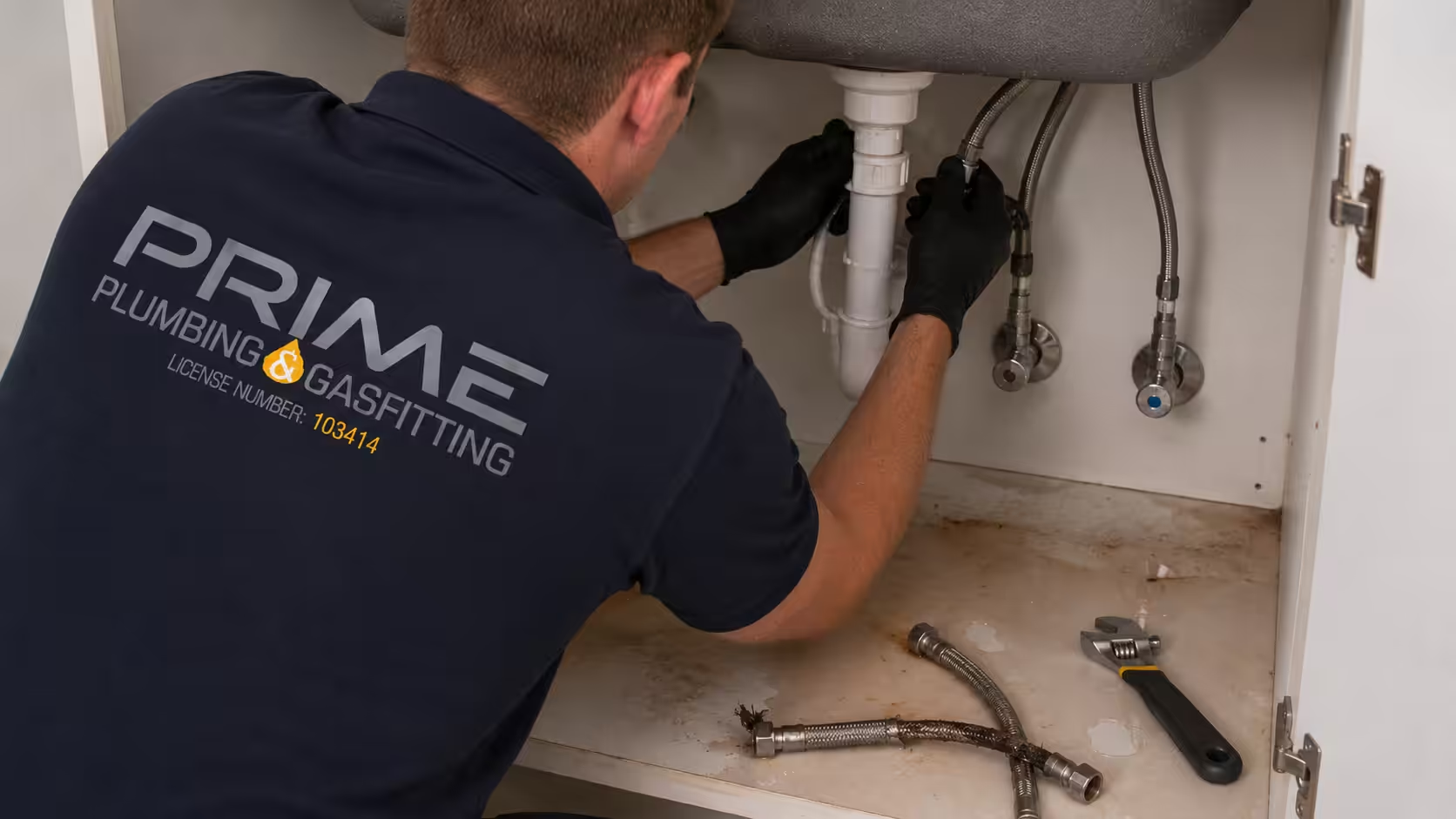
Stainless-steel braided flexi hoses (the supply lines under sinks and behind toilets) have a 10-year service life. They don't gradually weaken, they're fine, then suddenly catastrophic failure with a high-pressure spray.
In a home where all the flexis were installed at the same time (typical of a single renovation or original build), they reach end-of-life simultaneously. The signal: a small drip from one flexi connection, then another one weeks later. By the time the third one shows symptoms, you're at meaningful risk of catastrophic failure on any of them.
The fix: replace all flexis as a batch ($150 to $300 for a typical 3-bedroom home, takes 1-2 hours). Worth doing proactively at year 8-9 rather than reactively at year 11-12.
Brass alloys used in plumbing fittings before about 1990 can lose zinc internally over decades (called dezincification). The fitting looks fine externally but weakens from inside. In Glen Waverley homes with original brass fittings still in service, the failure pattern is: weeping joints behind walls (sometimes invisible until paint stains appear), or sudden failures at compression fittings.
The signal: damp patches appearing on walls or in cabinet bases over months, multiple small leaks at different brass connections.
The fix: sectional replacement of the affected fittings with modern lead-free brass or copper. We'll typically replace the entire affected circuit rather than just the one failed fitting, the others on the same age cohort are likely close to failing.
Copper pipework installed with lead solder (standard in Australia until 1989) often fails at the joint after 30-40 years. The solder slowly cracks under thermal cycling, water sits in the micro-crack, and you see a slow weep on the outside of the joint over months before the joint opens fully.
The signal: small damp patches around visible copper joints, especially in areas with temperature variation (under hot water unit, behind washing machine, on copper runs in unheated wall cavities).
The fix: sectional repipe with modern lead-free copper joints, often combined with a lead water test if the affected pipework serves a kitchen tap. Cost varies widely based on access.
When a customer in Glen Waverley calls us about leaking taps and we suspect the broader pattern rather than a single washer issue, the walk we do covers:
Each leak gets identified: is it at the tap (washer/cartridge), at the connection (flexi or compression fitting), at the wall (in-wall pipework), or under the floor? The location tells us what failure mode we're looking at.
Year built, year of any significant renovation, year of any plumbing upgrades the owner remembers. A 1975 home with original kitchen but a 2010 renovated bathroom is two different plumbing eras under one roof.
Every flexi hose in the home gets a quick visual check. Date stamps on the braid (most flexis have manufacture year), visible kinks, any sign of weeping at the connections. Flexis past 10 years go on the replacement list regardless of current condition.
Isolation valves under sinks, the tee at the hot water unit, any visible compression fittings. Pre-1990 brass tends to discolour at the joint faces (greenish or whitish residue) before it fails.
Age, pressure relief valve condition, any damp around the base or supply connections. Hot water unit replacement is the right time to upgrade the immediate surrounding pipework.
Looking for hidden leaks. Damp patches around the kitchen, bathroom, laundry, and behind the washing machine. Light staining on ceilings under upstairs bathrooms.

Original plumbing in these homes is usually copper. Issues at this age:
Plumbing in these homes is typically:
Generally fine plumbing, modern copper with lead-free solder, modern brass alloys, PVC sewer. Issues in this age range tend to be flexi hose failures and isolated cartridge failures rather than systemic.

Some indicative ranges for proactive plumbing work in a typical 1970s-90s Glen Waverley brick veneer home:
For most owners, doing flexi replacement at year 8-9 (proactively) saves the $400 to $800 callout cost of an emergency flexi failure that floods a cabinet.


A few things people often expect to see on a "plumbing audit" list but that we don't recommend chasing unless there's a specific issue:
Not every leak needs immediate intervention, but these patterns are worth a same-week call rather than waiting:
The Building & Plumbing Commission maintains a plumbing licence search so you can verify your plumber is licensed before any work.
Most flexis have a manufacture date stamped on the braid (year and sometimes month). If it's 8+ years old, replacement is sensible regardless of visible condition. Visible warning signs: braid showing rust spots, any kink or sharp bend, any moisture at the fitting end. Flexis fail catastrophically when they fail, proactive replacement at $150 to $300 is cheaper than the cabinet flood.
Lead leaches into water that sits in the pipework for hours. Risk from a tap that's been flushed for 20-30 seconds before use is generally low. Risk is meaningfully higher for water that's been static overnight, for cooking water, and for infant formula. A water test ($50 to $120) tells you definitively whether the concentration warrants intervention.
Dezincification is internal, externally they look identical to a healthy valve. The failure mode is sudden: the valve either won't operate (seized internally) or fails under pressure with a small leak that quickly escalates. In a home where multiple valves are from the same era, replacing them as a planned upgrade is cheaper than reactive emergency callouts.
A washer is the rubber seal at the end of the spindle in a traditional twin-handle tap, Schedule 4 of the Plumbing Regulations explicitly permits homeowners to replace these. A cartridge is the ceramic disc valve inside a single-lever mixer tap, it's licensed work because it involves the pressurised supply path. The price difference is mostly the cartridge part itself (much more complex than a washer) plus the licensed labour.
Almost never the right call. Whole-home repiping costs $15,000 to $35,000+ in Glen Waverley typically, and most of the pipework still has decades of service life. Targeted sectional work, replacing specific failed circuits, upgrading the kitchen supply if lead-solder is a concern, batching flexi replacement, costs a fraction and addresses the actual problem.
60-90 minutes for a typical 3-bedroom Glen Waverley home. We walk the property, identify each visible leak, check accessible flexis and brass fittings, inspect the hot water unit, and write up what we find with rough cost ranges for any recommended work. No charge for the visit if we proceed with work; otherwise the assessment fee covers the time.
Before calling about a leaking tap, this 5-minute check tells you whether it's a simple fix or part of a broader pattern: