Heat Pump Hot Water Noise: How Loud Are They and What Can You Do About It?
heat pump hot water noise: How loud is a heat pump hot water system? Typical decibel levels, where noise comes…


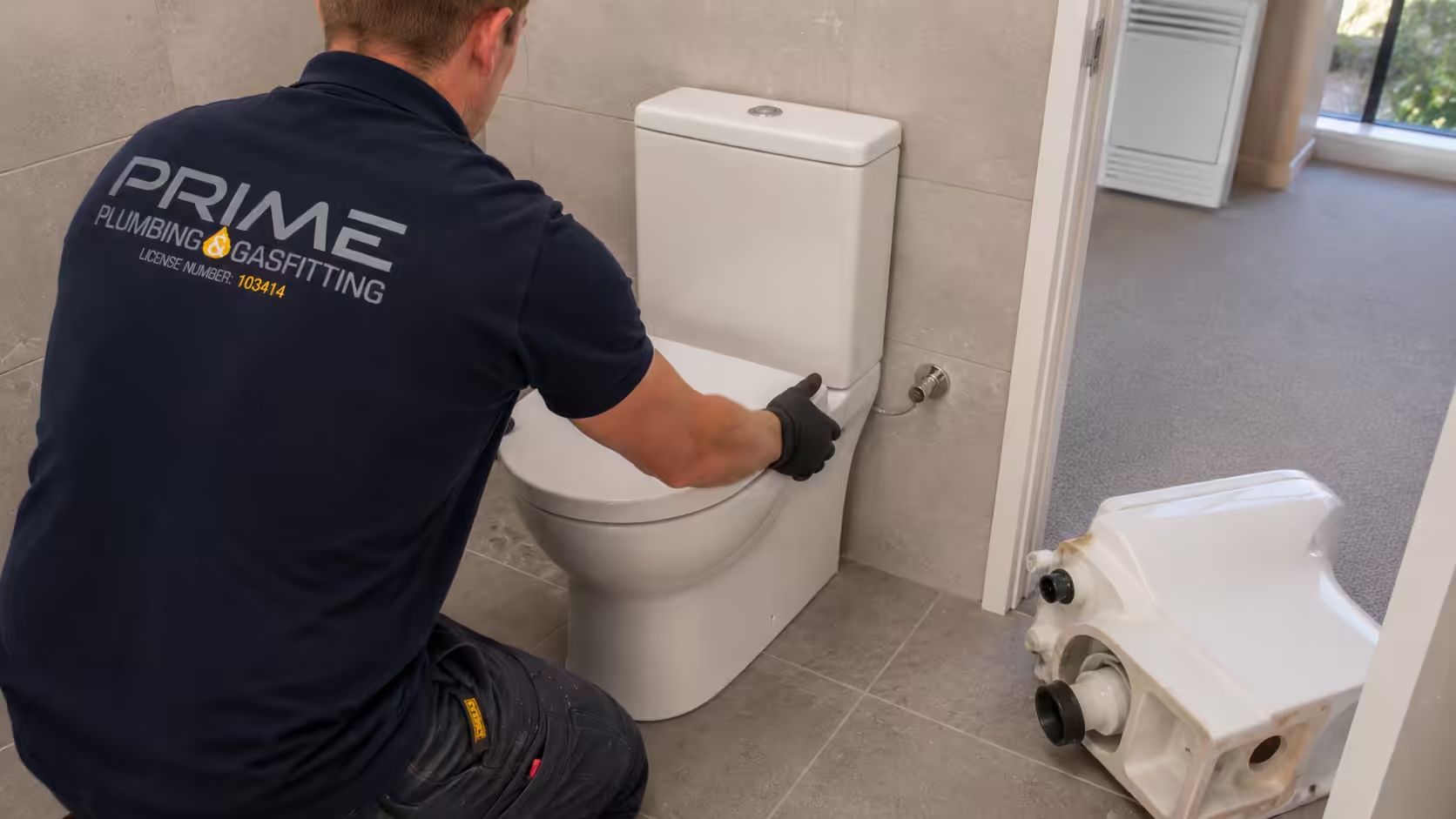
Why Does My Toilet Keep Running? Common Causes and DIY Fixes, a Prime Plumbing & Gasfitting plain-English guide to toilet keeps running for Melbourne homeowners. Below we cover what works, what doesn't, and when to call a licensed plumber.
Quick answer: A constantly-running toilet is almost always one of three things: a worn-out flapper (the rubber valve at the bottom of the cistern that seals after each flush), a faulty fill valve (the assembly that refills the cistern), or a misadjusted float (which tells the fill valve when to stop). Most fixes take 15-30 minutes and cost under $25 in parts. The water waste from a constantly-running toilet adds up fast, typically 25,000-80,000 litres per year and $200 to $650 on your water bill. If you're not comfortable opening the cistern, or if you've replaced the flapper and fill valve and the toilet still runs, the problem is usually a hairline crack in the overflow tube or flush valve seat, that's a plumber call.
Once you understand the cycle, diagnosis is easy. Lift the cistern lid:
A toilet "keeps running" when one of these steps gets stuck, water keeps flowing because the cycle never properly completes.
What it is: the rubber or silicone disc at the bottom of the cistern that seals the flush valve seat. After hundreds of thousands of flushes (usually 5-10 years), the rubber hardens, warps, or develops mineral build-up, and stops sealing properly. Water seeps from cistern → bowl, the cistern level drops, and the fill valve keeps cycling on to top it back up.
How to diagnose:
How to fix:
This is the most common fix and the most DIY-friendly.
What it is: the tall assembly on the left side of the cistern that controls the inflow of water. Older toilets use a brass ballcock with a horizontal arm and metal float ball; newer ones use a vertical-action plastic fill valve (Fluidmaster-style). They wear out, internal washers fail, mineral build-up jams the diaphragm, or the shut-off mechanism stops responding to the float.
How to diagnose:
How to fix:
What it is: the float (ball or cup) that rides on the water surface. It signals the fill valve when the water reaches the desired level. If it's set too high, the water rises above the overflow tube, and water continuously overflows down into the bowl. From outside, this looks identical to a leaking flapper.
How to diagnose:
How to fix:
If you've replaced the flapper, fill valve, and adjusted the float and it's still running, you've crossed into licensed plumber territory. Common deeper issues:

DIY-safe scope: replacing flappers, fill valves, adjusting floats, and tightening hose connections.
Call a licensed plumber when:
Plumber callouts for a running toilet are typically $150 to $300 including parts, depending on what's wrong.
Bring the old one with you to Bunnings or your hardware store. There are about a dozen common types, round 50mm, oblong, tank-style, dual-flush styles for Caroma, and they don't interchange perfectly. Or buy a "universal" flapper which fits most toilets and includes adapters.
That's a slow flapper leak. The flapper isn't fully sealing, water gradually seeps from cistern to bowl, the level drops to the float's cut-on point, the fill valve runs briefly to top up. Same fix, replace the flapper.
Almost never. Cisterns are essentially porcelain boxes that don't wear out. Their internals (flapper, fill valve, flush mechanism) wear out and are inexpensive to replace. Cistern replacement is justified if there's a crack in the porcelain itself or if you're modernising for water-efficiency reasons (older 9L cisterns vs modern 4.5/3L dual-flush).
Slow flapper leak. Water gradually drains from cistern to bowl, hits the fill valve's cut-on level, and a refill cycle starts. Replace the flapper.
That's the bowl-refill cycle filling water back into the bowl through the small tube that goes into the overflow standpipe. Normal for most toilets. If it runs longer than 90 seconds, the fill valve refill ratio may need adjusting (most have an adjuster screw on top).
No, every modern toilet has its own isolation valve where the water supply meets the cistern (usually behind or below the toilet, near the floor). Turn that quarter or half-turn until it stops. Test by flushing, if the cistern doesn't refill, the isolation is working.
If the isolation valve is seized, painted over, or behind the cistern in a wall-hung install, you'll need to turn off the water at your property's main shutoff (usually at the front of the house near the meter). After the repair, ask your plumber to install or replace the isolation valve so future repairs are easier.
Three checks: (1) is the chain too short, holding the flapper slightly open? (2) is the new flapper seated correctly on the flush valve seat? (3) is there mineral build-up or roughness on the flush valve seat that's preventing a proper seal? If all three check out, your problem is the fill valve or float, work through those next.
Real numbers from Yarra Valley Water and South East Water utility data:
A $20 flapper saves hundreds. There's no toilet repair where DIY is more cost-effective.

For toilet repairs that go beyond DIY scope, see our Toilet Repairs Melbourne page. Leaking taps and other bathroom plumbing is covered on our Leaking Tap Repairs Melbourne page. If a running toilet is making your water bill jump and you want a property-wide plumbing inspection, contact us.