Heat Pump Hot Water Noise: How Loud Are They and What Can You Do About It?
heat pump hot water noise: How loud is a heat pump hot water system? Typical decibel levels, where noise comes…
Aged Care Plumbing Compliance Checklist, Victoria 2026, a Prime Plumbing & Gasfitting plain-English guide to aged care plumbing compliance for Melbourne aged-care operators and facility managers. Below we cover what works, what doesn't, and when to call a licensed plumber.
Quick answer: Victorian aged-care facilities need four annual plumbing compliance tests, each under a different Australian standard: TMV testing on every resident-accessible hot-water outlet (AS/NZS 4032.3); backflow testing on the property's main and any kitchen/medical branch (AS 2845.3); gas compliance on the cooking, hot-water and any clinical-use gas equipment; and carbon monoxide testing where gas appliances serve common or sleeping areas. All four are checkable at Aged Care Quality and Safety Commission audit. Most facilities batch these onto a single annual compliance visit through one contractor holding all the relevant endorsements, easier scheduling, one paperwork bundle, one point of contact when something fails the test.
Aged-care premises combine the highest risk factors for plumbing-related harm:
This is why aged care has the most demanding annual plumbing schedule of any Australian facility type.
Who tests: licensed plumber with TMV testing endorsement Where: every TMV on a resident-accessible hot-water outlet, basin, shower, bath, wash trough Test target: mixed-water outlet stays at 38°C ±2°C, cold-failsafe trips within 5 seconds, hot-failsafe trips cleanly Documentation: per-valve test tag + site-level test report sheet Frequency: annual (some intensive-nursing settings 6-monthly)
The audit question: "Show me the current TMV test tag on the bathroom you just walked us through, and the matching entry in the site asset register."
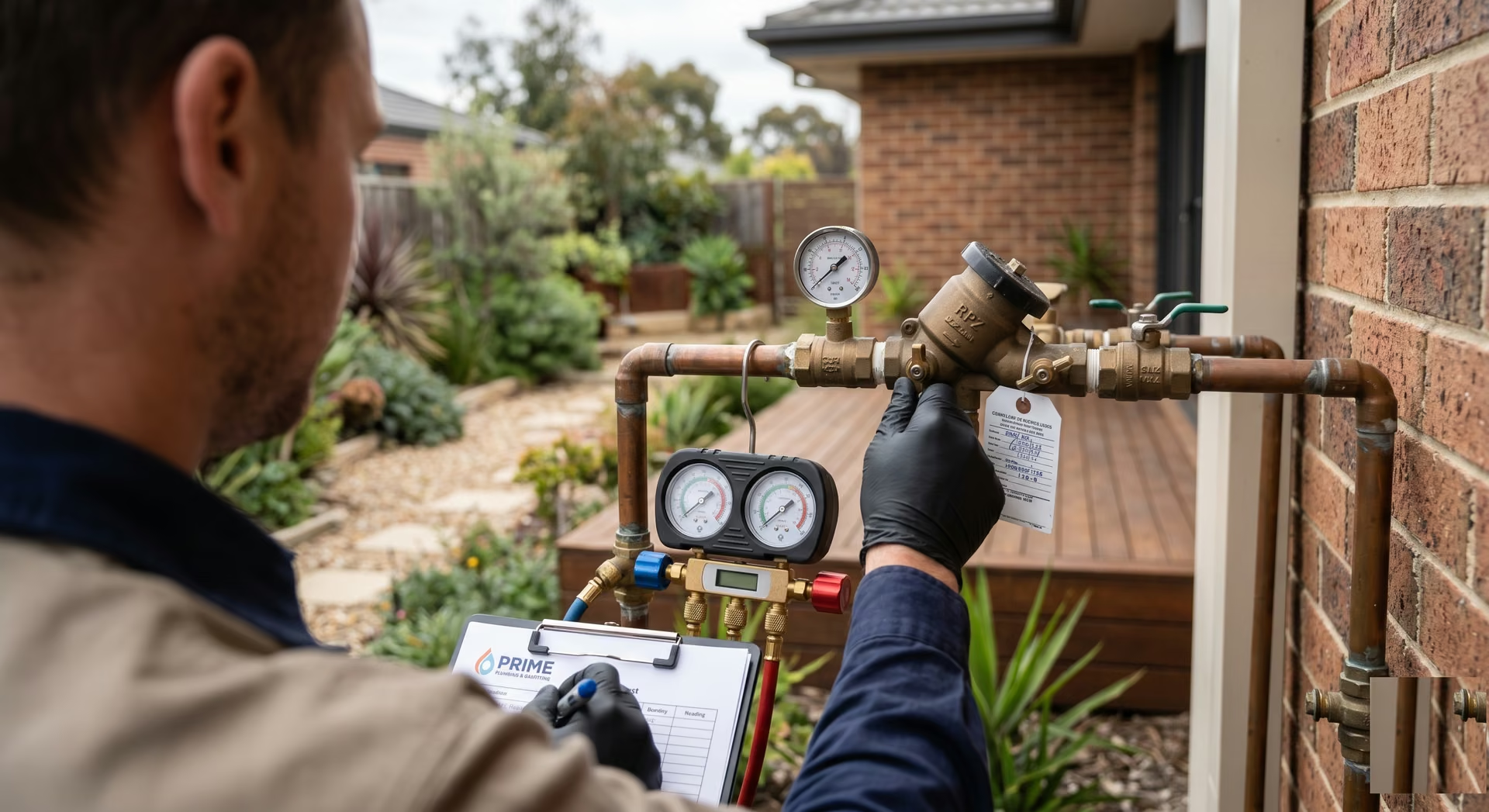
Who tests: licensed plumber with Backflow Prevention Endorsement Where: RPZD or DCV on the property's main water inlet, plus any high-risk branch (commercial kitchen, medical bath, irrigation) Test target: check valves seat under reverse pressure, pressure-relief vent operates within range, no internal corrosion Documentation: test report lodged with Yarra Valley Water (or relevant authority); copy on site Frequency: annual on medium and high hazard devices
The audit question: "Show me last year's backflow test certificate from Yarra Valley Water and confirm the date is within 12 months."
Who tests: licensed plumber with Type A gasfitter endorsement (Energy Safe Victoria) Where: every commercial-rated gas appliance, kitchen cooktops, ovens, hot water plant rooms, laundry dryers Test target: gas-tight connections, correct ventilation, isolation valves operational, Compliance Certificate on file for any work performed Documentation: Compliance Certificate from any new work or major service; periodic service report for ongoing equipment Frequency: annual for commercial appliances; on service for residential-style appliances
The audit question: "Show me the most recent Compliance Certificate for the kitchen cooktop bank and the laundry dryer."
Who tests: licensed plumber/gasfitter with CO testing capability Where: any flued or unflued gas appliance serving common areas, sleeping areas, or areas of resident assembly Test target: CO emission within safe range from each appliance under normal operation; flue draft testing where applicable Documentation: CO test report with reading per appliance and pass/fail Frequency: annual, often combined with the gas compliance visit
The audit question: "Show me the CO test results for the gas hot-water plant and any space heaters."
From facilities we've serviced and audit reports shared with us:
The four tests all need different test equipment and different documentation, but they don't all need different trades. One plumber holding all four endorsements (TMV testing, Backflow Prevention, Type A gasfitter, CO testing capability) can do all four on a single visit.
A typical combined annual visit for a 40-resident aged care facility:
This is exactly what Prime offers through the commercial plumbing compliance service.
Call 0475 407 670 or send your facility details through the form below. We'll quote a fixed-price annual contract covering all four compliance tests, with reports lodged with Yarra Valley Water and the relevant authorities direct.
Some plumbing problems are DIY-friendly; others need a licensed professional under Victorian law.
Anything involving gas, sewer drainage, hot water units, backflow prevention, or work behind tiled walls must be handled by a licensed plumber or gasfitter.
Pull the previous facility records (TMV reports, last YVW backflow certificate, gas Compliance Certificates) and we can audit them against the standards in one site walk. A 1-hour gap-analysis visit identifies what's overdue.
Yes, as long as they hold the relevant endorsements. The TMV test tags and backflow certificates are device-based, not plumber-based, any qualified tester can pick up the next cycle.
The strict requirement is for resident-accessible outlets. Staff bathrooms aren't normally classified as vulnerable. But if your facility's policy is to standardise across all bathrooms, that's fine, annual TMV testing then covers them too.
We recommend permanent, TMVs are clinical-risk equipment and historical records may be relevant in an incident investigation. At minimum, retain the last seven years of test reports.
Yes, common for multi-site aged-care providers. We've serviced 3- and 5-site portfolios with the same combined compliance contract, run sequentially over a couple of weeks each year.
A quick checklist to share with your plumber when you book:

If you're unsure, Prime Plumbing & Gasfitting can inspect the issue and explain the options before any work starts. Call 0475 407 670 or request a quote online.
Related plumbing topics: