Heat Pump Hot Water Noise: How Loud Are They and What Can You Do About It?
heat pump hot water noise: How loud is a heat pump hot water system? Typical decibel levels, where noise comes…

Annual TMV Testing Requirements in Victoria, What Facility Managers Need to Know, a Prime Plumbing & Gasfitting plain-English guide to tmv testing requirements victoria for Melbourne facility managers. Below we cover what works, what doesn't, and when to call a licensed plumber.
Quick answer: If your premises has a thermostatic mixing valve (TMV) on the hot-water outlet to any tap, basin or shower used by vulnerable people, children, elderly residents, hospital patients, the valve must be tested annually under AS/NZS 4032.3. The test verifies the valve still mixes hot and cold accurately, still cuts the hot supply if the cold supply fails, and still delivers a maximum mixed-water temperature within the safe range (38°C ±2°C for healthcare/aged care, 43.5°C ±2°C in some commercial settings). Failed valves must be repaired or replaced before the test can pass. Test reports are filed and kept on the premises; non-compliance can result in licence loss for aged care and childcare operators.
TMVs are mandatory in any premises where the hot water can be reached by vulnerable users. In practice that means:
If you're unsure whether the requirement applies to your premises, the simplest check is: are there hot water outlets that the public, residents, or vulnerable users access without supervision? If yes, you almost certainly need TMVs and annual testing.
A TMV is a mechanical valve that mixes hot and cold incoming water to a controlled outlet temperature. Over time, the seals, springs and thermostat element wear, and the calibration drifts. The annual test confirms:
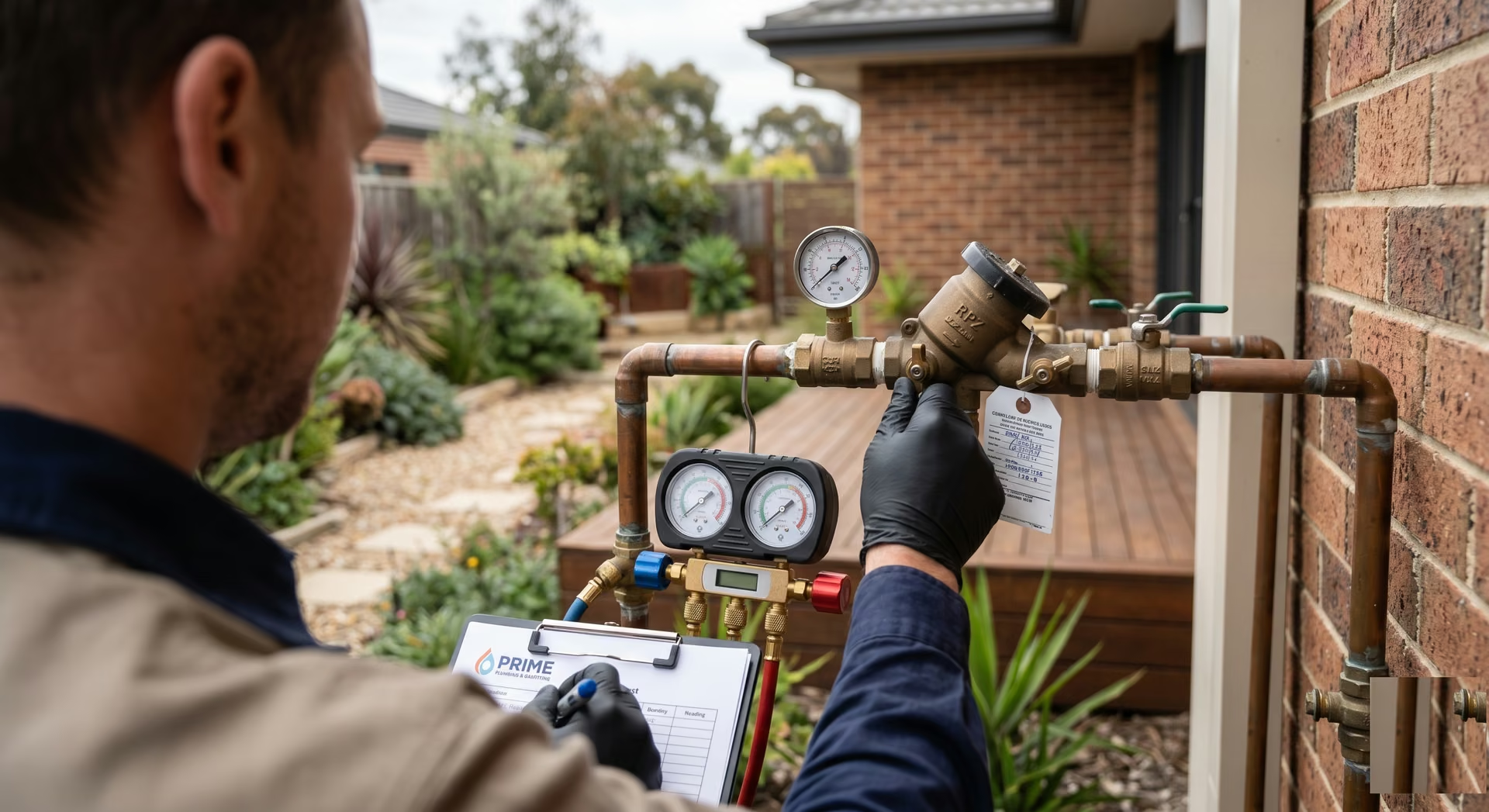
A licensed plumber with the TMV endorsement runs each test in sequence using a calibrated thermometer probe in the outlet. Each tested valve gets a tag attached showing the test date, the tester's licence, and the next due date. A site-level test report is filed with the building records and presented at audit.
The standard is twelve months from the last test, not "every calendar year". If your previous test was 14 March, the next test is due by 14 March the following year. A site that misses the window is non-compliant until the next test is completed and the new report is filed.
Some high-risk premises (intensive care, certain childcare configurations) have six-monthly testing requirements. Your facility's clinical governance or compliance officer can confirm your specific interval.
If the outlet temperature is outside tolerance, or either failsafe doesn't trip cleanly within the required time, the valve has failed. The plumber will either:
The premises remains non-compliant for that valve until the repair is completed and the valve passes a fresh test. For aged-care and healthcare facilities this can be a clinical-incident-reportable issue, so the response window is short.
Call 0475 407 670 or send your facility details through the form below. We'll quote a fixed-price annual contract covering all your TMVs, plus combined-compliance pricing if you also need backflow, gas or CO testing on the same visit.
Each tested valve produces:
These documents are kept on the premises and presented at:
For body corporates with TMVs in common-area amenities, the report sits with the owners corporation records and is available to any committee member on request.
Most facilities that need TMV testing also need at least one of:
Booking these as separate annual visits, with separate trades, separate reports and separate paperwork, is expensive admin. A combined annual compliance visit through one contractor with all four endorsements simplifies the schedule, reduces downtime to one visit per year, and consolidates the paperwork to one folder. That's the entire idea behind our commercial plumbing compliance service.
Some plumbing problems are DIY-friendly; others need a licensed professional under Victorian law.
Anything involving gas, sewer drainage, hot water units, backflow prevention, or work behind tiled walls must be handled by a licensed plumber or gasfitter.
No. Australian Standard AS/NZS 4032.3 requires the test to be carried out by a licensed plumber with the TMV testing endorsement. The endorsement covers both the technical capability and the legal authority to sign the report.
The auditor will treat that as non-compliant for the audit. Rebook a fresh test, get the report on-site, then update your records.
Per-valve pricing varies with site complexity, but most Melbourne testers charge in the $80-$160 range per valve including the test, tag, and report. Multi-valve sites and combined-compliance contracts attract per-valve discounts.
Yes. Most testers offer evening and weekend testing by arrangement, common for healthcare and aged-care facilities where amenities can't be down during operating hours.
Multi-device per-valve pricing typically lands $60-$120 per valve once volume is factored in. The testing is staged across the visit to minimise resident disruption.
A quick checklist to share with your plumber when you book:

If you're unsure, Prime Plumbing & Gasfitting can inspect the issue and explain the options before any work starts. Call 0475 407 670 or request a quote online.
Related plumbing topics: