Hot Water Not Hot Enough? Why It’s Lukewarm and What to Check
Hot water not hot enough at the tap? Why a lukewarm shower can be normal, the faults that cause it,…

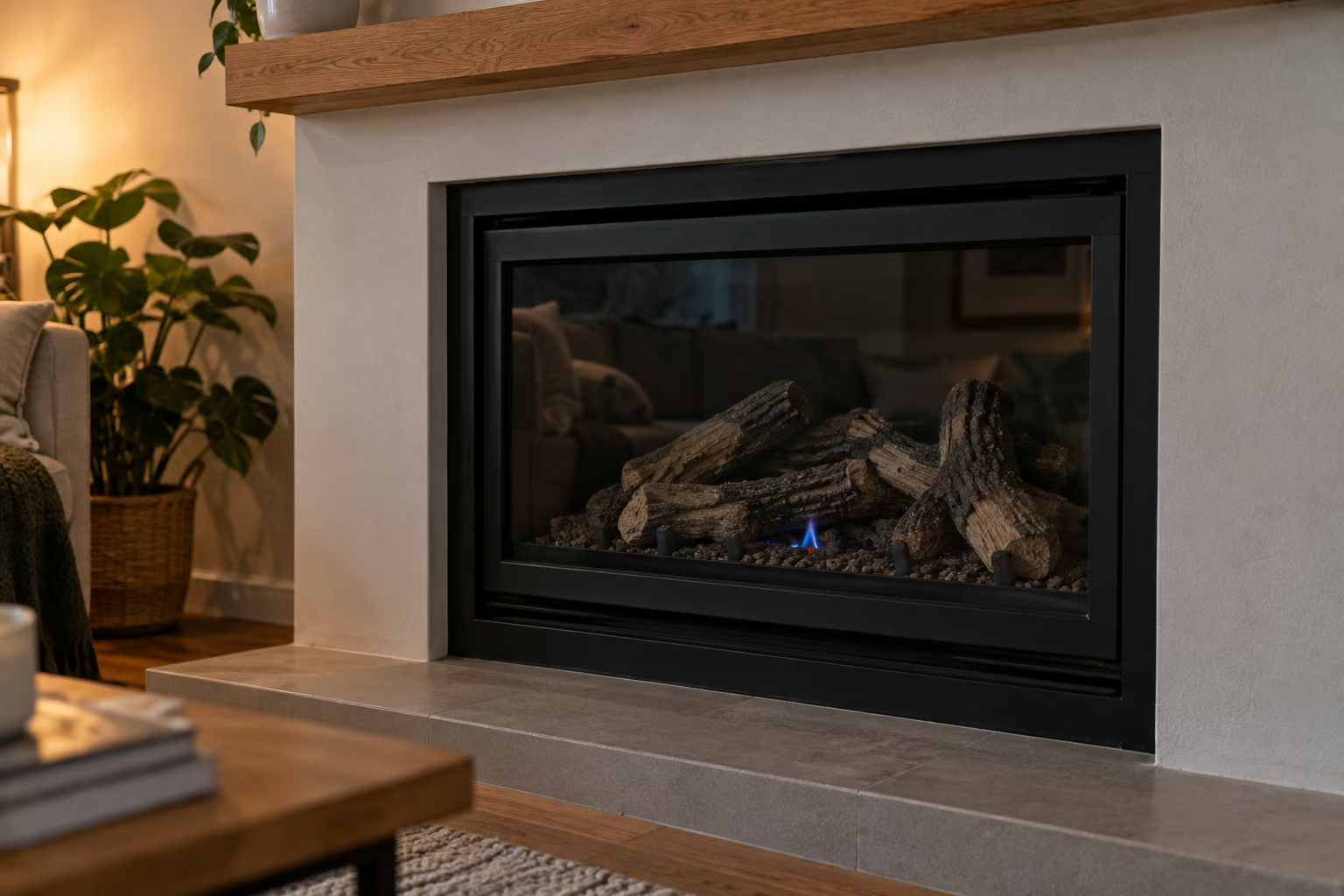
When a gas log fire won't light, or lights and then drops out, the cause is often something small: flat batteries in the remote, a gas valve that got turned off over summer, or a pilot that needs a clean. Sometimes it is the fire's own safety system shutting the gas off on purpose, and that is the case you need to take seriously. Below are the few things you can safely check yourself, what each fault tends to mean, and the point where it becomes a job for a licensed gasfitter.
Quick answer: If you smell gas, don't try to light it. Turn the gas off, open the room up and follow the gas smell steps below. Otherwise, check the remote and receiver batteries, the wall switch and power point, and that the isolation valve on the gas supply to the fire is open (unless it has been tagged off), then try lighting it once or twice following the instructions on the appliance or in the manual. If it still won't light, the pilot won't stay lit, or the fire cuts out on its own after a while, stop there. Those faults need a licensed gasfitter, and a fire that keeps shutting down can be a carbon monoxide warning.
Fire still won't go? Call 0475 407 670. Mon-Fri 7-5, Sat 8-1. Check the suburbs we cover.
Two situations come before any troubleshooting.
Our guide on what to do if you smell gas in your house shows where the gas meter tap is and how to turn it off. Once things are safe, a leak at the fire is a repair for a licensed gasfitter.
Turn the fire off, open doors and windows and get everyone out of the house into fresh air. Treat it as possible carbon monoxide and get medical advice straight away, from your GP or NURSE-ON-CALL on 1300 60 60 24. Ring 000 if anyone is confused, very drowsy, has chest pain or collapses. Symptoms in more than one person, or symptoms that ease once you are out of the house, point even more strongly to carbon monoxide, but don't wait for either sign before getting help. Carbon monoxide has no smell, and Energy Safe Victoria lists decorative log fires among the gas heaters that can spill it. Don't use the fire again until it has been checked. Our guide to carbon monoxide symptoms from gas heaters covers the signs.
A log fire is a licensed gas appliance, and Energy Safe Victoria is plain about it: fixing a gas heater yourself is not a DIY job. What you can do is make sure the fire is getting power, a signal from the remote and gas, and then light it the way the manufacturer says. That is the whole list.
Most remote-controlled log fires have two sets of batteries: one in the handset and one in a receiver box inside the fire, often behind the lower grille or in the control compartment. Flat receiver batteries will stop the fire answering the remote even while the handset screen still lights up. Swap both sets, following the manual to reach the receiver. Some remotes need pairing to the receiver again after a battery change, and the manual shows how.
Fires with electronic ignition, a fan or a wall controller need power. Check the wall switch is on, the fire's power point (often inside the fireplace cavity or under the hearth) is switched on, and nothing has tripped at the switchboard. If a safety switch trips again after you reset it, leave it off and get an electrician in.
There is a gas isolation valve on the supply to the fire, in the control compartment, behind the lower grille or under the hearth. With a lever handle, it is on when the handle points along the pipe and off when it sits across it. These get turned off for summer or for other work and then forgotten. If there is a tag on the valve or the fire, or a gasfitter or the gas company turned it off, or you don't know why it is off, leave it off and ring a gasfitter. Never turn it on if you can smell gas. If you turned it off yourself and none of that applies, turn it on and try lighting the fire. If you can't find it, it is stiff, or you would have to pull panels off to reach it, leave it for the gasfitter.
Try another gas appliance. If a cooktop burner lights normally, gas is reaching the house and the problem is at the fire. A gas hot water tank can stay hot for hours after the gas stops, so warm water on its own doesn't prove much. If nothing on gas is working, the issue is at the meter or the supply instead. On bottled gas, check the cylinder in use isn't empty.
The lighting steps for your model are printed on a label on the fire, often near the rating plate behind the lower grille, and in the owner's manual. Follow them exactly and give it two goes at most. If the pilot won't light or won't stay lit after that, stop. More tries won't fix a worn part, and our post on whether a pilot light going out is dangerous explains why the fire cuts the gas when the pilot fails.
Leave the glass seals, logs, embers, the burner and the gas control valve (anything past the isolation tap) alone. Moving the logs changes how the flame burns and can make the fire produce more carbon monoxide, and anything that carries or controls gas is licensed work. Our guide to what plumbing you can do yourself in Victoria sets out the general rule: any gas appliance work needs a licensed gasfitter.
If nothing at all happens when you press the remote or the switch, the fire isn't getting power, a signal, or a command through to the gas valve. Once the batteries, switches and isolation valve are ruled out, the suspects are inside the fire: the receiver, the ignition module, a loose connection or the gas valve itself. Those are all parts a gasfitter tests and replaces.
A clicking igniter means the spark side is working, so the question is whether gas is reaching the pilot and whether the spark is landing in the right spot.
If you can see a spark through the glass but no flame after two tries, or you can't see a spark at all, that is the point to stop. Cleaning a pilot, setting an electrode and checking gas pressure are all licensed gas work.
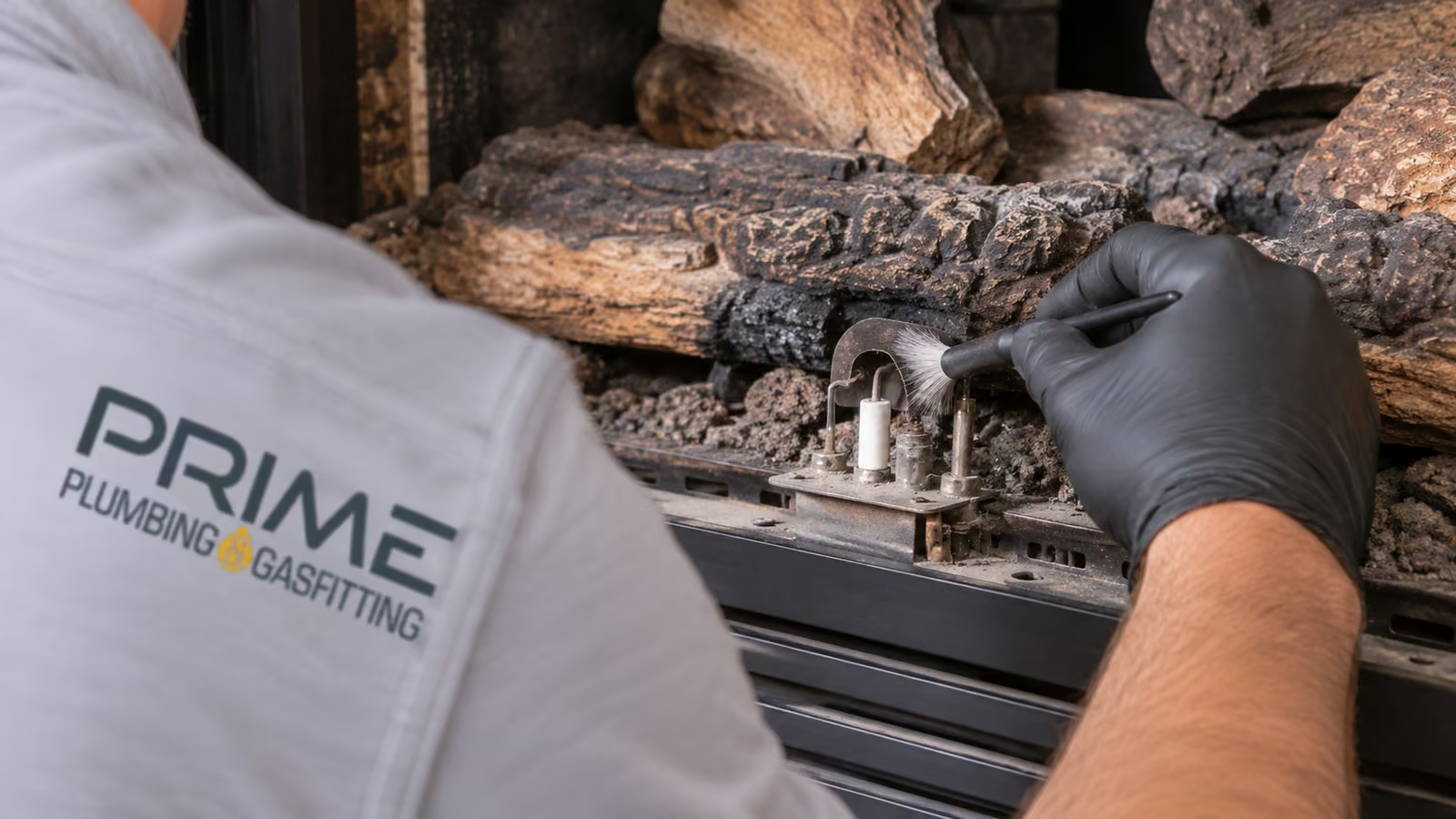
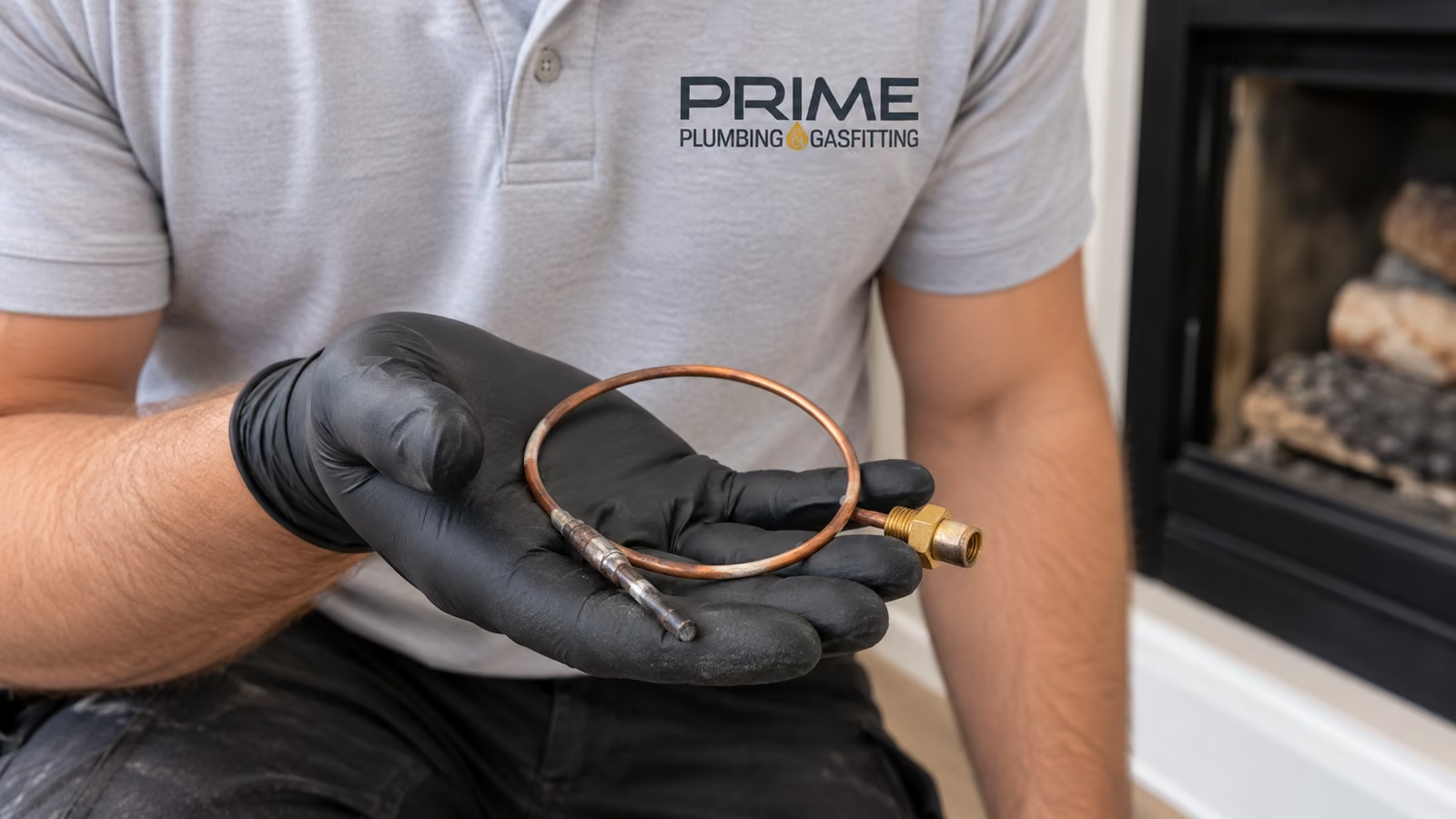
This is the fire's flame failure device doing its job. A thermocouple or thermopile sits in the pilot flame and holds the gas valve open only while it is hot. If the pilot goes out the moment you let go of the knob, the sensor is worn, it has moved out of the flame, or the pilot flame is too small to heat it because the pilot is dirty. The gas shutting off is the safe result, which is why relighting it every day is not a fix.
On a log fire, the repair is a gasfitter measuring the sensor's output, cleaning the pilot, and replacing the thermocouple or thermopile if it is worn.
Many remote-controlled log fires run on what is called a millivolt system. The thermopile in the pilot flame makes a small amount of electricity, and that is what opens the main gas valve when you ask for flame. A tired thermopile can make enough to hold the pilot but not enough to open the main valve. Other causes are a receiver that isn't passing the command on, or a fault in the main valve.
Your part is fresh batteries and making sure the remote isn't in a thermostat or timer mode, which can hold the fire on pilot. Testing thermopile output with a meter and replacing a valve are for the gasfitter.
| What the fire does | Common causes | Your part |
|---|---|---|
| Nothing at all: no click, no lights, no response to the remote | Flat batteries in the remote or receiver, power off, isolation valve off, a faulty receiver or ignition module | Batteries, wall switch, power point and the isolation valve |
| Clicks or sparks, but the pilot won't light | Air in the pilot line after months off, a dirty or blocked pilot, a worn or knocked spark electrode, low gas pressure | Valve on, other gas appliances working, two lighting tries by the manual |
| Pilot lights, then goes out when you let go of the knob | Worn thermocouple or thermopile, a weak or dirty pilot flame, a flame failure device fault | One more try, holding the knob as long as the label says |
| Pilot stays on, but the main burner won't come on | Low thermopile output, a receiver fault, a gas valve fault | Fresh batteries, and the remote set to manual |
| Starts, then cuts out on its own | Remote in thermostat or timer mode, or a safety device tripping because of spillage, a blocked or poorly drawing flue, or exhaust fans pulling air down the flue | Check the remote mode. If it is not that, stop using the fire |
| Gas smell at any point | A leak at a fitting, a valve or the appliance | Gas off, ventilate, ring the emergency line |
| You can safely | Leave to a licensed gasfitter |
|---|---|
| Replace the batteries in the remote and the receiver | Cleaning or adjusting the pilot, burner or spark electrode |
| Check the wall switch, power point and switchboard | Testing or replacing a thermocouple, thermopile or flame failure device |
| Turn the fire's isolation valve back on if you turned it off yourself (no tag, no gas smell) | Repairing or replacing a receiver, ignition module or gas valve |
| Check your other gas appliances are working | Gas pressure testing and leak checks |
| Light the fire following the label or manual, two goes at most | Flue checks and carbon monoxide spillage testing |
| Turn the gas off and open up the room if you smell gas | Moving or replacing the logs and embers |
This is the fault to take most seriously. Rule out the one harmless cause first, then treat anything else as a safety shutdown.
Many log fire remotes have a thermostat or timer mode. In thermostat mode the fire turns itself down to pilot, or off, once the room reaches the set temperature. A timer turns it off when the time runs out. If the display shows a thermostat, auto or timer symbol, switch it to manual and try again. The manual shows how.
A log fire burns in a firebox connected to a flue or chimney, and the flue gases are meant to go up and out. Many fires have safety devices that shut the gas off when that isn't happening. Depending on the model, it might be a spillage sensor near the top of the firebox that trips when hot flue gases come back into the room, an oxygen depletion sensor built into the pilot, or a thermocouple that is only just holding. A fire that lights and then drops out after a while can be one of these devices tripping.
Plenty of older log fires have no spillage shutdown at all, so a fire that stays lit isn't proof it is safe. That is what the two-yearly service and carbon monoxide test are for.
Common reasons a fire spills flue gases into the room:
What to do: treat it as a carbon monoxide red flag. Stop using the fire, don't keep relighting it, and book a service that includes a carbon monoxide spillage test. Turning the fans off might get it running, but that doesn't fix why it spilled. Energy Safe Victoria also notes that on newer heaters built to shut down on spillage, a gasfitter has to make the installation safe and reset the appliance once it has shut down. A carbon monoxide test with the exhaust fans running shows whether flue gases are coming back into the room.
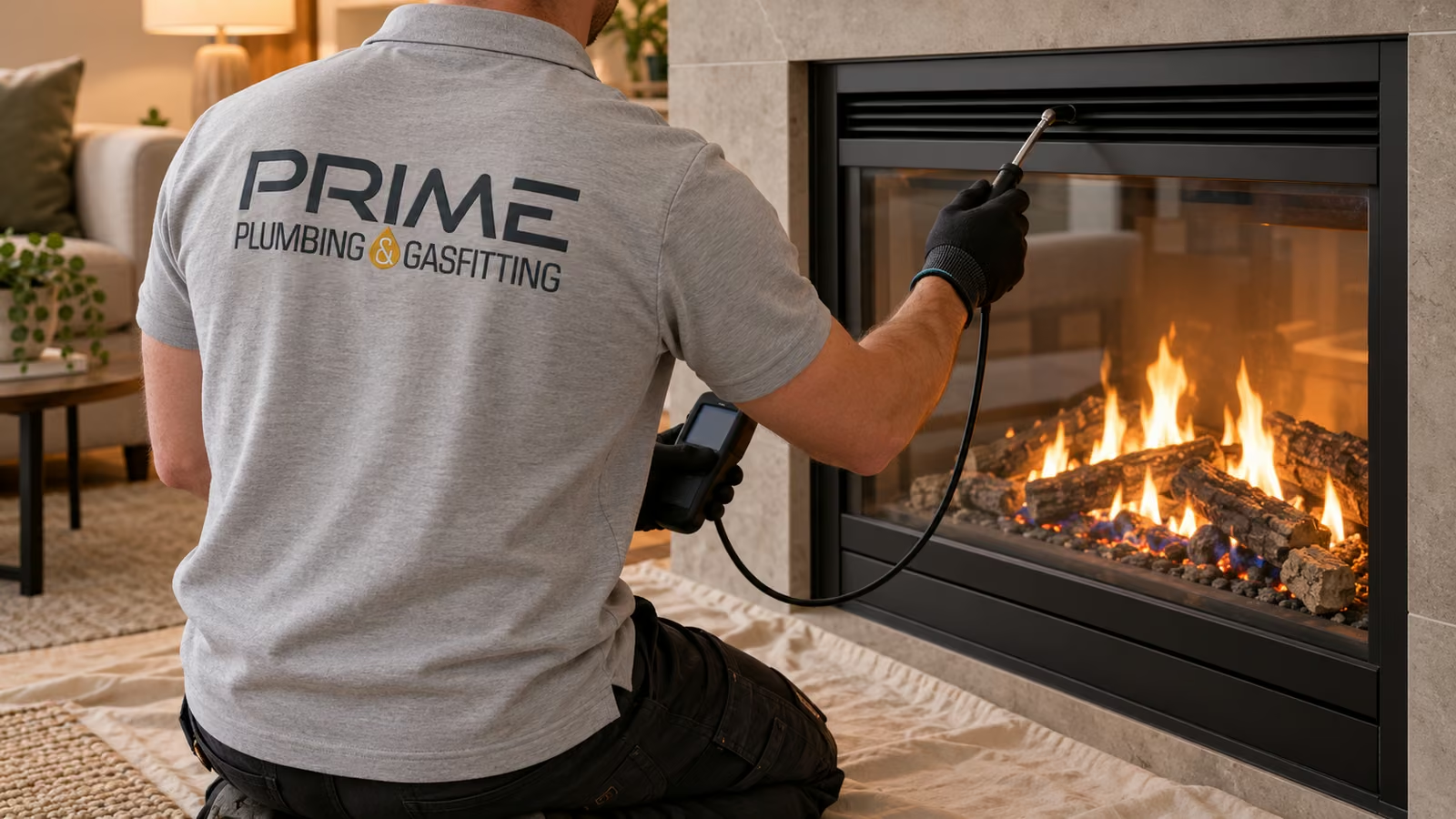
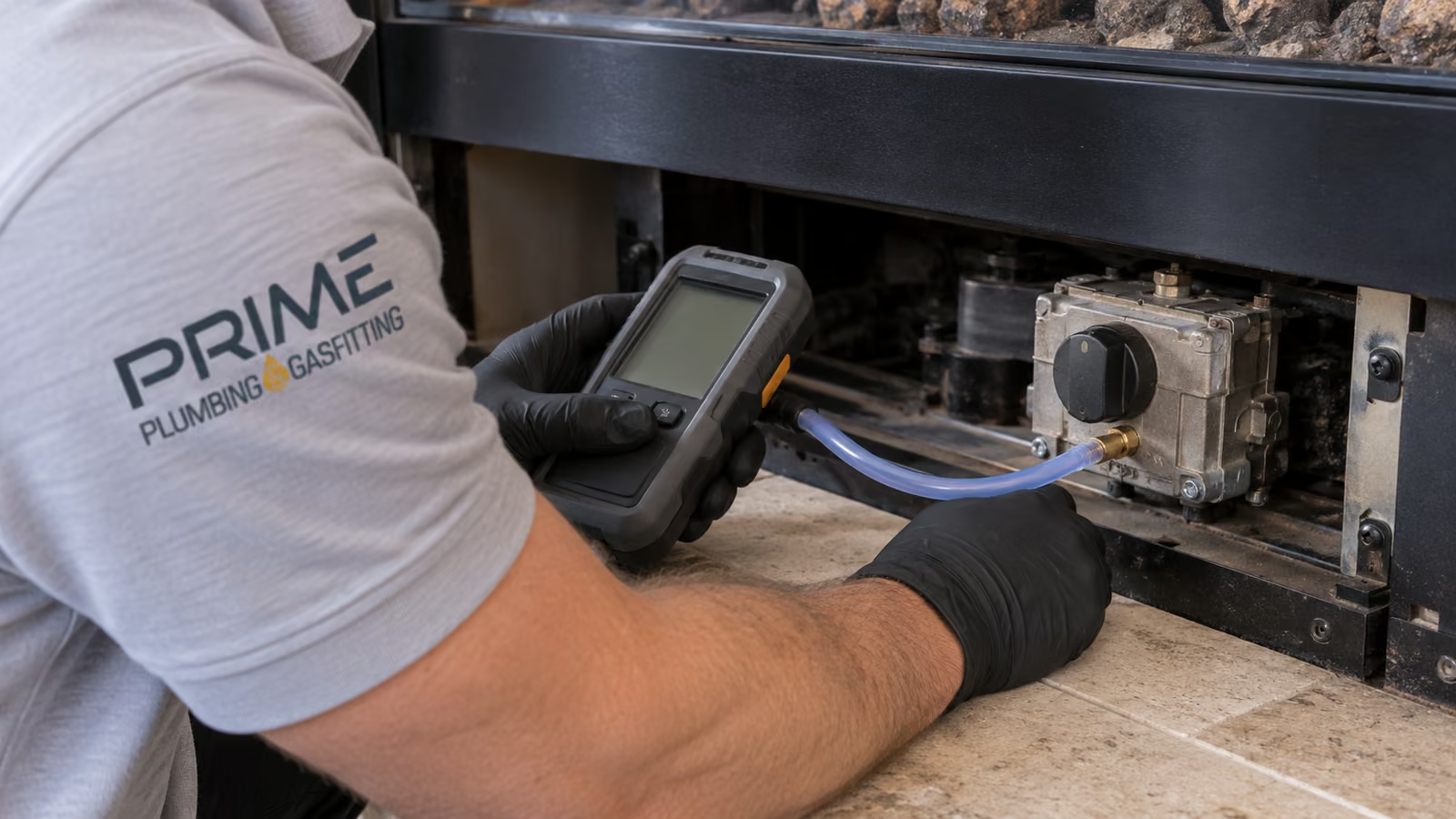
A fault call on a log fire starts with the fire running, or trying to, so the gasfitter can see the fault for themselves. From there it is a process of elimination.
Once the cause is known, you hear the options. Ask for the price before any part goes in. Where the work needs a compliance certificate, the gasfitter lodges it with the Building and Plumbing Commission (BPC) and you get a copy. For the full picture of what a routine visit covers, see log fire service and repairs.
On older fires, parts can be hard to find. If the fire is near the end of its life, or the repair isn't worth doing on it, the conversation turns to replacing it, and our gas fireplace installation page covers what a new install involves.
Regular servicing is how most of these faults get picked up before the first cold night. Our guide to how often gas appliances should be checked covers the Energy Safe Victoria recommendation of a service at least every two years, and the rules for rentals.
A few details up front help the gasfitter work out what is likely wrong and bring the right parts.
If the fire has been shutting itself off, leave it off until it has been looked at.
Only the basic checks: batteries, switches, the isolation valve, and lighting it the way the manual says. Cleaning the pilot, replacing a thermocouple, testing gas pressure or working on the valve is gas work, and in Victoria that needs a licensed gasfitter. Our DIY plumbing guide covers the jobs around the house you can do yourself.
Look at the remote before anything else. A thermostat or timer setting will turn the fire down or off on its own. If that isn't it, the fire's safety system is most likely cutting the gas, either because the thermocouple is worn or because a sensor has picked up flue gases coming back into the room. Leave it off and book a service with a carbon monoxide test.
Months off give dust, lint and insects time to settle in the pilot, and if the gas was turned off, there can be air in the pilot line. If you turned the isolation valve off yourself and it isn't tagged, turn it back on, put fresh batteries in the remote, then follow the lighting steps. If it still won't catch after two tries, book a gasfitter.
Not if it smells of gas, keeps shutting itself off, burns with tall yellow or sooty flames, or anyone has felt unwell while it was running. If anyone has felt unwell, get medical advice first, as covered above. If the problem turned out to be a flat battery or an isolation valve you had turned off yourself, and it now runs normally, it is fine to use. If you aren't sure, leave it off.
Energy Safe Victoria recommends one as a back-up. Follow the maker's instructions on where it goes. An alarm only tells you the air is already bad, so it doesn't replace a service, and a hard-wired alarm has to be put in by a licensed electrician.
It depends on what has failed, the make and model, and whether parts are still made for it. A flat battery costs you a packet of batteries. A worn thermocouple, a receiver or a gas valve is a different job, so get the repair priced before the work starts.
Work through these before you ring:

Log fire still not lighting, or shutting itself off? Prime Plumbing & Gasfitting services and repairs gas log fires and gas fireplaces across Melbourne's east and south-east, from pilot, ignition and thermocouple faults through to carbon monoxide spillage testing. Alister is a licensed plumber and gasfitter.
Call 0475 407 670. Hours are Mon-Fri 7-5, Sat 8-1. See the suburbs we service, or read about our log fire servicing.
Related plumbing topics: