Gas log fire won’t light or keeps going out? What to check first
Gas log fire won't light, or lights then shuts off? The checks you can safely do yourself, what each fault…

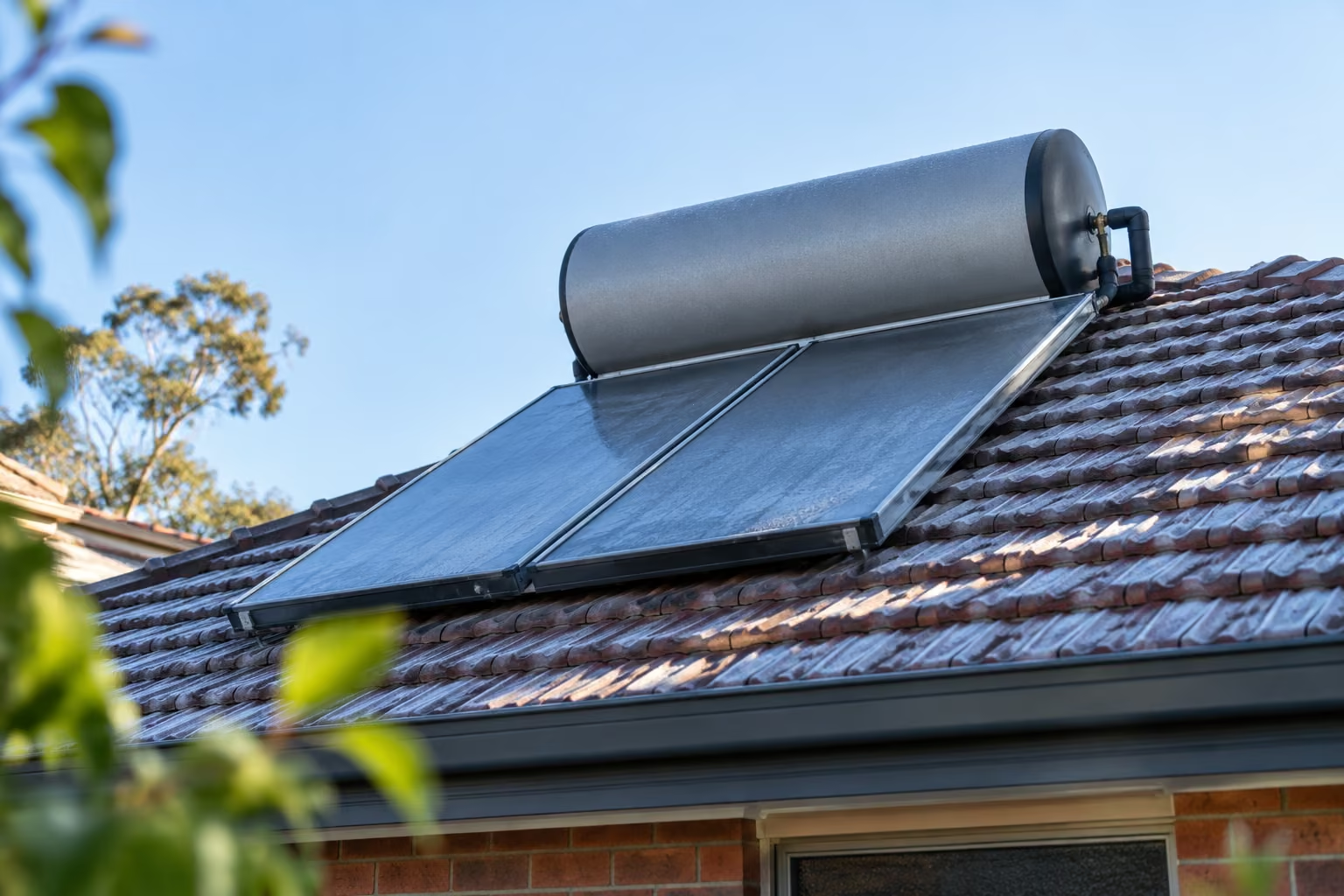
Most solar hot water problems come down to a short list: a booster that is off or has failed, a stopped pump or controller on a split system, a broken tube or panel, or a system doing its job on a very hot day or a freezing night. Some of that you can check from the ground. The rest is licensed work: plumbing, gasfitting if the booster runs on gas, and electrical work for an electric booster's element and thermostat.
Quick answer: Lukewarm water in winter or after a run of cloudy days most often points to the booster. Check the hot water switch at the switchboard, any isolating switch near the tank, the booster timer, and on a gas-boosted system the power point the booster plugs into. On a split system, make sure the solar controller has power and isn't showing a fault light. A trickle from a frost valve on a freezing night, or some water from the relief valve on a hot afternoon, can be normal. A breaker that trips again after one reset, a fault light that comes back, or water running for hours needs a licensed tradesperson. Stay off the roof.
Need it looked at? Call 0475 407 670. Mon-Fri 7-5, Sat 8-1. Check we cover your area on the service area page.
Solar hot water problems look different depending on how the system is set up, and you can work most of it out from the ground.
The tank sits on the roof right above the panels. Water moves between them on its own as it heats, so there is no pump. The booster is usually an electric element inside the roof tank, wired to a hot water circuit at the switchboard, though some have a gas booster on the ground instead.
The tank is on the ground or in the laundry and the panels are on the roof. A small pump moves water up to the panels and back when the sun is out, and a controller near the tank, plugged into a power point, decides when it runs. The booster is either an electric element in the tank or a gas continuous flow unit fitted after it, often called an in-series booster.
Flat panels look like dark, glass-topped boxes. Evacuated tubes are rows of glass tubes running into a header along the top. A gas pipe running to a wall-hung unit beside the tank means a gas booster. No gas pipe means an electric booster.
On many winter days in Melbourne the sun alone won't get a tank hot enough, and nor will a cloudy week in spring. That is what the booster is for, so when the water goes lukewarm it is the first thing to suspect.
Overnight, heat at the top of the tank spreads into the cooler water below (owner's manuals call it temperature redistribution), so the first morning shower can be cooler than expected.
An in-series gas booster heats water coming out of the solar tank when the sun hasn't done enough. It needs power as well as gas, so check its power point is on and that a gas cooktop lights. Write down any error code. Our no hot water checks cover the basics for gas units. Past the power point and the gas valve it is licensed gas work, including the temperature settings.
If the switches and timer are fine but the water is hot on sunny days and lukewarm on cloudy ones, the booster has probably stopped working. On an electric booster that points to the element or its thermostat. Testing them is electrical work, which needs an electrical licence from Energy Safe Victoria. Many of these thermostats have an over-temperature cut-out, and if it has tripped, something overheated. Don't take the cover off to reset it. There is mains wiring behind it, and the reason it tripped has to be found first.
Lukewarm water sitting in a tank is where Legionella bacteria can grow, so stored hot water has to be kept at 60°C or more. On a solar system the booster makes sure of that when the sun hasn't. Solahart's and Rheem's owner's guides both say their systems only meet the standard when the booster has power for long enough each day and its thermostat is at 60°C or higher. Switching it off while you're on holiday is fine. Turn it back on when you get home and let the tank heat before anyone showers. After a sunny week away the tank can be very hot, so take care at the kitchen and laundry taps for the first day.
On a split system the pump carries heat from the panels down to the tank. If it stops, the booster quietly does all the work, and you may notice nothing but a bigger power or gas bill. On a sunny day you can often hear the pump humming near the tank. Don't touch the bare copper pipes there to check, because water coming down from the panels can be hot enough to burn.
Some steady or slow-flashing lights are normal, and some controllers show a warning light on very hot days that isn't a fault. Your owner's manual says which. A series of flashes, or no light at all with the power on, points to a fault. Switch the controller off at its power point for a few seconds, then back on. If the fault returns, count the flashes or note the code and call.
On many split systems this is normal. On cold nights the controller runs the pump for a few minutes at a time to push warmer water from the tank through the panels so they don't freeze. Some also run it after a very hot day to shed heat. A pump that runs non-stop in mild weather points to a sensor or controller fault.
Frost protection only works with power to the controller. With it off on a frosty night, the panels or their pipes can freeze and split, so if it has to be off for a while, ask a plumber about draining the panels first. Otherwise a plumber looks for a failed pump, a faulty or loose sensor, or air trapped in the panel pipes.
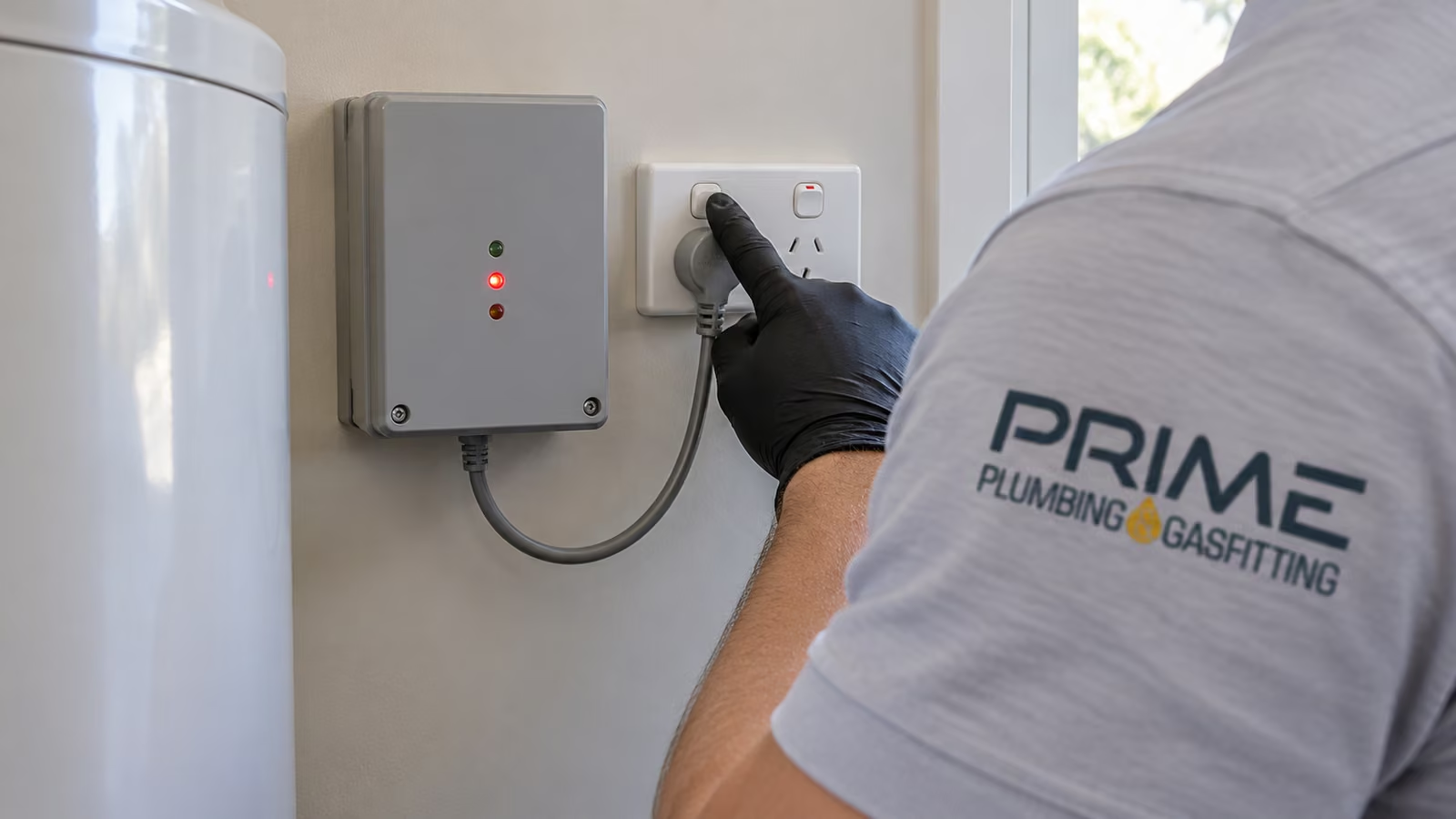
You can check most of this from the ground or an upstairs window. Don't climb onto the roof: a fall is far worse than a lukewarm shower. Victoria's list of plumbing you can do yourself is short, and hot water work isn't on it. Look from the ground, check the switches and take photos, but don't undo anything.
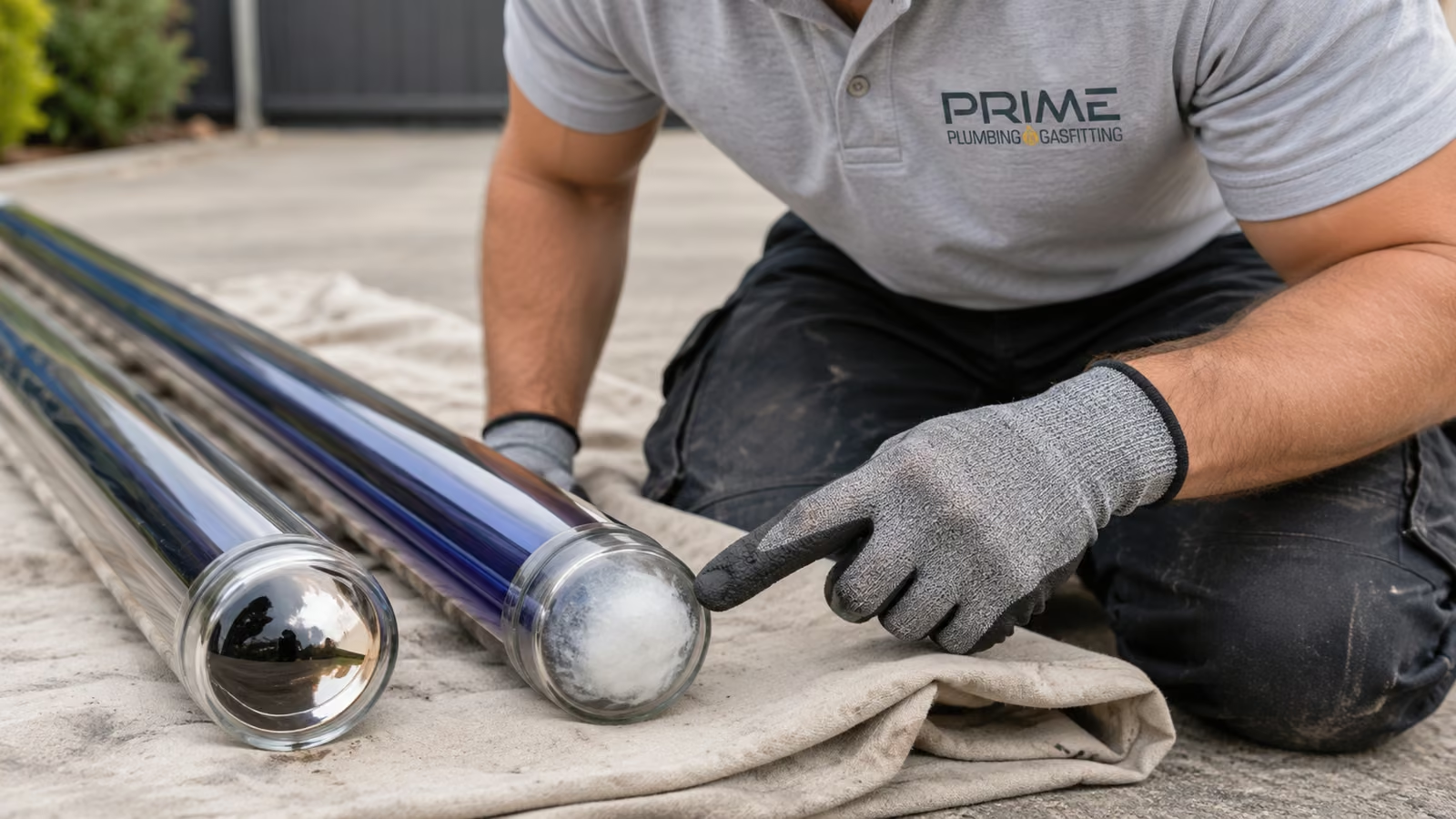
Each glass tube holds a vacuum to keep the heat in, and the bottom of each tube has a shiny silver coating. If a tube loses its vacuum, that coating turns white or chalky. White, cracked or missing tubes mean less heat reaching the tank. On most tube systems the damaged ones can be replaced one at a time.
Look for cracked or shattered glass, often after hail, and panels that look fogged or stained inside. Don't try to remove broken glass. Collector glass often isn't covered by the warranty, so check your home insurance after hail. Trees grow too, so a panel in full sun when it went in may be shaded half the day now.
Some systems made for frosty areas run a blue anti-freeze fluid through the panels and pass its heat to the tank through a heat exchanger. Blue-tinted hot water, or blue fluid around the tank or below the panels, means that fluid is escaping. In most systems it is a non-toxic glycol mix, but the system needs a service.
| What you notice | Likely cause | What happens next |
|---|---|---|
| Lukewarm in winter or after cloudy days | Booster switched off, tripped, outside its timer or off-peak hours, or failed | Check the switches and timer. If they are fine, the booster needs testing by a licensed tradesperson |
| Hot water breaker trips again after one reset | Failed element or a booster wiring fault | Leave it off. A licensed electrician finds the fault |
| Controller light flashing, or off with the power on | Pump, sensor or controller fault | Switch the controller off and on once. If the fault returns, call |
| Pump running for a few minutes on cold nights | Frost protection | Nothing to fix |
| White or chalky tube bases, or cracked tubes | Tubes have lost their vacuum or broken | Replace the damaged tubes |
| Cracked panel glass, or blue fluid around the system | Hail damage, or closed circuit fluid escaping | Service. Check your insurance for hail damage |
| Frost valve trickling on a freezing night | Frost protection doing its job | Normal if it stops once it warms up |
| Relief valve letting out hot water on a hot afternoon | Tank overheating while little hot water is used | Can be normal. Call if it runs heavily or every day |
| You can safely | Leave to a licensed tradesperson |
|---|---|
| Check the hot water switch, any isolating switch near the tank, and the booster timer | Testing and replacing a booster element or thermostat (electrical work: a licensed electrician, or a plumber with the right restricted electrical licence) |
| Reset a tripped hot water breaker once | Finding out why a breaker keeps tripping (a licensed electrician) |
| Check the power point for the solar controller or gas booster is on | Anything on the gas side, including booster settings and repairs (a licensed gasfitter) |
| Switch the controller off and on once to clear a fault light | Pump, sensor and controller repairs |
| Look at the panels or tubes from the ground and take photos | Anything on the roof part of the system: tubes, panels and frost valves |
| Follow the relief valve lever test in your owner's manual, only where the valve is safe to reach from the ground. Stand clear of the drain outlet, because the water coming out can be hot enough to scald | Replacing relief, expansion control and tempering valves |
On a long hot day with little hot water used, a solar system can collect more heat than the tank needs. Water in the tank can go above 75°C, so the kitchen and laundry taps can run hot enough to scald. Many split systems stop the pump once the tank is at its top temperature. Others rely on the temperature and pressure relief valve, which lets very hot water out so cold water can come in.
A little water from the relief valve, or the expansion control valve where fitted, each time the tank heats is normal, because water expands as it heats. On a solar system the relief valve may also let out hot water on very hot afternoons, especially when the house has been empty. More than a bucket in a day is worth having checked. On a roof-mounted tank that water may come off the roof or out of a drain line. Don't climb up to look.
If the relief valve lets out a heavy flow of hot water while the booster is heating, and keeps going until the tank is cold, switch the booster off at the switchboard and call. That points to a booster thermostat fault, not the sun. Never block the drain line or tie the valve shut. That valve is what stops the tank failing under pressure.
A plumber can look at fitting over-temperature protection, and check the tempering valve on the bathroom hot water is working so showers stay at a safe temperature when the tank is very hot.
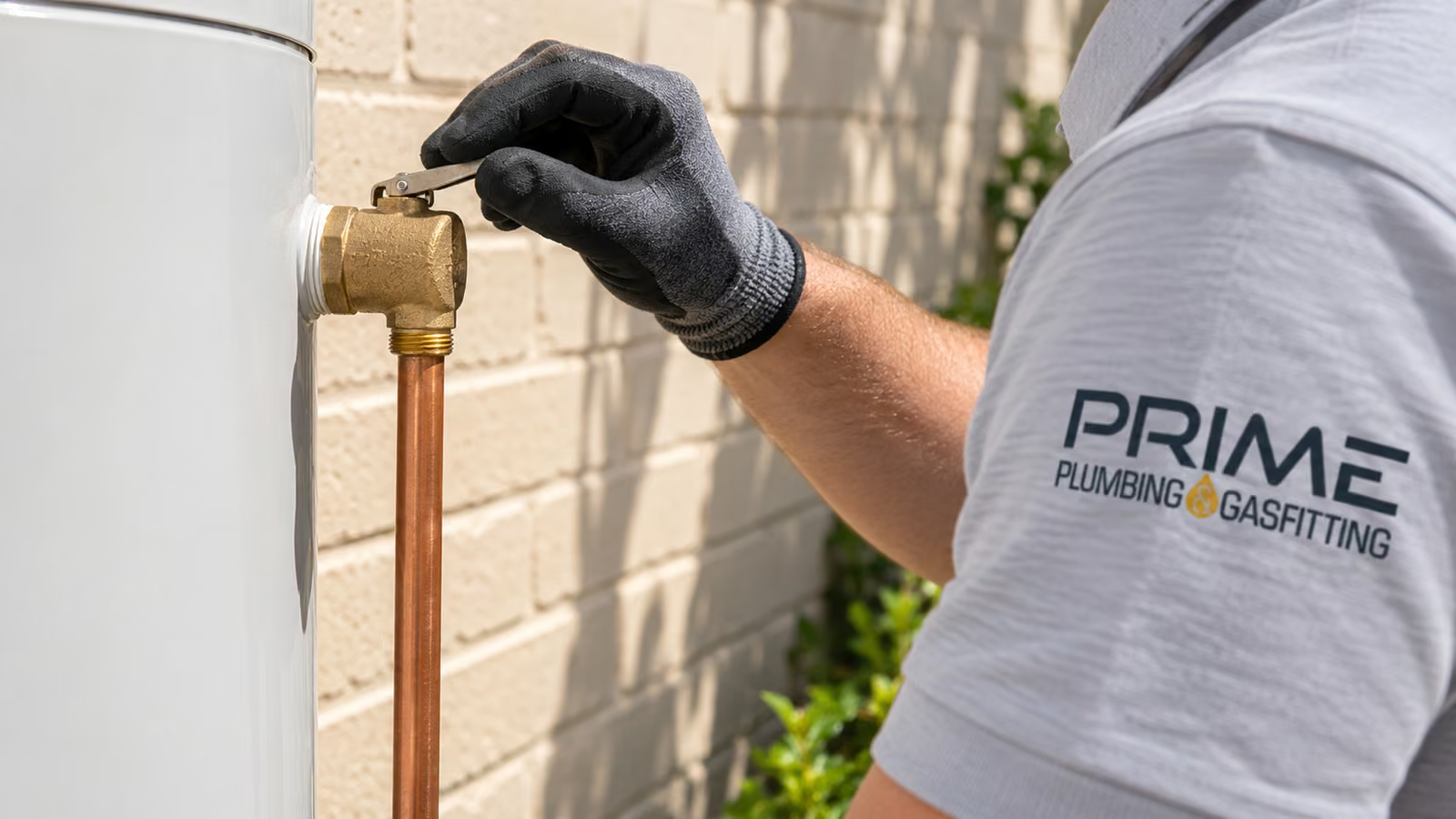
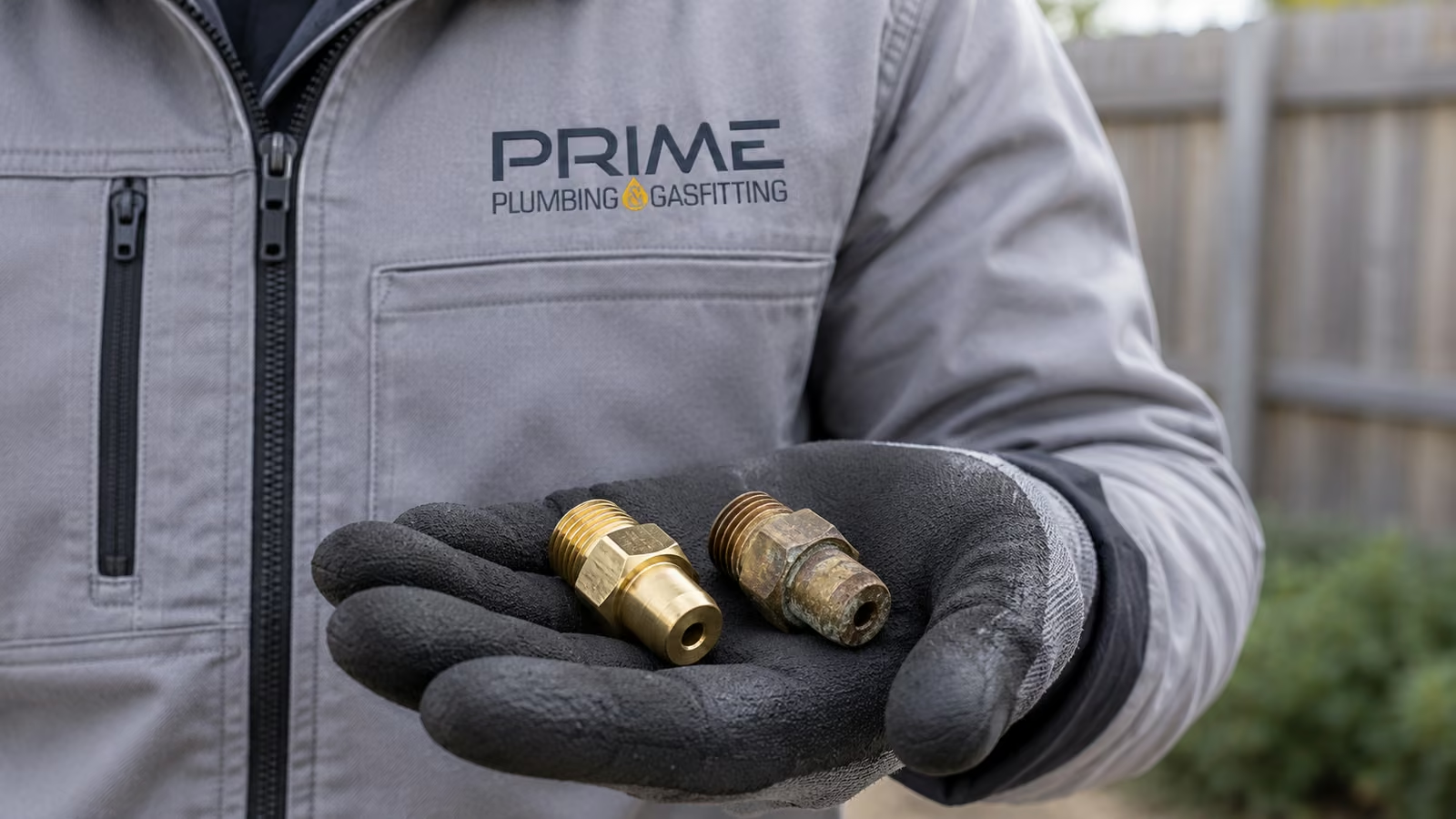
Many roof-mounted systems that run water straight through the panels have a frost valve at the panels. When it gets down to a few degrees above freezing up there, the valve opens and lets a small trickle out, so warmer water from the tank flows in behind it. Once that warmer water reaches the valve, it closes. On a cold, clear night it can do this several times, which is why people in the colder parts of the outer east and the Dandenongs sometimes find water dripping off the roof on a frosty morning.
Frost valves wear and can stick open. Replacing one is work on the roof part of the system, so leave it to a plumber. Closed circuit systems, the ones with blue fluid, don't need frost valves because the fluid is mixed to resist freezing. A system that has frozen and split a panel or pipe needs repairing before it is used again.
Water from the tank itself or its pipework is a different problem. Turn the booster off (the hot water circuit for an electric booster, or the power point and gas valve for a gas one), close the cold water valve to the tank if you can reach it safely, and call a plumber. Water from the base of a tank, with everything above it dry, often means the tank has rusted through. Our hot water installations and repairs page covers what happens next.
A plumber will normally start with the booster: having the element and thermostat on an electric booster tested by someone with the right electrical licence, or a licensed gasfitter checking a gas booster and its settings. Then the solar side: the controller readings, sensors and pump on a split system, and the tubes or panels. They also check the tank reaches 60°C, look over the relief, expansion control and tempering valves, and tell you whether it is a repair or the end of the system's life.
Most solar repairs are worth doing on a system that is otherwise in good shape. The decision gets harder when:
Our guide to how long a hot water system lasts covers solar tanks and panels, and when to replace a hot water system covers the other signs. Glass-lined solar tanks have a sacrificial anode like any storage tank, and checking it helps a tank last. See anode rod replacement.
When an old solar system does need replacing, many Melbourne homeowners now choose a heat pump. It has no roof panels and still heats on cloudy days. Rebates can apply in Victoria, and our heat pump rebate guide explains how they work. To stay with solar, or go to gas or electric, see our hot water installations and repairs page.
The winter sun isn't strong enough to heat the tank by itself, so the booster has to make up the difference. If the water stays lukewarm, the booster is either not getting power, outside its timer hours, or not working. Work through the switch and timer checks above. If everything is on and set right, have the booster tested. On an electric booster that is electrical work, and on a gas one it is gasfitting.
It's better to leave it on. The booster thermostat only heats when the water is below its setting, so on sunny days it does very little. With it off for months, nothing lifts the tank to 60°C during a cloudy spell, and that temperature is what controls Legionella. Turning it off while you are away is fine, as long as it goes back on when you return.
On many roof-mounted systems it is the frost valve, which opens on a near-freezing night to swap the coldest water in the panels for warmer water from the tank. A trickle on a frosty night is normal. Dripping during the day or on mild nights, or a steady stream, means the valve needs replacing.
You can check the switches, the timer and the controller's power, restart the controller once, and look at the panels from the ground. Everything else on a hot water system is licensed work in Victoria. Anything on the gas side needs a licensed gasfitter, and booster element or thermostat work is electrical work. Where the job needs a Compliance Certificate, the plumber or gasfitter issues it.
If the tank is sound, a booster element, controller, pump or a few tubes are usually worth repairing. If the tank is leaking or rusting, or several major parts are failing together, compare the repair with a replacement.
Yes. Owner's guides set out regular checks of the relief and expansion control valves, and some recommend a major service every five years, covering the relief valve, the anode, the booster and the panel circuit. Follow the schedule in your manual, and have the tank temperature and tempering valve checked at the same time.
These details help a plumber work out what's going on before they arrive:

Solar hot water playing up? Call Prime Plumbing & Gasfitting on 0475 407 670. Hours are Mon-Fri 7-5, Sat 8-1. Prime Plumbing & Gasfitting works across Melbourne's east and south-east, and you can check your suburb on the service area page.
Related plumbing topics: