Gas log fire won’t light or keeps going out? What to check first
Gas log fire won't light, or lights then shuts off? The checks you can safely do yourself, what each fault…

Hot water not hot enough at the shower? It can be confusing, because the unit is running and the water is warm, just milder than you expect. Sometimes that is exactly how the system is meant to work. Other times a setting has been changed, cold water is leaking into the hot line, or the unit is being asked to do more than it can. Below is how to tell which one you have, what you can safely check yourself, and when it needs a licensed plumber or gasfitter.
Quick answer: Bathroom hot water in most newer Victorian homes is held to about 50°C by a tempering valve, while the kitchen and laundry can run hotter. So a shower that feels milder than the kitchen tap can be correct. If the bathroom is well under that, check the easy things first: the temperature on a continuous flow controller, a gas storage dial turned down or left on pilot after a holiday, and a solar booster that has been switched off. Hot water that is lukewarm at taps all over the house while the unit itself is heating normally often points to cold water crossing into the hot line through a faulty mixer or non-return valve. Apart from a user dial your owner's guide describes, don't take covers off the unit or adjust a tempering valve yourself. That is licensed work.
Want it looked at? Call 0475 407 670. Mon-Fri 7-5, Sat 8-1. Check we cover your area on the service area page.
No hot water at all, or a unit showing a fault code? Start with our no hot water checks instead.
Before chasing a fault, it helps to know what the system is designed to deliver, because "not hot" is sometimes the plumbing code doing its job.
So a kitchen tap that makes you pull your hand away and a noticeably milder shower can both be right.
Older systems are different. The Building and Plumbing Commission notes that hot water systems installed before 5 August 1998 are unlikely to be tempered at all, so in an older house with the original unit the shower may always have run as hot as the kitchen. If that unit has since been replaced, a tempering valve should have gone in with the new one, and the shower will feel cooler than it used to. Our post on the difference between a tempering valve and a TMV explains what is fitted in a normal home and why.
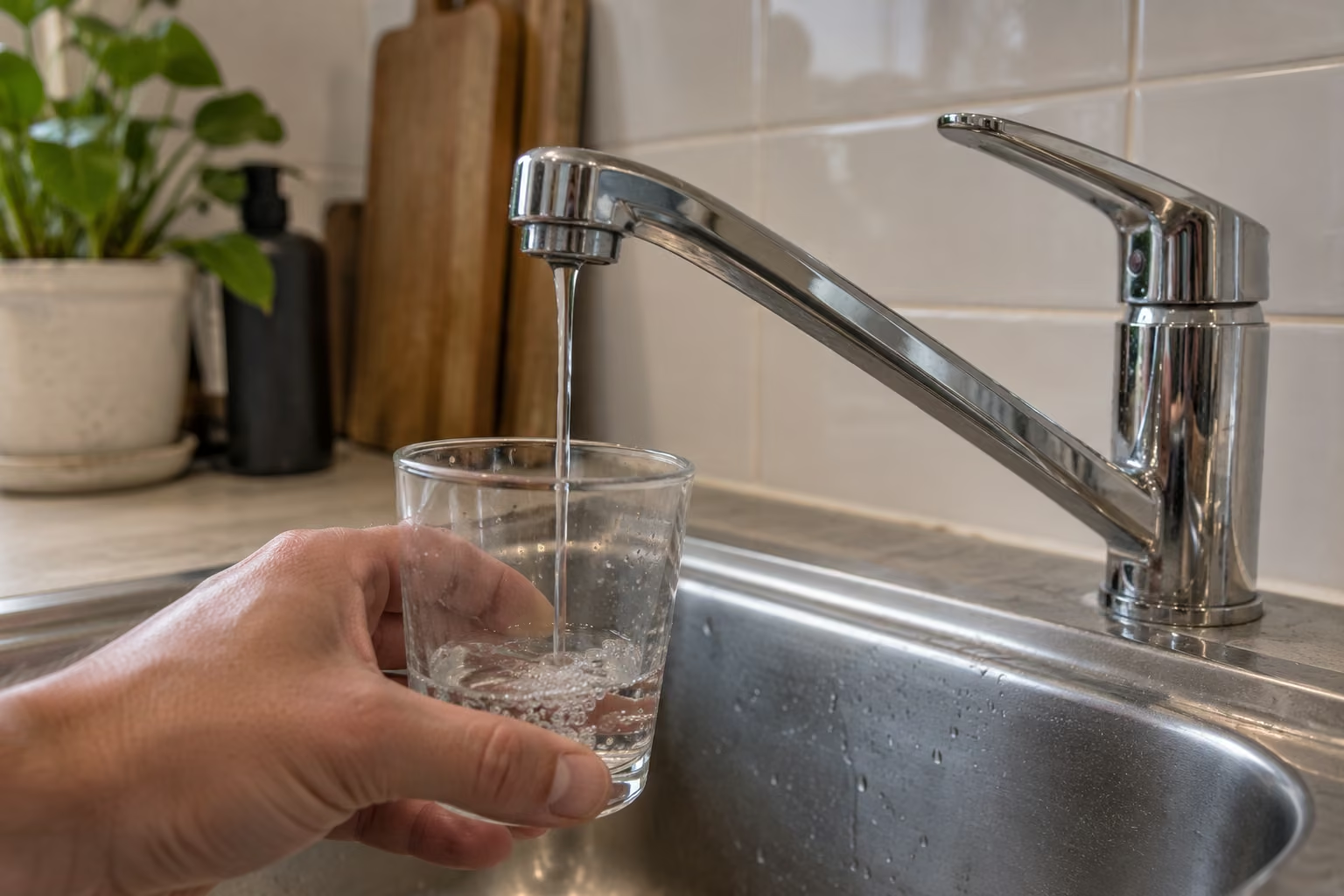
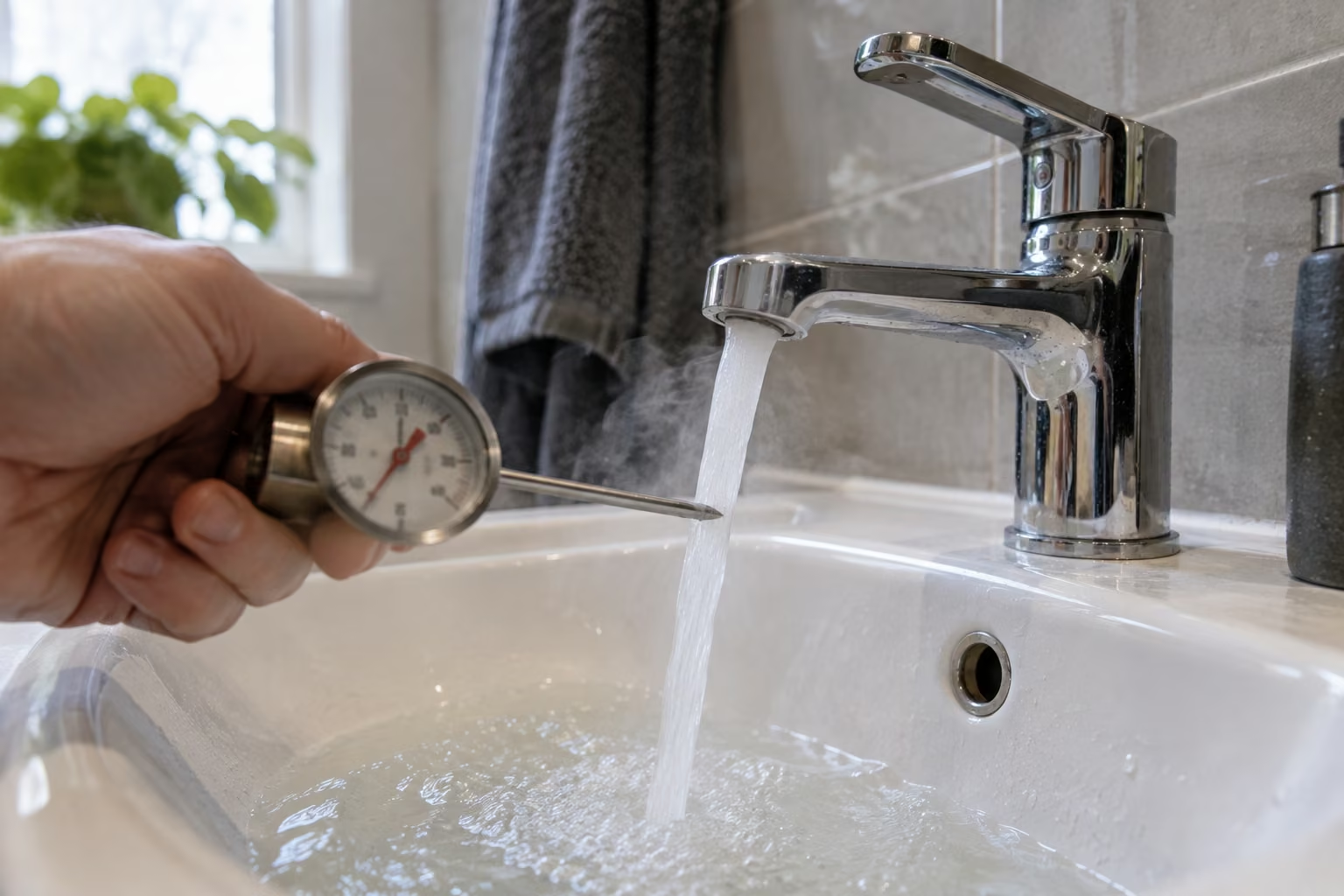
You don't need to guess. Run the hot tap at the bathroom basin for a minute or two, then hold a cooking thermometer in the running stream until the reading settles. Do the same at the kitchen sink, and keep your fingers out of the stream there, because untempered water can scald.
A tempering valve has an adjustment cap, and it is tempting to wind it up. Don't. Setting one means measuring the outlet with a calibrated thermometer and then locking the setting, and it is licensed plumbing work, not on the list of plumbing jobs you can do yourself in Victoria. A valve turned up by guesswork is how people get scalded. If yours has drifted or failed, it gets reset or replaced as part of a tempering valve replacement.
Lukewarm water sometimes comes down to nothing more than a setting. These are the checks you can make without tools, and without opening anything beyond what your owner's guide describes.
Gas continuous flow units with wall controllers deliver water at whatever temperature the controller with "priority" is set to. Only one controller has priority at a time. Rinnai's manual, for one, explains that bathroom controllers are limited to 50°C, and that when priority goes back to a controller other than the kitchen one, its temperature resets to 42°C. If someone pressed the priority button in the bathroom, or a child played with the controller, the whole house may now be getting water at a lower setting.
Look at the display on each controller. With all the hot taps off, give priority back to the controller you normally use and set the temperature you want, within the limit it allows. The owner's manual for your model shows how. Many controllers won't let you change priority, or raise the temperature, while a hot tap is running. That is a safety feature.
Some gas storage units have a temperature dial on the gas control, behind the small access cover at the bottom front where the lighting instructions are. The owner's guide shows which number on the dial keeps the water at about 60°C. That number differs between models, and even between versions of the guide for the same model, so go by the guide for your unit rather than a number from somewhere else. Rheem's guide for one of its outdoor models also suggests turning the knob to the pilot position when you go on holiday. In the pilot position the pilot stays lit but the main burner can't come on, so a unit left there after a trip slowly goes cold. A dial turned down to a lower number gives lukewarm water all the time. Our post on turning off your hot water for a holiday covers getting it back on afterwards.
If your owner's guide shows a user dial, check it hasn't been turned down or left on pilot, and set it back only as the guide describes. If your guide says the setting is for a service person, or you are not sure, leave it and ring a licensed gasfitter. Don't go below the guide's normal setting, because the tank has to stay at 60°C or more, and don't go above it either, because hotter water makes the kitchen and laundry taps more dangerous. Leave everything else on the gas control alone. If you can smell gas, don't touch it: get everyone outside and ring the gas emergency number on your gas bill.
An electric storage tank's thermostat sits behind a cover with live electrical parts under it. That cover is not for homeowners to remove. If the thermostat reset button can only be reached by taking that cover off, leave it for the plumber. If you think the thermostat is set wrong or has failed, it is a job for a licensed plumber who also holds a restricted electrical licence, or a licensed electrician.
Solar and heat pump owners have one more switch to check, the booster, which is covered further down.
Everything past these checks is licensed work. Our guide to what plumbing you can do yourself in Victoria sets out where the line sits: hot water work and gas work are not on the homeowner list.
This one is easy to miss. The unit heats the water properly, but somewhere in the house cold water is leaking across into the hot pipe and diluting it before it reaches your tap. Plumbers call this a crossover.
It happens at fittings where hot and cold meet. The usual suspects are:
Signs that point to crossover rather than a weak unit:
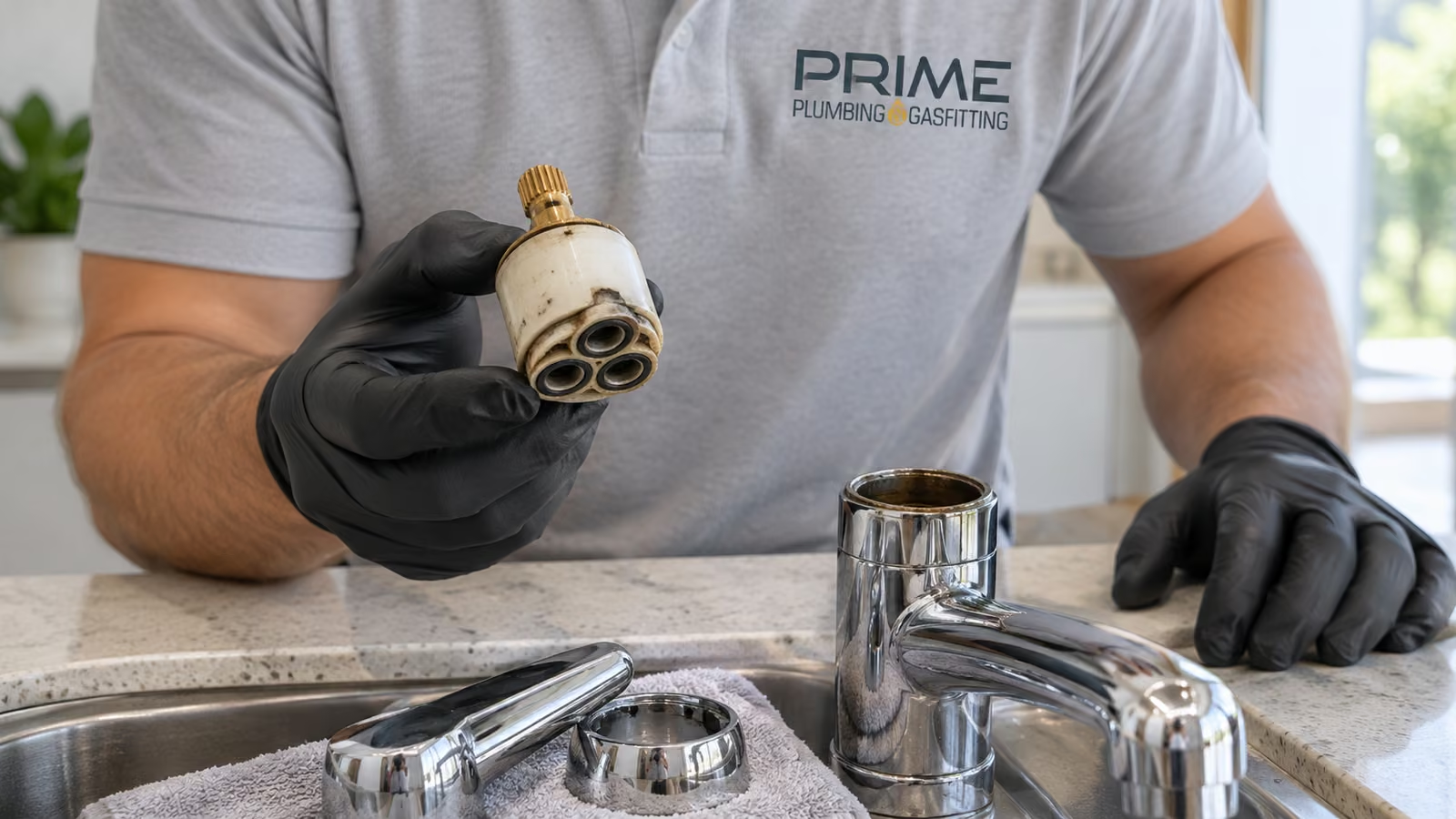
Finding which fitting is at fault takes isolating the system and testing it. Swapping a worn cartridge or a stuck non-return valve is licensed plumbing work too, even though it can look like a simple tap job.
A continuous flow unit heats water as it passes through, so it can only lift a certain amount of water by a certain number of degrees each minute. Ask for more than that and the temperature drops.
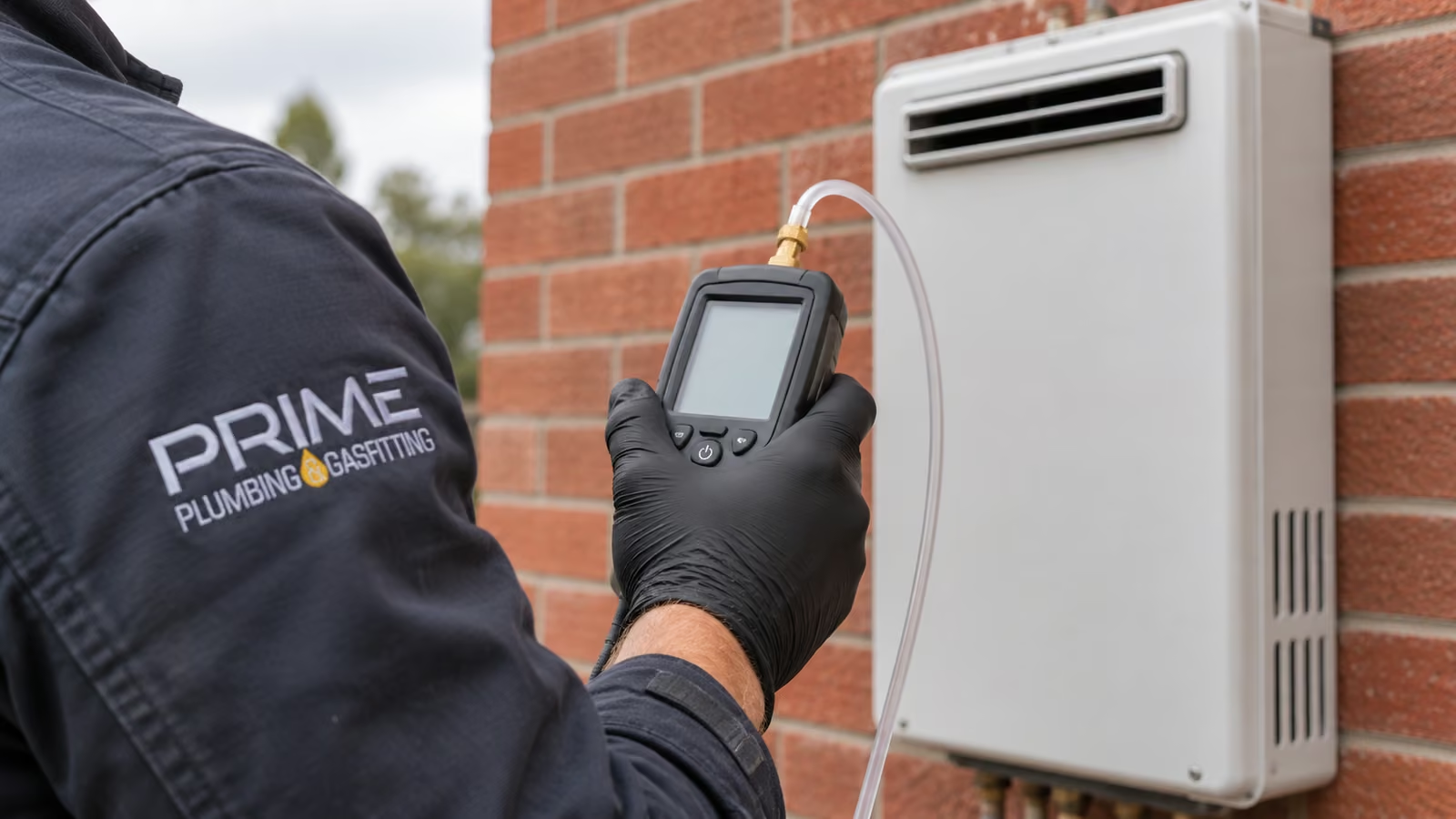
A plumber can check the flow the unit delivers against its rating, and a gasfitter can check the gas pressure with everything running. The answer might be spreading out hot water use, work on the gas supply, or a unit sized for the household.
| What you notice | Likely cause | Who sorts it |
|---|---|---|
| Shower milder than the kitchen tap, bathroom near 50°C | Tempering valve working as designed | Nothing to fix |
| Bathrooms well under 50°C, kitchen hot | Tempering valve drifted or failed | Licensed plumber |
| Whole house lukewarm on a continuous flow unit | Controller set low or priority changed | You, using the owner's manual |
| Gas storage lukewarm, dial turned down or left on pilot | Setting changed, often after a holiday | You, only as the owner's guide describes, otherwise a plumber |
| Taps all lukewarm, yet a thermometer at the unit outlet (the plumber's check) shows it heating fine | Cold crossing into the hot line | Licensed plumber |
| Fine with one shower, lukewarm with two | Flow above what a continuous flow unit can heat | Licensed plumber, gasfitter if gas supply |
| Lukewarm in cold weather, heat pump or solar | Slow heating in winter, or the booster off or failed | You check the switch, plumber for the rest |
| Hot water runs out sooner than it used to | Tank too small now, failed element or burner, or sediment | Licensed plumber (element or thermostat work also needs an electrical licence) |
| You can safely | Leave to a licensed plumber, gasfitter or electrician |
|---|---|
| Measure the water at the bathroom basin and the kitchen sink with a cooking thermometer | Adjusting, resetting or replacing a tempering valve |
| Check the set temperature and priority on continuous flow controllers | Replacing a mixer cartridge or a non-return valve |
| Check a gas storage user dial isn't turned down or on pilot, only as your owner's guide describes | Anything on the gas side, including gas pressure checks |
| Check the solar booster or heat pump switch is on | Opening the electrical cover or changing an electric thermostat (licensed plumber with an electrical licence, or an electrician) |
| Note when it happens and which taps are affected | Element, burner, booster or sizing faults, and replacing the unit |
A heat pump takes heat out of the outside air, so it works harder and heats more slowly when the air is cold. In winter it may also stop heating for a while to defrost its coil. Manufacturers' guides describe water that is cooler than expected in cold weather because the unit hasn't had enough time to heat. Many heat pumps have an electric element that helps in very cold weather, and if that element has failed, winter is when you find out.
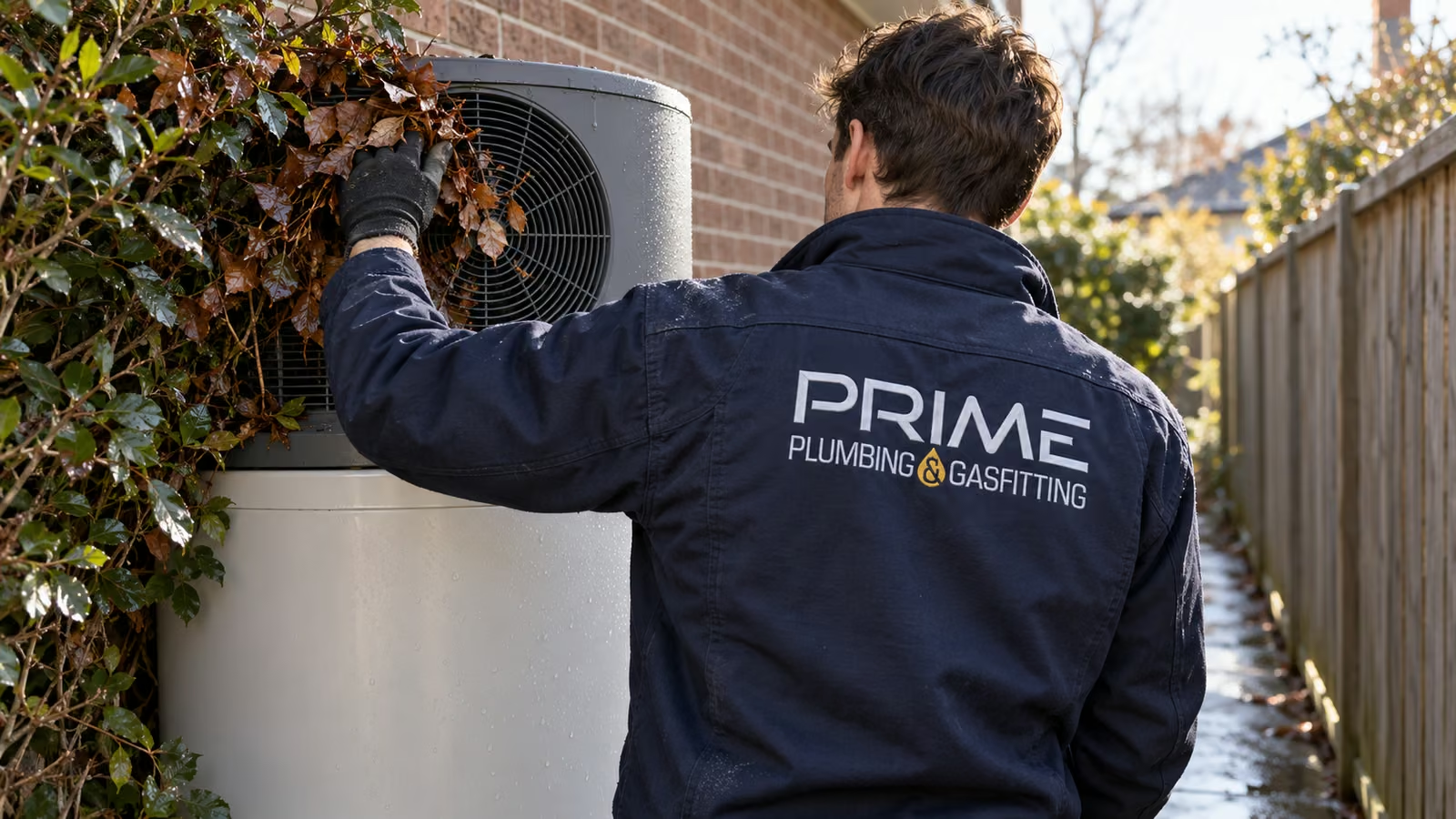
So lukewarm water on a cold morning after a lot of use the night before isn't always a fault. Water that stays lukewarm all day, or a unit showing an error code, is. Check the controller for codes and make sure nothing is blocking the air intake, then see the no hot water checks for the rest. Refrigerant faults need a technician with a refrigerant handling licence, often arranged through the manufacturer's warranty.
On a solar system the gas or electric booster gets the tank to 60°C on cloudy days and through a Melbourne winter, so a booster switched off over summer and forgotten leaves you with water only as hot as the sun made it that day. Check the booster switch or circuit is on, and if it is and the water is still lukewarm, have a plumber look at it rather than going up on the roof.
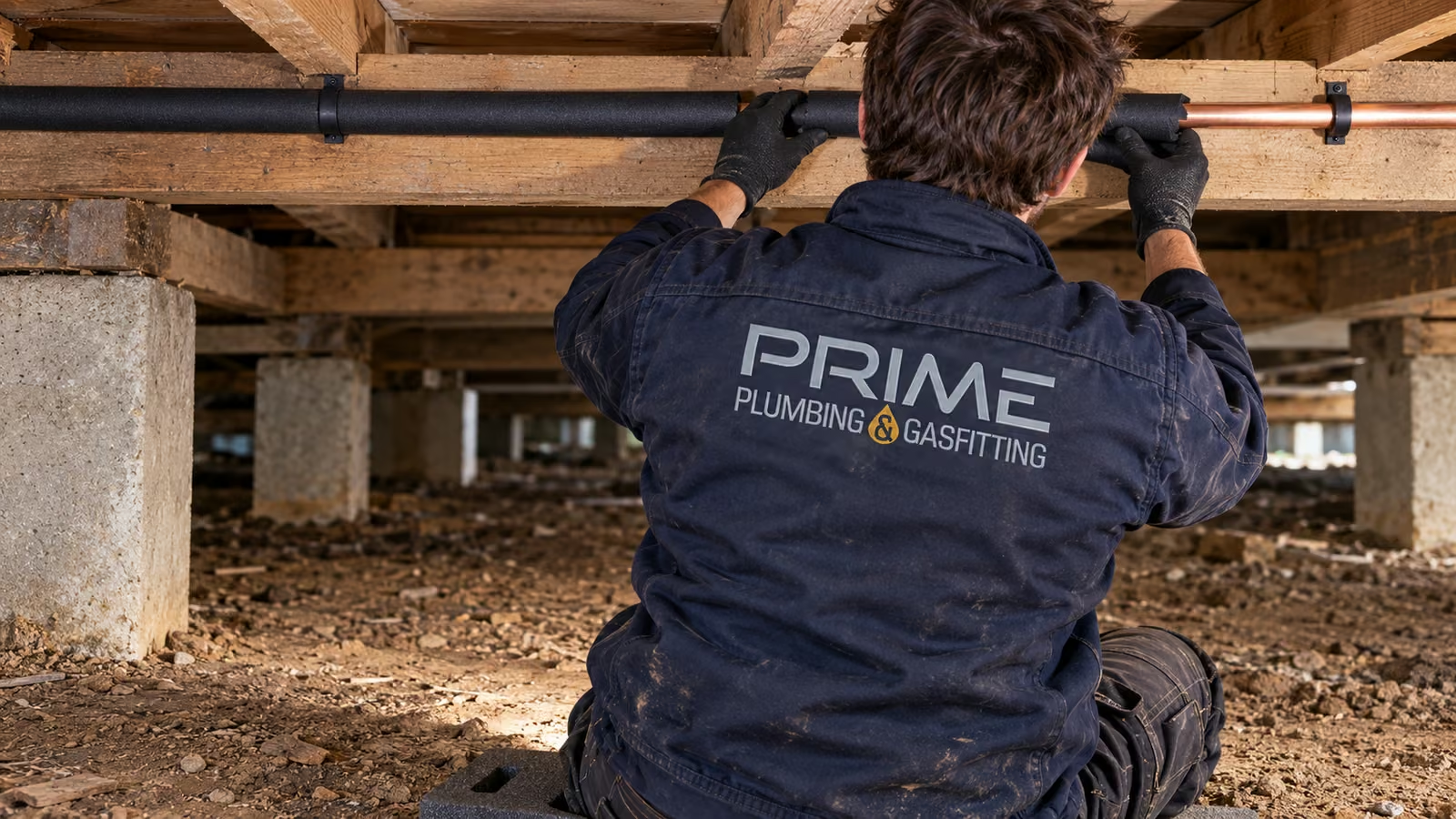
Where the hot water unit is at one end of the house and the main bathroom at the other, the water sitting in the pipe cools between uses. You run off a pipe full of cold water before the hot arrives. In winter, pipe running under a cold floor also loses heat on the way, most of all at a low flow such as a basin tap barely open. The water at the far end can be noticeably cooler than at a tap near the unit.
A licensed plumber can look at the options for your layout. Depending on the house, they include insulating the pipe where it can be reached, a flow and return loop that keeps hot water moving, or a second smaller unit closer to the bathroom. None of these is a quick fix, so rule out the faults above first.
Hot water that runs out sooner than it used to is a related but different problem. Common reasons are a household that has outgrown its tank, a failed element or thermostat on an electric unit, a gas burner that isn't firing properly, or sediment in an older tank. Our guide to why hot water starts costing more covers sediment and sizing in detail, and the no hot water guide covers a tank that runs cold quickly. If the hot water runs out and then takes much longer to come back than it used to, have it checked.
When a plumber comes out for lukewarm hot water, the job is to find which part of the system is pulling the temperature down before anything gets replaced. Expect the visit to cover:
Licensed work that needs one comes with a Compliance Certificate. If the unit itself turns out to be the problem, our hot water installations and repairs page covers gas, electric, heat pump and solar repairs and replacements.
In most newer homes the bathrooms are fed through a tempering valve that limits the water to about 50°C, while the kitchen and laundry can get hotter water straight from the unit. A milder shower is normal. If the bathroom water is well under 50°C when you measure it, the tempering valve may have drifted or failed, and a licensed plumber can test and reset or replace it.
No. Adjusting a tempering valve is licensed plumbing work (see the jobs a Victorian homeowner is allowed to do). It has to be set with a calibrated thermometer so the bathroom water doesn't go over 50°C, then locked. Turning it up by feel is a real scald risk, especially for children and older people. If the water is too cool, have the valve checked.
It rarely helps. A storage unit already has to hold 60°C or more, and the tempering valve still limits the bathroom to about 50°C, so a hotter tank mostly makes the kitchen tap more dangerous. The exception is a gas storage dial that has been turned down below its normal setting, or a continuous flow controller set low. Putting those back to normal is fine when your owner's guide shows you how. If it doesn't, ring a plumber.
Colder incoming water means a continuous flow unit has to lift it further, heat pumps heat more slowly in cold air, and solar systems lean on their booster. A unit that copes in summer can fall short in winter. If yours is only lukewarm in the cold months, check any booster switch, then have the unit and its sizing looked at.
On a continuous flow unit, two outlets at once can need more hot water than it can heat. On any system, a faulty mixer or non-return valve can let cold water into the hot line, and that gets worse as pressures change when other taps open. A plumber can tell which with a flow check and a crossover test.
Not until you know the unit is the problem. A drifted tempering valve, a crossover at a mixer, a setting or a long pipe run will give the same lukewarm water with a brand new unit. Have the temperatures measured and the system tested first, so you don't replace a unit that is working.
A few details make the first conversation much more useful:

Hot water still lukewarm? Call Prime Plumbing & Gasfitting on 0475 407 670. Hours are Mon-Fri 7-5, Sat 8-1. Prime Plumbing & Gasfitting works across Melbourne's east and south-east, and you can check your suburb on the service area page. Let us know the type of unit and whether the kitchen and bathroom taps run differently.
Related plumbing topics: