Heat Pump Hot Water Noise: How Loud Are They and What Can You Do About It?
heat pump hot water noise: How loud is a heat pump hot water system? Typical decibel levels, where noise comes…

What Is a CCTV Drain Inspection? A Plumber's Guide for Melbourne Homeowners, a Prime Plumbing & Gasfitting plain-English guide to what is cctv drain inspection for Melbourne homeowners. Below we cover what works, what doesn't, and when to call a licensed plumber.
Quick answer: A CCTV drain inspection (also called a sewer camera inspection or drain survey) is a visual diagnostic where a small waterproof camera on a flexible cable is fed down a drain to record the inside of the pipe. The plumber sees a live feed on a monitor and gets a recording you can keep. It shows blockages, root intrusion through joints, cracks, displaced or collapsed pipe sections, off-grade pipe, scale build-up, and material accumulations. Cost in Melbourne in 2026 is typically $300-$700 standalone, or $200-$300 as an add-on to other drain work. CCTV is the right tool when a drain is repeatedly blocking, before excavation work, before buying a property over 30 years old, or whenever you need to know what's actually wrong rather than guess.
The equipment is a self-contained kit: a waterproof high-resolution camera head, a flexible push-rod cable (typically 30-60m long), a portable monitor, and recording electronics. The cable is fed into the drain through an existing access point (a clean-out, gully, vent, or fixture in some cases), and as it pushes through the line the plumber watches the live feed on the monitor.
Modern Melbourne CCTV drain kits include:
The result is a video file plus a written report identifying what was seen, where it was, and what (if anything) needs to be done about it.
These limitations are why a CCTV report is read alongside other diagnostics (water test, smoke test, dye trace, visible signs above ground), not in isolation.
Most Melbourne households never need a CCTV inspection. A drain blocks, a snake clears it, life moves on. The scenarios where CCTV genuinely changes the outcome:
If the same drain has blocked twice in 12 months, the second visit is the right time for CCTV. The recurrence is telling you the snake or jet wasn't a fix, there's an underlying issue. CCTV typically reveals one of: root intrusion at a joint, an off-grade pipe section that traps material, a partial collapse, or heavy scale build-up. Each has a different fix.
Excavation is expensive, easily $2,000-$8,000 for a residential sewer dig in metro Melbourne, more for difficult access or paved-over yards. A CCTV inspection that costs $400-$700 first identifies exactly where to dig and confirms excavation is actually the right answer. Digging without CCTV is digging blind.
Relining (a specialist trade Prime doesn't offer) requires the existing pipe to be in a specific condition, not too collapsed, not too off-grade, geometry suitable for the resin liner. A pre-relining CCTV survey is non-negotiable for the relining contractor to quote accurately.
For a Melbourne property over 30 years old, particularly older homes, a CCTV drain survey before settling reveals issues that the building inspector won't catch (building inspectors don't survey drains). We'll cover this in detail in a separate post on pre-purchase CCTV surveys.
Sewer smell inside the building, drains that are slowing without an acute blockage, or wet patches over the sewer easement in the lawn all suggest something is wrong but unspecified. CCTV identifies what.
If your water authority has issued a notice about your sewer connection, or if there's an insurance claim involving sewer overflow or root damage, documentary CCTV evidence is what gets you to a resolution.
Tree planting near a sewer easement, foundation work near drains, or pipe-adjacent excavation can all damage drains in ways that take months to manifest. A baseline CCTV pre-works and a follow-up post-works gives you objective evidence of any change.
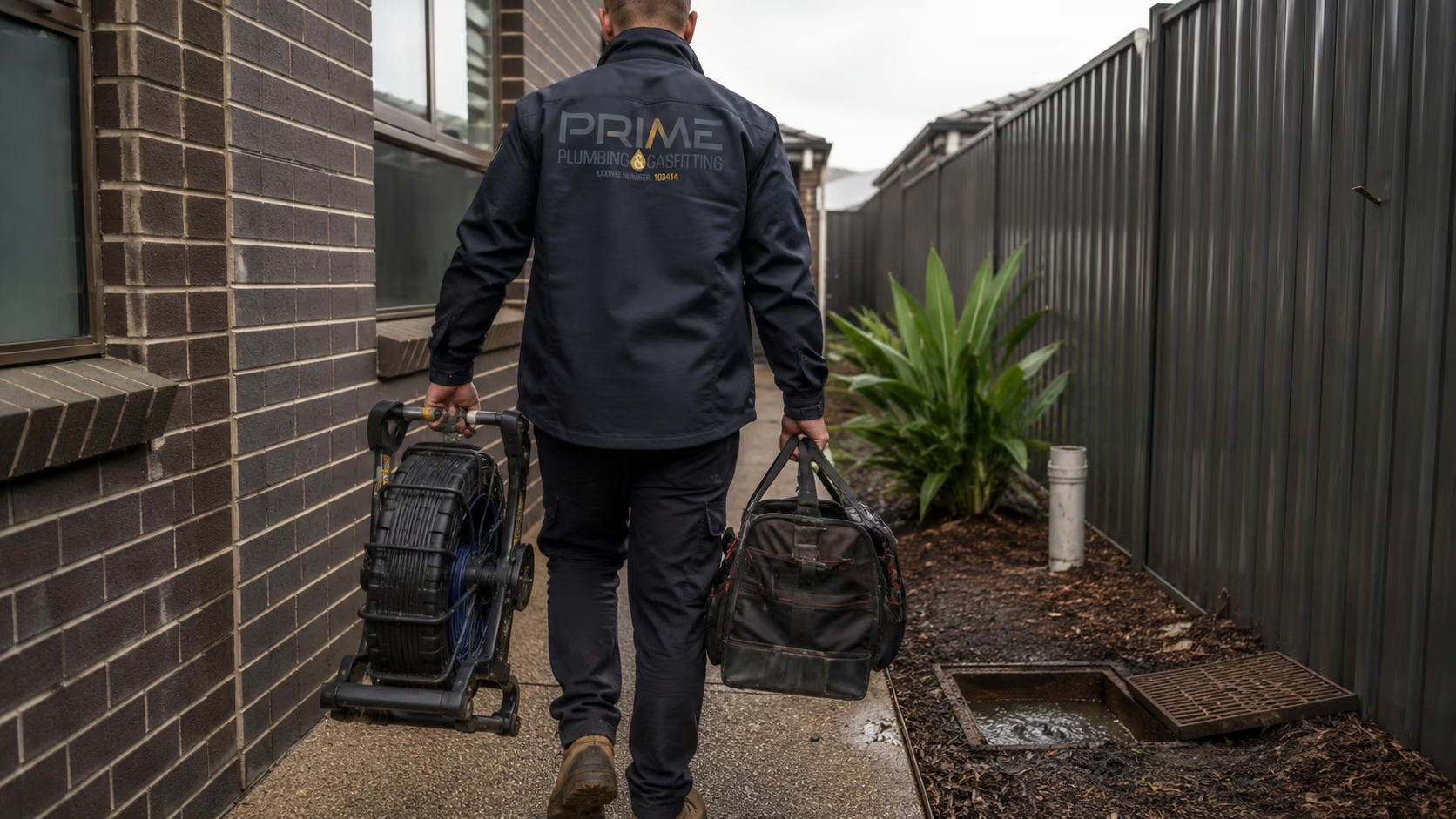
The actual visit is fairly low-drama for the householder:
Total time on site: typically 60-90 minutes for a standalone CCTV inspection, longer if it's combined with other work (jetting, snake, dye trace).
You don't need to be home during the inspection if access has been arranged, the plumber works at the clean-out outside, and the report is delivered after.
Call 0475 407 670 or send through the contact form. Tell us why you want the inspection, recurring blockage, pre-purchase, pre-renovation, insurance, and we'll quote the appropriate level of detail and reporting.
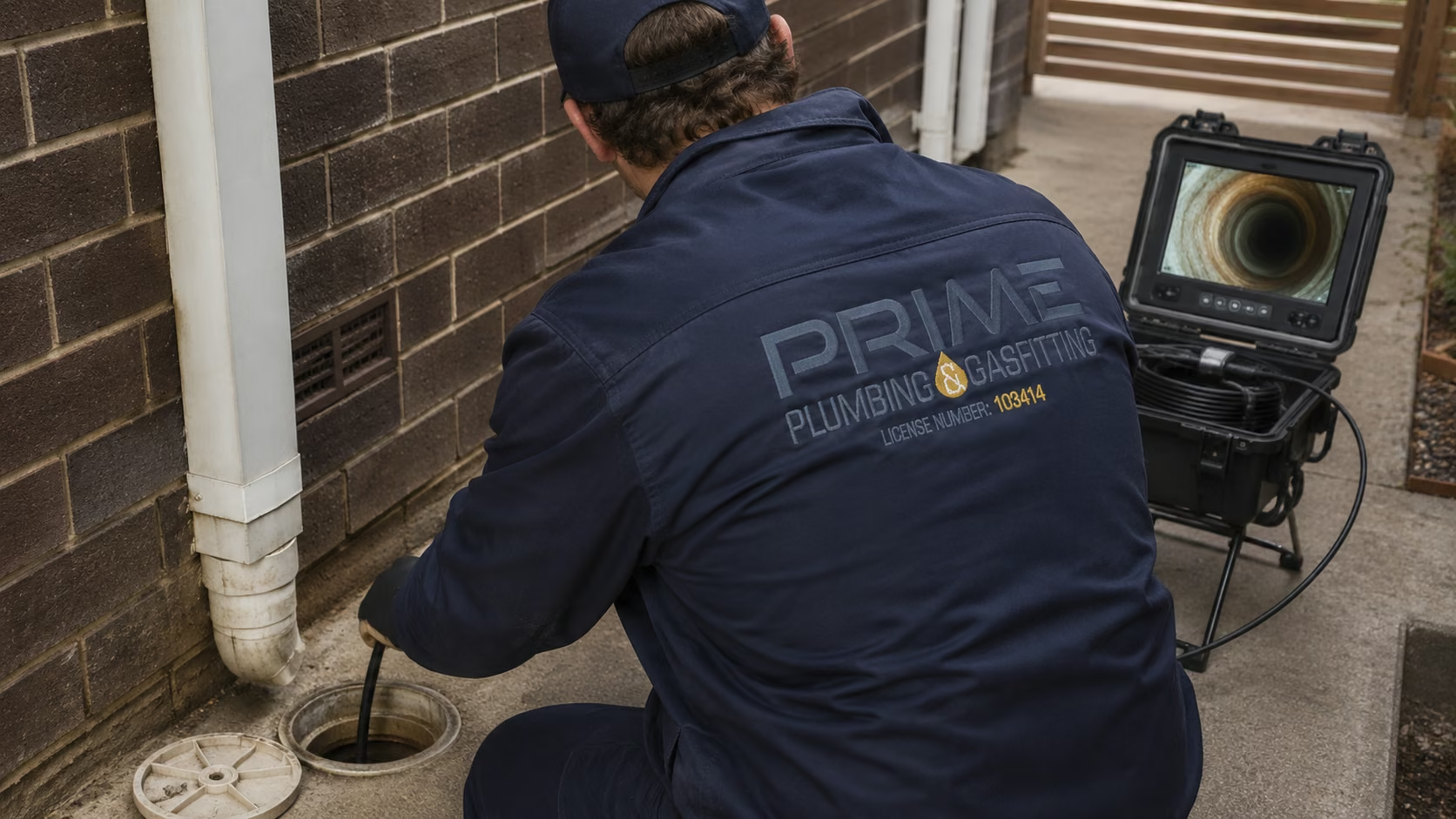
CCTV is rarely the only thing done in a single visit, it's almost always the diagnostic step before or after another piece of work. The common combinations:
The principle: don't pay for jetting until you've seen the line; don't pay for excavation until you've located the defect. CCTV is the cheapest investment in not making the next decision blindly.
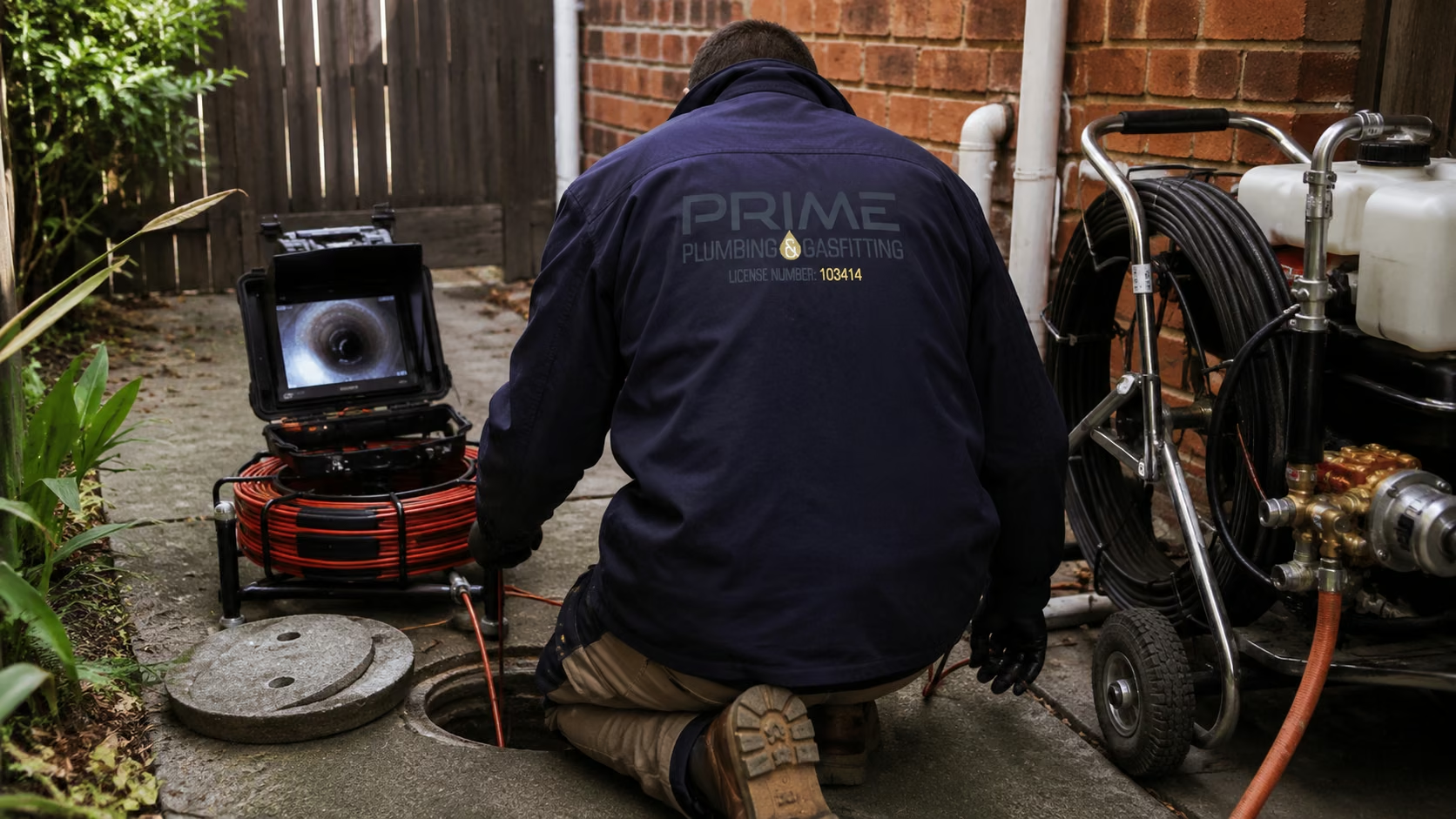
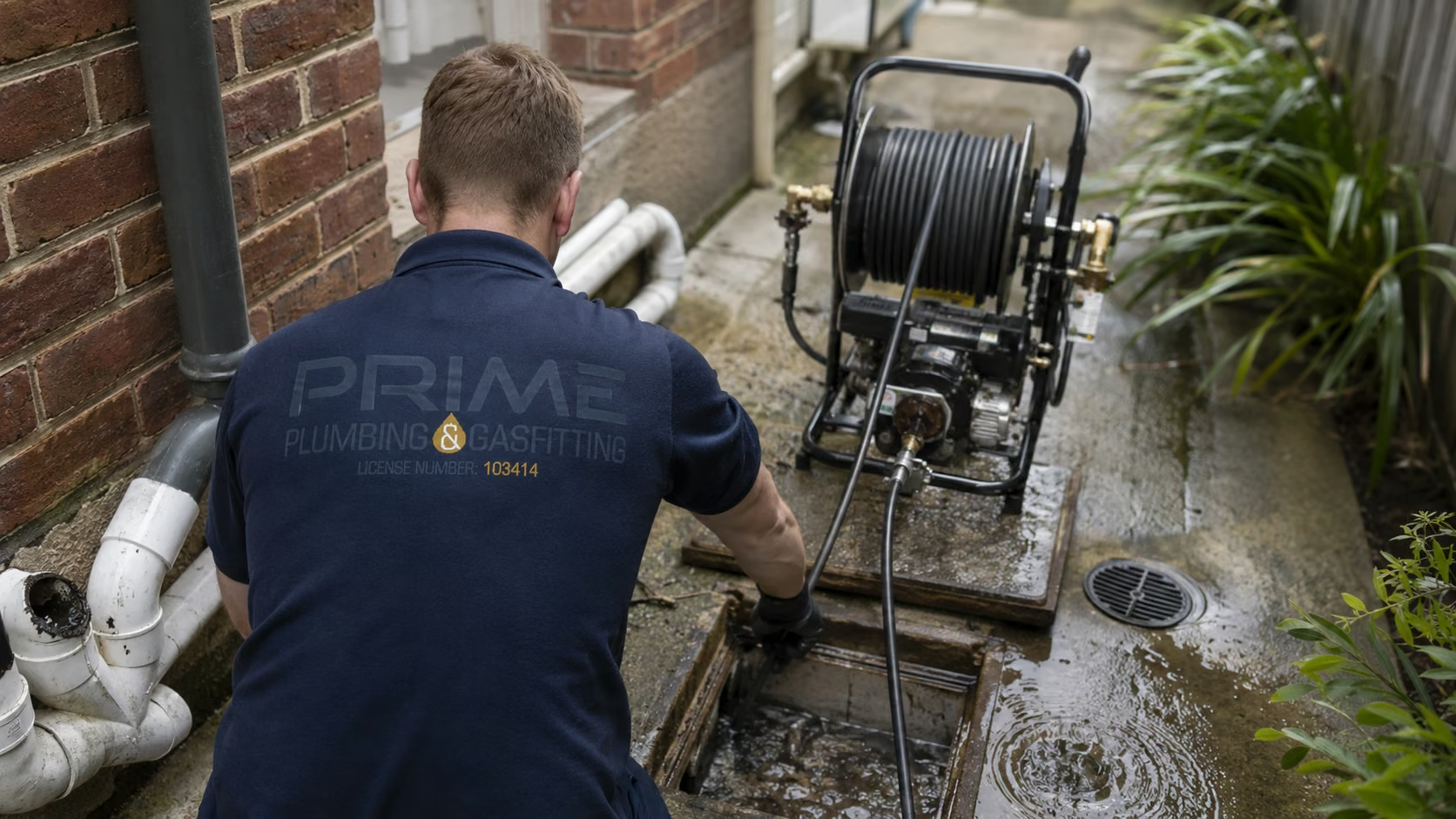
Prime Plumbing & Gasfitting carries CCTV inspection equipment to every drain job across Melbourne's eastern, south-eastern, inner-east, and bayside suburbs. See all suburbs we service
Verify any plumber via the Building and Plumbing Commission licence search before booking.
Hire-yard CCTV kits exist, and consumer-grade endoscope cameras have come down in price enough that some homeowners try DIY. The limitations are: most consumer kits don't have a sonde locator (so you can't pinpoint where in the yard a defect is), the cable lengths are short (10-15m vs the 30-60m a plumber's kit reaches), and reading what you're looking at requires familiarity with pipe materials and defect types. For a quick check of an obvious problem you can sometimes get a partial result; for diagnostic-quality footage and a usable report, the licensed plumber's gear is what you want.
A typical residential CCTV inspection produces 15-30 minutes of footage. You receive the video file (usually MP4) on a USB or via download link, plus a written report with screenshots of significant findings, distance markers, and recommendations. Keep both, they're useful for insurance, future plumbers, or property records.
It happens, the line might be too long for the cable, blocked further down than the camera can reach, or have a tight bend the camera head can't navigate. The report notes how far the camera reached and what the obstruction was. Sometimes a follow-up jet pass clears the blockage and a second CCTV pass completes the survey. Sometimes a different access point gives you the rest of the line. The plumber should explain which applies.
No, the camera head is small and waterproof, fed at low force. It can't damage a sound pipe. On already-damaged pipe, a careful CCTV pass actually reduces risk because the plumber sees the defect and avoids forcing the camera through.
Standalone, $300-$700 depending on length, complexity, and report depth. As an add-on to jetting or other work, $200-$300. Pre-purchase reports with detailed written documentation tend to be at the higher end. Bundled "free CCTV with jetting" offers usually mean a brief look on the live monitor without a saved video or written report, fine for a basic visual check, not enough for documentary purposes.
For documentary purposes (pre-purchase, insurance), within 12 months is normally accepted. For a recurring-problem diagnostic, the relevant footage is from after the most recent significant change (a recent blockage, a landscaping job, a pipe-adjacent excavation). If the property has had work done since the last CCTV, a fresh pass is what you want.
Sometimes, through a roof vent (working at height), a gully trap, or by lifting a fixture. None of those are as straightforward as a properly-installed external clean-out. If your property doesn't have a clean-out, installing one ($300-$600 typically) makes future drain work materially cheaper and safer.
A quick checklist to share with your plumber when you book: