Hydronic Heating Not Working? Cold Panels, Low Pressure, Noise and Lockouts
Hydronic heating not working? Safe checks for cold panels, low pressure, noise and lockouts, what each problem means, and when…

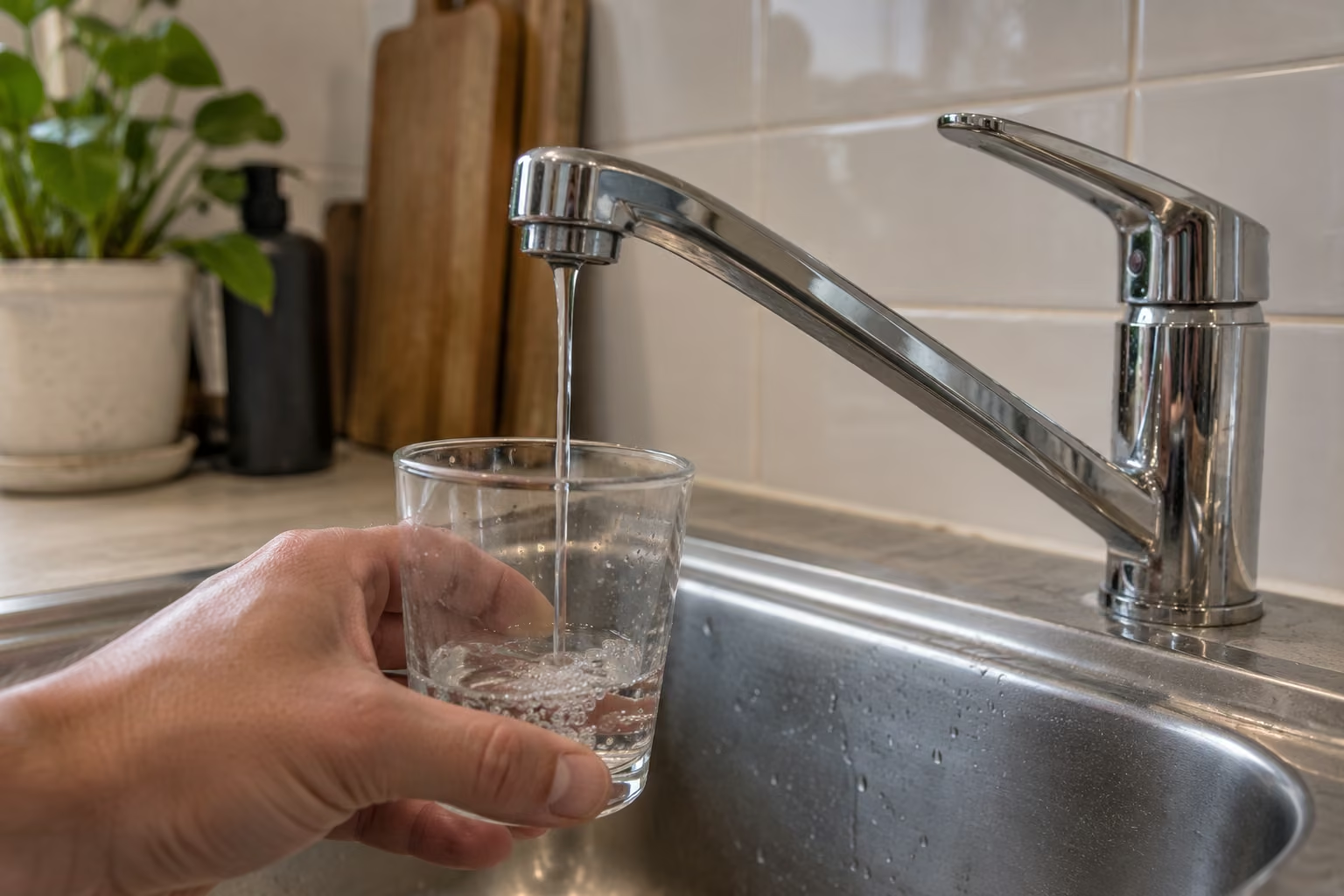
Low water pressure in house taps and showers comes from a short list of causes, and you can rule a lot of them in or out yourself. The trick is working out where the pressure is being lost: at one tap, on the hot side only, or across the whole property. Below are the safe checks, what each result tends to mean, and what a plumber does from there.
Quick answer: Work out where the pressure is being lost. One weak tap or shower points to that fixture, most often a clogged aerator or shower head. Weak hot with good cold points to the hot side. Weak everywhere points to the supply or your own pipework, and the garden tap by the meter tells you which.
Want it looked at? Call 0475 407 670. Mon-Fri 7-5, Sat 8-1. Check we cover your area on the service area page.
Water bill jumped as well? A leak can drop the pressure, so run the meter test in our guide to finding a water leak in your house first.
Low water pressure in house plumbing tends to follow a pattern, and the pattern points at a short list of parts. Work through these three questions before you ring anyone.
Turn on the cold at the kitchen sink, then a bathroom basin, the shower and the laundry, one at a time. Then try the hot at the same taps. Finish at the garden tap nearest the water meter, which is normally at the front of the property, with the main stop tap fully open. That tap shows what the supply is like before the rest of the house gets a say.
Ask a neighbour whether their pressure has dropped too, and check your water retailer's website for faults and planned works. In Melbourne's east and south-east that is mostly Yarra Valley Water or South East Water, and your retailer's name is on your water bill. If the whole street is affected, it's the retailer's to sort out, and a plumber can't fix it from your side of the meter.
Yarra Valley Water also publishes a bucket test on its website. With the main stop tap fully open, you time how long the tap closest to the meter takes to fill a bucket. If it is slow, the problem is before the meter and Yarra Valley Water wants a call. If it is fine, the problem is after the meter and needs a plumber. If you are with South East Water, ring the faults number on your bill instead.
A sudden drop normally means something changed. A slow fade over months or years points to build-up or wear. The lists further down go through both.
When the trouble is at a single fixture, start with the cheapest explanation and work up.
The aerator is the small screen screwed into the end of a tap spout. It catches grit and builds up scale, and after mains work in the street it can fill with sand or rust. Shower heads clog the same way.
Cleaning them is homeowner work. Our guide to what plumbing you can do yourself sets out what else is allowed without a licence in Victoria.
If the tap runs strongly with the aerator off and weakly with it back on, you have found the problem. If it is still weak after a clean, or the screen is torn, ask a plumber about a replacement.
Newer shower heads are made to use less water, and many have a flow restrictor built in. If the shower has been weak since a new head went on, it may be giving the flow it was designed for rather than showing a fault.
In a mixer tap the water passes through a cartridge inside the body. When a cartridge wears or picks up grit, it can restrict the flow, make the handle stiff, or let the tap drip. If the aerator is clean and a mixer is still weak, the cartridge is the next suspect. Replacing it means isolating the water, getting the exact cartridge for that brand and model, and taking the tap apart, so most people get a plumber to do it. Our post on mixer cartridge replacement covers the signs and what is involved.
Most basins, sinks and toilets have a small isolation valve on the pipe underneath. If someone turned it down to fix something and didn't open it all the way again, that fixture will run weak. Gently opening it the rest of the way is fine to try. If it is stiff, leaks when you turn it, or makes no difference, leave it for a plumber.
A kinked flexible hose under a sink or behind a toilet can do the same. Have a look, but leave straightening or replacing it to a plumber.
If the cold runs well and the hot is weak at every tap, the restriction is on the hot side. These are the places to look:
One thing not to do: don't turn down the thermostat on the hot water unit, or adjust the tempering valve, to change how the hot water feels. A storage tank has to keep its water at 60°C or more to stop bacteria growing in it, and the tempering valve is what brings it down to a safe temperature at the taps. Both are set by a plumber for good reason.
Start at the meter. If the garden tap there is weak too and the neighbours are fine, the fault is at the meter end: a part-closed stop tap, the meter itself, a valve fitted right beside it, or the supply coming in. If that tap runs strongly but the house is weak, the fault is on the property side, between the meter and the taps inside. The retailer is responsible up to the meter, and the property owner from there into the house.
The main stop tap sits beside the water meter. If it was turned off for a repair, or the meter was changed, it may not have been opened all the way again. If it has a round handle, turn it gently anticlockwise until it stops. If it has a lever, it is fully open when the lever sits in line with the pipe. That is fine to do yourself. If it is seized or leaking, don't force it. Call a plumber, or the retailer if the fault is in the meter itself.
If the stop tap is fully open and the tap by the meter is still weak, do the retailer's bucket test or give them a call before you book a plumber. The causes below are the ones that leave the meter tap strong and the house weak.
The plumbing standard limits the pressure at the outlets inside a home to 500 kPa. Where the street supply runs higher, a pressure limiting valve is fitted near the meter to bring it down. These valves wear. Some fail by letting too much pressure through, which shows up as banging pipes and a dripping hot water relief valve, and our guide to fixing water hammer covers that side. Others fail the opposite way: the valve sticks or its strainer clogs, and every tap past it runs weak. Testing and replacing a pressure limiting valve is licensed work.
Some older homes still have galvanised steel water pipe, in at least part of the house. Over the years the inside rusts and builds up, and the space for the water gets narrower. The drop is slow, and it is often worst with two taps running at once. Brown or rusty water first thing in the morning is another hint. Narrowed steel pipe can't be cleaned out, only replaced, and a plumber can tell you how much of it is left.
A leak between the meter and the house, or under the floor, takes water away before it reaches the taps. Low pressure on its own doesn't prove a leak. Low pressure together with a higher water bill, a wet patch in the yard or the sound of running water is worth chasing. Our post on underground water leak signs goes through what to look for, and the meter test in how to find a water leak in your house shows whether water is going somewhere it shouldn't. If the meter says there is a leak and you can't find it, that is a job for water leak detection.
If the neighbours are affected too, report it to the retailer even if their website shows nothing yet. Once their work is finished, check your aerators and shower heads, because grit stirred up in the mains often ends up in them.
| Cooktop Type | Typical Layout | Best Suited For | Planning Considerations |
|---|---|---|---|
| Standard 4-Burner | One large, two medium, one small simmer burner | Everyday family cooking | Fits most standard bench cut-outs and kitchens |
| Wok Burner (High Output) | Five burners with a double or triple-ring flame | High-heat cooking and stir-frying | Requires wider cut-out and stronger ventilation |
| Fish or Griddle Burner | Elongated oval burner | Long pans and cast-iron griddles | Needs additional horizontal space |
| Modular (Domino) Cooktops | 1 or 2 burners, approx. 30cm wide | Custom kitchen layouts | Often combined with induction or other modules |
| Dual Fuel Setups | Gas cooktop with electric oven below | Flexible cooking and baking | Requires gas and electrical planning |
| Cooktop Width | Common Use | Notes |
|---|---|---|
| 60cm | Standard kitchens | Common in apartments and existing homes |
| 75cm | Larger cooking zones | Popular in renovated family kitchens |
| 90cm | Five-burner layouts | Requires ample bench space and ventilation |
| 30cm (Modular) | Custom layouts | Used in modular cooking stations |
How fast the pressure went is the third clue.
A plumber works through the same questions, with gauges in place of guesswork. What gets tested depends on the pattern, but a visit for low pressure will often include:
Sometimes the answer is clear from the first test, and sometimes it takes a process of elimination, especially where old pipe and a tired valve are both playing a part. Either way, ask what was found and what the options are before agreeing to a repair.
A few details make the first visit more useful:
Photos of the meter, the stop tap, any wet patches and the pipework around the hot water unit help too. If it turns out to be a leak, our leak detection service is the next step.
Rule out the street first. Burst mains and works are a common reason for a sudden drop, so ask a neighbour and check your retailer's faults page. If it is only your place, check nobody has left the stop tap half closed, and look and listen for a leak. A stuck pressure limiting valve can also drop the whole house at once. If none of that explains it, call a plumber.
Something on the hot side is holding the flow back, most often the tempering valve or its strainers, or a valve on the hot water unit. Some older systems are also built to run at low pressure. Check the cold valve into the unit is fully open, then leave the rest to a plumber.
Call the retailer if the neighbours have lost pressure too, or if the tap by the meter is weak with the stop tap fully open. Yarra Valley Water's bucket test checks exactly that. The retailer is responsible on the street side of the meter. If the street is fine and only your taps are weak, the problem is on the property side, and that is a plumber's job.
You can clean the shower head, which is homeowner work in Victoria. Unscrew it, soak it in vinegar and clear the holes. Swapping it for another water-efficient shower head (3-star WELS or better) is also allowed without a licence. If the shower is still weak, the cause is more likely a worn mixer cartridge, a valve behind the wall or the hot water side, and those are best left to a licensed plumber. Our guide to doing your own plumbing in Victoria sets out where the line sits.
You can't be sure without a gauge. The valve is there to stop the pressure getting too high, but as it wears it can stick or its strainer can block, and then every tap in the house runs weak. A plumber can test the pressure either side of it and replace it if it has failed.
Turn off every tap and appliance that uses water, then watch the meter. A leak on the supply pipe that is big enough to drop the pressure will normally keep the meter moving. A higher bill or a soggy patch in the yard backs it up. If the meter moves and you can't see why, ask a plumber about leak detection.
Run through these and jot down the answers for the plumber: