Heat Pump Hot Water Noise: How Loud Are They and What Can You Do About It?
heat pump hot water noise: How loud is a heat pump hot water system? Typical decibel levels, where noise comes…

Can Water Hammer Damage Pipes? An Honest Plumber's Answer, a Prime Plumbing & Gasfitting plain-English guide to can water hammer damage pipes for Melbourne homeowners. Below we cover what works, what doesn't, and when to call a licensed plumber.
Quick answer: Yes, water hammer can damage pipes, fittings, and appliance valves over time. The damage is gradual rather than sudden. The most common patterns we see in Melbourne homes are loosened compression fittings, hairline fatigue cracks at clipped pipe sections, premature failure of appliance solenoid valves (washing machines, dishwashers), and dripping pressure-relief valves on hot water units. Catching water hammer early, when it's just a noise, costs much less than waiting for it to cause a leak.
The bang itself isn't dangerous to you. But the question we get asked most often after diagnosing water hammer is: "is it actually damaging anything?"
Honest answer: yes, gradually. Here's what we actually see on Melbourne callouts where water hammer has been ignored for years.
When a fast-closing valve stops the flow, the water column has momentum. That momentum has to go somewhere, and where it goes is into a pressure spike that travels back through the supply line as a shockwave. The peak pressure during a water hammer event can briefly hit several times the normal static pressure.
For context: AS/NZS 3500.1 caps static pressure at fixtures at 500 kPa. A water hammer pressure spike can briefly hit 1500-2000 kPa or more. Your pipes, fittings and joints are designed for the static pressure, not the spike.
A single spike doesn't damage anything, pipes have plenty of safety factor. But repeated spikes thousands of times over years gradually fatigue the components that absorb them.
Compression fittings rely on a brass olive being squeezed between the nut and the fitting body. The seal isn't infinitely tight, it's relying on the olive staying in compression. Repeated shock-loading slowly relaxes that compression, and eventually the joint starts weeping.
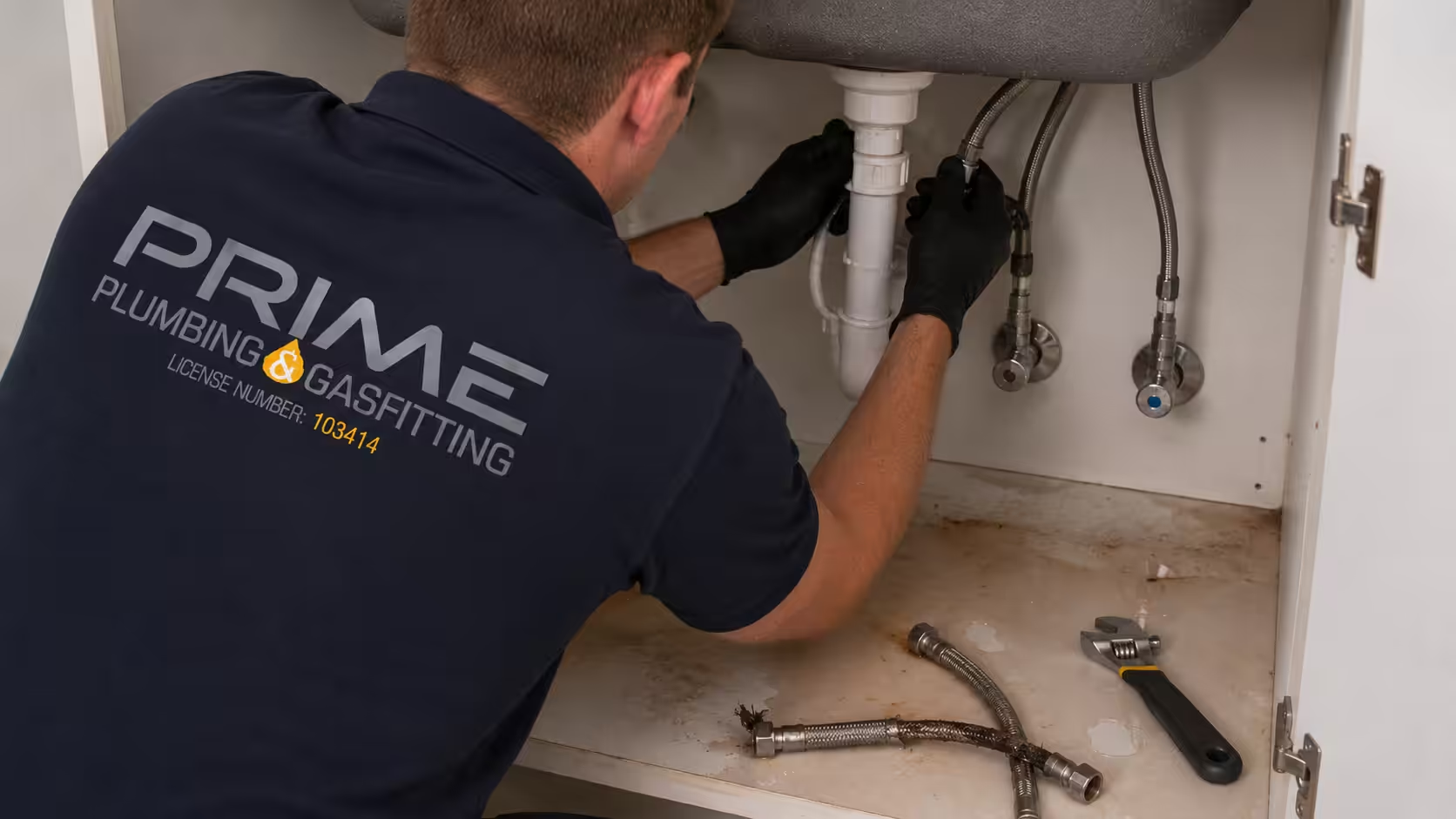
Real example: On a recent Camberwell callout, the homeowner had been hearing water hammer for "ages" (their word) and one morning noticed a small wet patch under the kitchen sink. The compression fitting at the dishwasher cold-water tap had finally let go, not catastrophically, just a slow weep that had been growing for months. Tightening the nut bought a few weeks; the fitting needed replacement properly. We also fitted a hammer arrestor at the same time so it wouldn't happen again.
Where a copper pipe is clipped tight to a joist or strapped against a wall, the pipe can't move. Every shockwave bends the unsupported sections between fix points slightly, and the bend concentrates at the clip itself. Over years that point develops microscopic fatigue cracks that eventually become a pinhole leak.
This is why "old copper finally giving up" leaks tend to cluster at fixing points rather than in the middle of a clear run.
Washing machines and dishwashers have an internal solenoid valve that closes the water at the end of each fill cycle. Those valves are rated for normal residential pressure, not for repeated shock loads. Properties with chronic water hammer often see the appliance valves fail several years earlier than they should.
Real example: On a recent Brighton callout, the homeowner had replaced their washing machine inlet valve twice in three years on the same machine. The machine itself was fine; the valve kept dying. Mains pressure measured at 720 kPa, well above AS/NZS 3500 limits. We installed a pressure-limiting valve at the meter, brought pressure down to 400 kPa, and the next inlet valve outlasted the rest of the appliance.
Most appliance manufacturer warranties specifically exclude damage caused by water hammer because they know the valves aren't rated for repeated shock loading.
The pressure-relief valve on a hot water unit is designed to vent slightly when system pressure exceeds the unit's rated working pressure. On a healthy system it shouldn't drip at all in normal operation, maybe a few drops during heat-up cycles.
If the relief valve is constantly dripping, the system is over-pressure. Water hammer is one cause; high incoming mains pressure (often the underlying driver of both the relief valve drip AND the water hammer) is more common.
Toilet fill valves close fast on the modern dual-flush mechanism. On chronic-hammer properties, we see fill valves that drip slowly into the bowl, weep at the supply connection, or fail entirely sooner than they should.
A few things people sometimes worry about that water hammer typically doesn't cause:

Look for these signs:
| Sign | What it suggests |
|---|---|
| Damp patch under sink, behind toilet, or near appliance | Compression fitting or supply hose loosening |
| Small unexplained increase on water bill | Slow leak somewhere, could be hammer-driven |
| Hot water relief valve constantly dripping | System over-pressure; hammer often a contributing factor |
| Appliance fill cycles getting shorter or appliance failing | Solenoid valve wearing out |
| Bang has been there for years and just got louder | Pipe clip loosening or fitting opening up |
| Tap cartridges failing more than once every 5 years | Hammer + high pressure stressing cartridges |
If two or more apply, get the hammer diagnosed sooner rather than later.
Worried your water hammer has already done damage? Call 0475 407 670 or send your address through the contact form.
If shockwave damage has already caused a leak, our burst pipe repair page covers that side of the work. For the underlying cause and broader fix list, see what causes water hammer and how to fix water hammer.
About the author
Alister Williams is the founder and lead plumber of Prime Plumbing & Gasfitting. He's been licensed under BPC #103414 for over a decade, is licensed for gasfitting with the Building and Plumbing Commission, and is a member of the Master Plumbers Association of Victoria.

Book a water hammer diagnosis if:
Most diagnoses complete in one visit; the fix usually follows in the same visit or the next.


Prime Plumbing & Gasfitting services water hammer and supply-line damage repair across Melbourne's eastern, south-eastern, inner-east and bayside suburbs. See all suburbs we service
Some plumbing problems are DIY-friendly; others need a licensed professional under Victorian law.
Anything involving gas, sewer drainage, hot water units, backflow prevention, or work behind tiled walls must be handled by a licensed plumber or gasfitter.
It varies, on a property with mild hammer (occasional bang, mains pressure within spec), damage might not appear for 10+ years. On a property with chronic hammer and high mains pressure, you can see fitting weep within 2-3 years. The rate scales with both spike intensity and frequency.
Rarely. Bursts on copper supply line are usually electrolytic corrosion or freeze damage, not water hammer alone. What water hammer DOES cause is gradual fitting weep at compression joints, which can eventually become a more dramatic leak if ignored long enough.
Less than it damages copper. Plastic and PEX absorb shockwaves better than rigid copper. But the fittings (where plastic joins anything else) still take the stress, and appliance solenoid valves are appliance-specific so the hammer affects them regardless of supply-line material.
Generally yes for the resulting damage (water damage to floors, ceilings, etc.) but most insurers expect you to address the underlying cause once you become aware of it. If your water hammer has been audible for years and you didn't act, an insurer may argue it's a maintenance issue rather than sudden damage.
You can't, definitively, after the fact. But the diagnostic pattern is fairly consistent: leaks at fitting points (not mid-pipe), appliance valve failures earlier than expected, and the hammer noise itself preceding the damage by months or years. A plumber's written report at the time of repair can support an insurance claim.
A water hammer fix (pressure-limiting valve, hammer arrestor, or both) is a small one-off cost. The damage from leaving it alone scales:
We've seen plenty of jobs where the hammer was making noise for 5+ years and the eventual leak repair cost more than fixing the hammer would have at the start. Calling early genuinely saves money, not always a sales line.

If you're unsure, Prime Plumbing & Gasfitting can inspect the issue and explain the options before any work starts. Call 0475 407 670 or request a quote online.