Heat Pump Hot Water Noise: How Loud Are They and What Can You Do About It?
heat pump hot water noise: How loud is a heat pump hot water system? Typical decibel levels, where noise comes…


How to Fix Water Hammer: A Plumber's Guide for Melbourne Homes, a Prime Plumbing & Gasfitting plain-English guide to how to fix water hammer for Melbourne homeowners. Below we cover what works, what doesn't, and when to call a licensed plumber.
Quick answer: Water hammer fixes range from a $30 tap-washer replacement up to a couple of hundred for a pressure-limiting valve install. The right fix depends on what's causing the hammer. The four most common fixes are: (1) replace worn tap washers, (2) fit a water hammer arrestor at the offending fixture, (3) install a pressure-limiting valve at the meter, and (4) secure loose pipework against framing. A plumber can identify which one applies in a single visit.
If you've already read what causes water hammer, you'll know the bang isn't a single problem, it's a symptom of one of four underlying causes. The right fix depends on which cause applies to your home. Here's how each fix works, what's in DIY territory, and when you need a licensed plumber.
If your hammer is rapid "machine-gun" drumming that only happens at one tap and only when the tap is almost closed, it's almost certainly a worn washer. The flat rubber washer (or the jumper valve assembly in a brass screw-down tap) has degraded and is fluttering against the seat instead of sealing cleanly.
The fix:
If the hammer continues, the seat itself may be damaged, that needs a tap reseating tool or a plumber.
Cost guide: Washers cost a couple of dollars each from any hardware store. The DIY version takes about 20 minutes per tap. A plumber's call-out for the same job typically includes diagnosis and re-seating if the brass needs it.
If a single specific appliance (washing machine, dishwasher, toilet fill valve) makes the bang, the cleanest fix is a water hammer arrestor: a small device with an internal sealed air or piston chamber that compresses to absorb the shockwave when the appliance valve closes.
You fit an arrestor between the existing isolation tap and the appliance hose. They're rated by AS/NZS 1182 in Australia and come in a few common sizes. The right one for your home depends on flow rate at the appliance.
Arrestors are technically a screw-on plumbing fitting, but anything connected to the mains supply line should be fitted by a licensed plumber under Victorian regulations. If it leaks, your insurance will ask whether the work was done by a BPC-licensed plumber: and an unlicensed install is grounds to deny a water-damage claim.
Real example: On a recent Camberwell callout, the homeowner had bought an arrestor from Bunnings and fitted it themselves to the dishwasher. It actually worked, the hammer stopped, but when an unrelated leak developed three weeks later, their insurer checked the install and flagged it. A licensed re-fit took 15 minutes and would have cost less than the insurance claim hassle.
If your hammer is across the whole house: every appliance, every tap when shut quickly, your incoming mains pressure is probably too high. AS/NZS 3500.1 caps fixture-side pressure at 500 kPa for a reason: above that, valves close harder, fittings stress more, and water hammer gets louder.
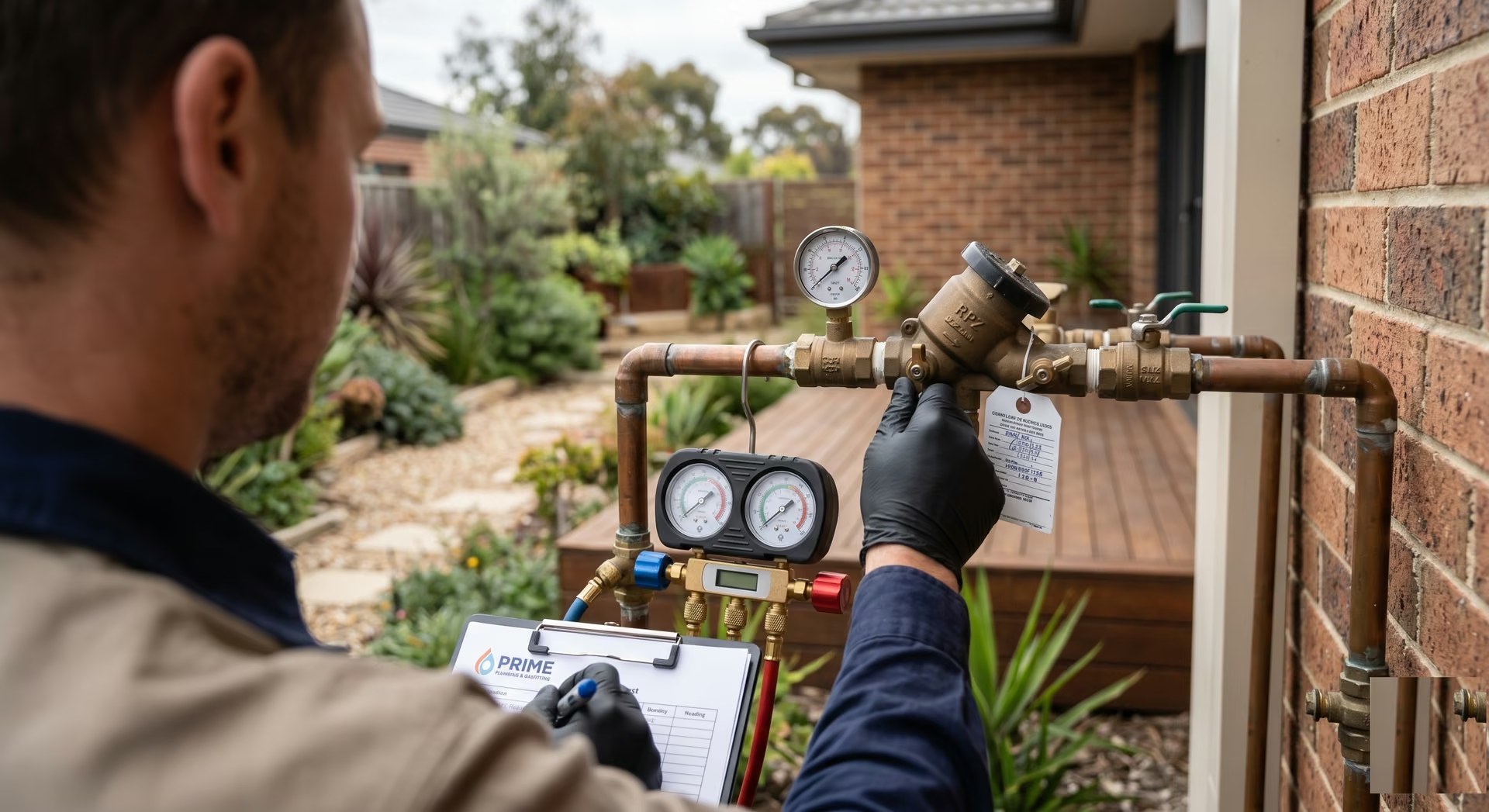
A pressure-limiting valve (PLV) sits at the water meter or just inside the property and steps the pressure down to a safe limit (usually set around 350-450 kPa). Once it's in, the hammer drops dramatically across the whole house and you usually see a few side benefits:
Real example: On a recent Brighton callout, mains pressure measured 720 kPa at the meter, almost 50% over the AS/NZS 3500 limit. A PLV install (about 90 minutes on-site) brought it to 400 kPa and the hammer disappeared completely.
If the hammer sounds different in different parts of the house, louder in some rooms than others, it's often the pipe banging against framing, not the shockwave itself making the noise. Supply pipes that aren't properly clipped to a joist or strapped against the wall move when a shockwave passes through, and the moving pipe knocks against whatever it's near.
The fix is access-dependent: visible pipework in the roof cavity or under the floor can be re-clipped in a single visit. Pipework concealed inside walls is harder, sometimes you have to settle for fitting an arrestor at the offending fixture rather than tearing open plaster.
Common access points:
A few "fixes" you'll see online don't actually work in Australian residential plumbing:
I'm not going to fabricate exact prices because every property is different. Indicative ranges:
| Fix | Typical scope |
|---|---|
| Worn tap washer | Smallest fix, single tap, single visit |
| Hammer arrestor at one appliance | 30-60 min on-site, parts under $100 |
| Pressure-limiting valve | 60-90 min on-site, parts $150-300 |
| Re-clipping unsupported pipework | Depends on access, could be 30 min in an open roof cavity, or longer if walls are involved |
| Combined diagnosis + multiple fixes | A whole-home water hammer fix on a 4-bed house typically takes a half-day visit |
We quote in writing first, after diagnosis, so you know the exact cost before any work starts.

Book a water hammer diagnosis visit if:
Most water hammer fixes complete in one visit.

Prime Plumbing & Gasfitting fixes water hammer issues across Melbourne's eastern, south-eastern, inner-east and bayside suburbs. See all suburbs we service


Loud bangs in your pipes? Call 0475 407 670 or send your address through the contact form.
For shockwave-related leaks, see our burst pipe repair page.
About the author
Alister Williams is the founder and lead plumber of Prime Plumbing & Gasfitting. He's been licensed under BPC #103414 for over a decade, is licensed for gasfitting with the Building and Plumbing Commission, and is a member of the Master Plumbers Association of Victoria.
Some plumbing problems are DIY-friendly; others need a licensed professional under Victorian law.
Anything involving gas, sewer drainage, hot water units, backflow prevention, or work behind tiled walls must be handled by a licensed plumber or gasfitter.
You can technically screw one in (they're standard plumbing thread), but anything connected to the mains supply line in Victoria requires a licensed plumber. If the install leaks and damages the property, an insurance claim will be denied if the install wasn't done by a BPC-licensed plumber. The cost saving from DIY isn't worth the insurance risk.
A quality PLV typically lasts 8-12 years in Australian residential conditions before the internal seat starts wearing. The first sign it's failing is usually the hammer returning slowly over a few months. They're easy to replace once installed, no major plumbing work, the existing fittings stay in place.
Yes, indirectly. Water hammer stresses fittings, mixer cartridges and appliance solenoid valves. Properties with chronic hammer typically replace tap cartridges every 2-3 years instead of the normal 5-10. A PLV install pays for itself within a few years on tap-cartridge wear alone, plus the longer appliance life.
Plumbing warranties cover the install workmanship for normally 6-12 months. Warranty doesn't cover developing water hammer caused by changes elsewhere in your system (new appliance fitted, mains pressure changed). Appliance warranties often exclude damage caused by water hammer, your dishwasher inlet valve isn't rated for repeated shock loading, and the manufacturer knows it.
If your hammer is the rapid "machine-gun" type at one specific tap, replacing the washer is the cheapest fix, well under $50 in parts and 20 minutes of labour. If your hammer is across multiple fixtures, a pressure-limiting valve is typically the highest-impact fix per dollar.
A quick checklist to share with your plumber when you book:

If you're unsure, Prime Plumbing & Gasfitting can inspect the issue and explain the options before any work starts. Call 0475 407 670 or request a quote online.