Heat Pump Hot Water Noise: How Loud Are They and What Can You Do About It?
heat pump hot water noise: How loud is a heat pump hot water system? Typical decibel levels, where noise comes…

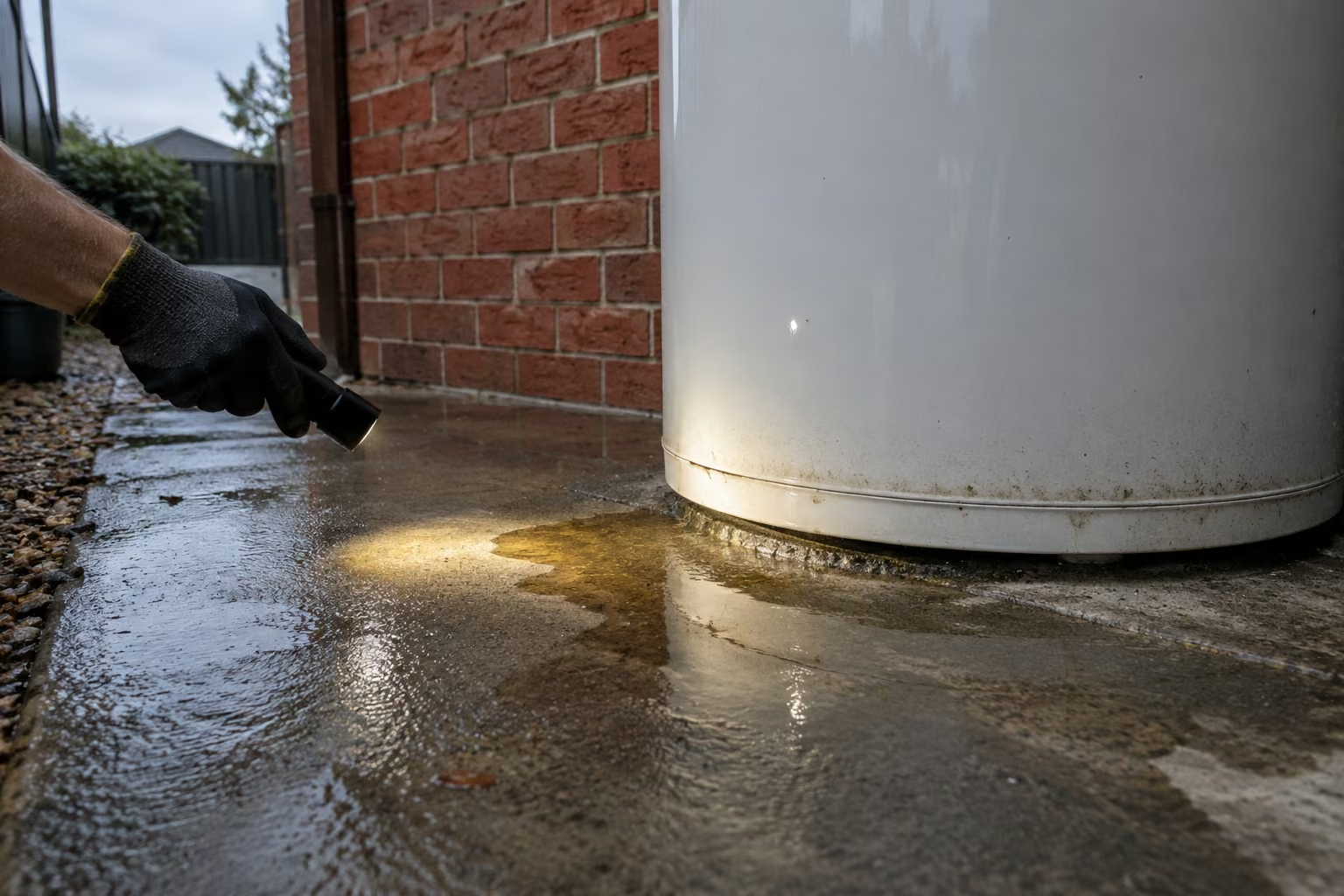
A hot water system leaking onto the floor never turns up at a good time. The useful thing to know is that plenty of leaks come from a valve or a fitting, and those can be repaired. Some come from the tank itself, and those can't. Below is what to switch off first, how to track down the source, and what each spot usually means.
Quick answer: If water is running, pooling, or coming from the tank, turn off the energy to the unit first (the hot water circuit at the switchboard for electric and heat pump units, the gas control or gas isolation valve for gas), then close the cold water valve going into the unit. Then look for where the water starts. If all you can see is a little water from the relief valve drain pipe during heating, read the relief valve section before you switch anything off, because some of that is often normal. A relief valve dripping all the time, or a drip from a union or valve on the pipework, can normally be repaired. Water coming from the body or base of the tank, with everything above it dry, means the tank has most likely rusted through and needs replacing.
Water still coming out? Call 0475 407 670. Mon-Fri 7-5, Sat 8-1. Check we cover your area on the service area page.
No leak, just no hot water? Start with our no hot water checks instead.
A small drip from the relief valve drain during heating is a different case: check the relief valve section below first. For a steady leak, a puddle that keeps growing, or water from the tank body, do these in order: energy off first, water off second. If you shut the water and leave the unit running, a tank that keeps leaking can lose water while it is still trying to heat. An electric element that ends up out of the water can burn out.
Switch off the hot water circuit at the switchboard. It's often labelled "HWS" or "Hot Water". Some units also have an isolating switch on the wall nearby. If water has reached a power point, the switchboard or the electrical cover on the unit, don't touch anything wet. Keep everyone clear and get an electrician to make it safe.
Turn the gas control knob on the unit to OFF, or close the gas isolation valve on the pipe going into it. On most of these valves the handle sits across the pipe when it's closed. If you can smell gas, don't flick any switches. Get everyone outside and ring the gas emergency number on your gas bill.
Switch off the power point the unit plugs into (normally on the wall beside it), then close the gas isolation valve underneath. In a cold snap, don't leave an outdoor unit switched off for days if you can avoid it. Most have frost protection that only works with the power on.
Switch it off at the switchboard or at the isolating switch near the unit.
Turn off the booster the same way as above, and switch off the power to the solar pump or controller if there is one. If the tank is up on the roof, stay off the roof.
Most units have an isolation valve on the cold pipe going in. Where it sits varies between models, so follow the pipes. The hot outlet pipe will feel warm, the cold one won't. Turn the valve clockwise until it stops. Don't force a valve that won't move. If it's seized or you can't find it, turn off the main stop tap at the water meter. That cuts water to the whole house, but it stops the leak being fed.
Closing the cold water stops new water going in, but a storage tank holds a lot of water and it can keep leaking slowly until it's drained. Put down towels or a tray, move anything you care about out of the way, and leave the draining to the plumber. The water inside is hot enough to scald, and the drain valve on an older tank can start leaking once it has been opened.
With a hot water system leaking, the puddle at the bottom tells you very little about where the water started, because water runs down. Begin at the top of the unit and work down, with dry hands and a torch.
While you are there, take a few photos, including the data plate on the side of the unit. It shows the model and in most cases the manufacture date, and it lets a plumber give you a fair idea of what you're dealing with before they arrive.
Some water around a hot water system isn't a leak at all:
The temperature and pressure relief valve (often called the PTR or TPR valve) is the brass valve near the top of a storage tank with a small lever on it. It's a safety valve. If the pressure or temperature inside the tank gets too high, it opens and lets water out through its drain pipe. How it's dripping tells you a lot.
Water expands as it heats. On a mains pressure system with no expansion control valve, that extra water has to go somewhere, and the relief valve lets a little of it out. Manufacturers describe a small discharge during heating as normal. If it drips for a while each time the unit heats and then stops, that's all it is. If it's more than a bucket of water a day, or it bothers you, a plumber can fit an expansion control valve on the cold line so the tank's relief valve doesn't have to do it.
That points to a worn valve or a bit of grit on the valve seat. Most owner's manuals describe a lever test and how often to do it, so follow yours: lift the lever gently, let some water run out of the drain pipe, then lower it gently. Doing that once can flush a bit of grit away. This only works with the cold water still on. If you've already isolated the unit, or there's any chance the tank itself is leaking, leave the lever alone and let the plumber test it. Stand clear of the end of the drain pipe, because the water is hot, and don't force a lever that won't move. If it still drips afterwards, the valve needs replacing. Our hot water maintenance guide covers that lever test in more detail.
A strong, constant flow from the relief valve drain, especially very hot water or steam, can mean the tank is overheating because a thermostat has failed. Turn the unit off at the gas control or the switchboard and leave it off until a plumber has checked it. Never block the drain pipe or tie the lever down to stop the water. That valve is what protects the tank from failing under pressure.
If the water pressure coming in from the street is high, the relief valve can open even when the unit is fine. The plumbing standard limits pressure at the outlets inside a home to 500 kPa, so where the supply runs higher a pressure limiting valve gets fitted on the cold line. If that valve has failed, or there never was one, the relief valve can drip constantly. A plumber can test the pressure and tell you which it is.
Replacing a relief valve is licensed plumbing work. The tank has to be isolated and partly drained, and the new valve has to match the rating for that unit.
The pipework around a hot water system has several joints and valves, and any of them can weep. These leaks tend to be slow, and most are repairs rather than a reason to replace the unit.
It's tempting to put a spanner on a weeping nut. On old brass and copper it's easy to crack a fitting or twist the pipe, and then a slow drip becomes a fast one. All hot water work is licensed work in Victoria, and our guide to what plumbing you can do yourself sets out where the line sits. Switching off, isolating and looking is fine. Undoing anything is not.
| Cooktop Type | Typical Layout | Best Suited For | Planning Considerations |
|---|---|---|---|
| Standard 4-Burner | One large, two medium, one small simmer burner | Everyday family cooking | Fits most standard bench cut-outs and kitchens |
| Wok Burner (High Output) | Five burners with a double or triple-ring flame | High-heat cooking and stir-frying | Requires wider cut-out and stronger ventilation |
| Fish or Griddle Burner | Elongated oval burner | Long pans and cast-iron griddles | Needs additional horizontal space |
| Modular (Domino) Cooktops | 1 or 2 burners, approx. 30cm wide | Custom kitchen layouts | Often combined with induction or other modules |
| Dual Fuel Setups | Gas cooktop with electric oven below | Flexible cooking and baking | Requires gas and electrical planning |
| Cooktop Width | Common Use | Notes |
|---|---|---|
| 60cm | Standard kitchens | Common in apartments and existing homes |
| 75cm | Larger cooking zones | Popular in renovated family kitchens |
| 90cm | Five-burner layouts | Requires ample bench space and ventilation |
| 30cm (Modular) | Custom layouts | Used in modular cooking stations |
Most storage tanks are steel lined with a glass-like enamel, with a sacrificial anode rod inside that corrodes so the tank doesn't. Once the anode is used up, the steel starts rusting from the inside, and eventually it rusts through.
Signs the leak is the tank:
A leaking tank can't be patched. The inner cylinder sits behind insulation and an outer jacket, and once it has corroded through in one spot the rest of it isn't far behind. Tank leaks also tend to get worse, sometimes quickly, so treat one as urgent even if it is only weeping now.
Before you assume the worst, check the relief valve drain and the fittings on top one more time. A drip at the top can run down inside the outer jacket and come out at the base. That alone is a good reason to have it looked at before buying a new unit.
There's no tank to rust through, so leaks come from the water connections underneath, an internal fitting or the heat exchanger. If water is dripping from inside the case of a gas unit, switch it off at the power point, close the gas valve and leave it off. The case should only be opened by a licensed gasfitter. A leaking internal fitting can be replaced. On an older unit with a failed heat exchanger, replacing the unit can make more sense. Outdoor units can also split a pipe or fitting in a hard frost if the power has been off.
Check the condensate hose first. Clean water from that hose is normal. A leak from the tank or its fittings is the same as any storage tank: fittings are repairs, the tank body isn't. A refrigerant leak doesn't leave water. It shows up as a unit that runs but doesn't heat. Start with the no hot water checks, and keep in mind that refrigerant repairs need a technician with a refrigerant handling licence, often arranged through the manufacturer's warranty.
A ground-mounted tank with panels on the roof leaks in the same places as any storage tank. Some systems also have a frost valve up at the panels that lets out a little water on cold nights to protect them, and that is by design. Water running off the panels during the day, or a roof-mounted tank that is leaking, needs a plumber. Don't climb up to check.
Most of the time it comes down to where the water is coming from:
Age, rust and how the unit has been running all come into the decision too. For the full set of signs, see when to replace a hot water system. If it does need replacing, our hot water installations and repairs page covers gas, electric, heat pump and solar options.
It depends on where the water is coming from. A few drips from the relief valve drain while the unit heats is normal in small amounts. A steady leak, water from the tank body, or a relief valve running very hot water or steam is urgent: turn the unit off, close the cold water valve and call a plumber. A slow drip from a fitting is less urgent, as long as the energy is off, something is catching the water and it isn't reaching anything electrical.
If it's only a few drips from the relief valve while the unit heats, and nothing is running hot or steaming, the unit can stay on. For any other leak, switch the energy off and close the cold water valve as described above. Once the cold water to the unit is off, expect only a dribble from the hot taps.
It depends on your policy, so ring your insurer. Many home policies treat the damage the water causes separately from the hot water unit itself, which is often seen as wear and tear. Take photos of the leak and any damage before you clean up, and keep the plumber's report on what failed.
No. The water is hot enough to scald, an old drain cock may not seal properly again once it has been opened, and draining is part of licensed hot water work. Turn off the energy and the cold water, put something down to catch the drips, and leave the draining to the plumber.
Dry the pipes and valves on top, wait ten minutes, and see what gets wet first. Check the end of the relief valve drain pipe, the unions and the cold water valve. Water from any of those can run down the pipes, or inside the outer jacket, and pool at the base. If all of that stays dry and the base keeps getting wet, it's most likely the tank.
Not unless the tank itself is leaking or the unit is at the end of its life. Valve and fitting leaks are repairs. A licensed plumber can tell you which one you have, and you get a Compliance Certificate for licensed work that needs one.
Run through this before the plumber gets there: