Toilet Leaking Onto the Floor? Cistern, Base or Flexi Hose
Water on the floor by the toilet? Tell a cistern leak from condensation, find the wet joint, and know when…

Hydronic heating not working on a cold night is miserable, but plenty of the causes are quick to check. Some you can sort out yourself, like air in a radiator or a timer that lost its settings in a power cut. Others, like a stopped pump or a boiler that keeps locking out, need a licensed plumber or gasfitter. Below is how the system works, what each symptom points to, and where your part stops.
Quick answer: If you smell gas, don't touch switches or the boiler controls. Turn the gas off at the meter if it's safe to, get everyone outside and ring the gas emergency number on your gas bill (000 if there's any fire risk). If a carbon monoxide alarm goes off, or anyone feels sick or headachy while the heating runs, switch the boiler off as you leave if you can, get everyone into fresh air and call 000. Otherwise check the power, timer and thermostat, then read the pressure gauge on the boiler. Low pressure is a common reason for a boiler to stop and show a fault. One radiator cold at the top is often air, which you can bleed out. Cold at the bottom points to sludge. Pressure that keeps dropping or climbing, or water from the relief valve pipe, needs a plumber.
Heating still off? Call 0475 407 670, Mon-Fri 7-5, Sat 8-1, or see the suburbs we service.
A hydronic system heats water and pumps it around the house through a closed loop of pipes. The same water goes round and round. Knowing the main parts makes the symptoms below easier to read.
Some systems run off a heat pump instead of a gas boiler. The water side works the same way, but the gas parts of this guide don't apply.
Look at the gauge with the system cold. Your boiler manual gives the right range. On a lot of sealed systems it sits around 1 to 1.5 bar cold (100 to 150 kPa) and rises a little once hot. Write down the cold reading, the hot reading and how fast it changes. That tells a plumber a lot before they arrive.
If the display shows a code or a flashing light, write it down and look it up in the user manual. Most manufacturers put manuals online by model number. Many manuals allow the owner one reset. If the boiler locks out again after that, stop. Resetting a boiler that keeps failing to light or keeps overheating fixes nothing and can hide the fault the gasfitter needs to see.
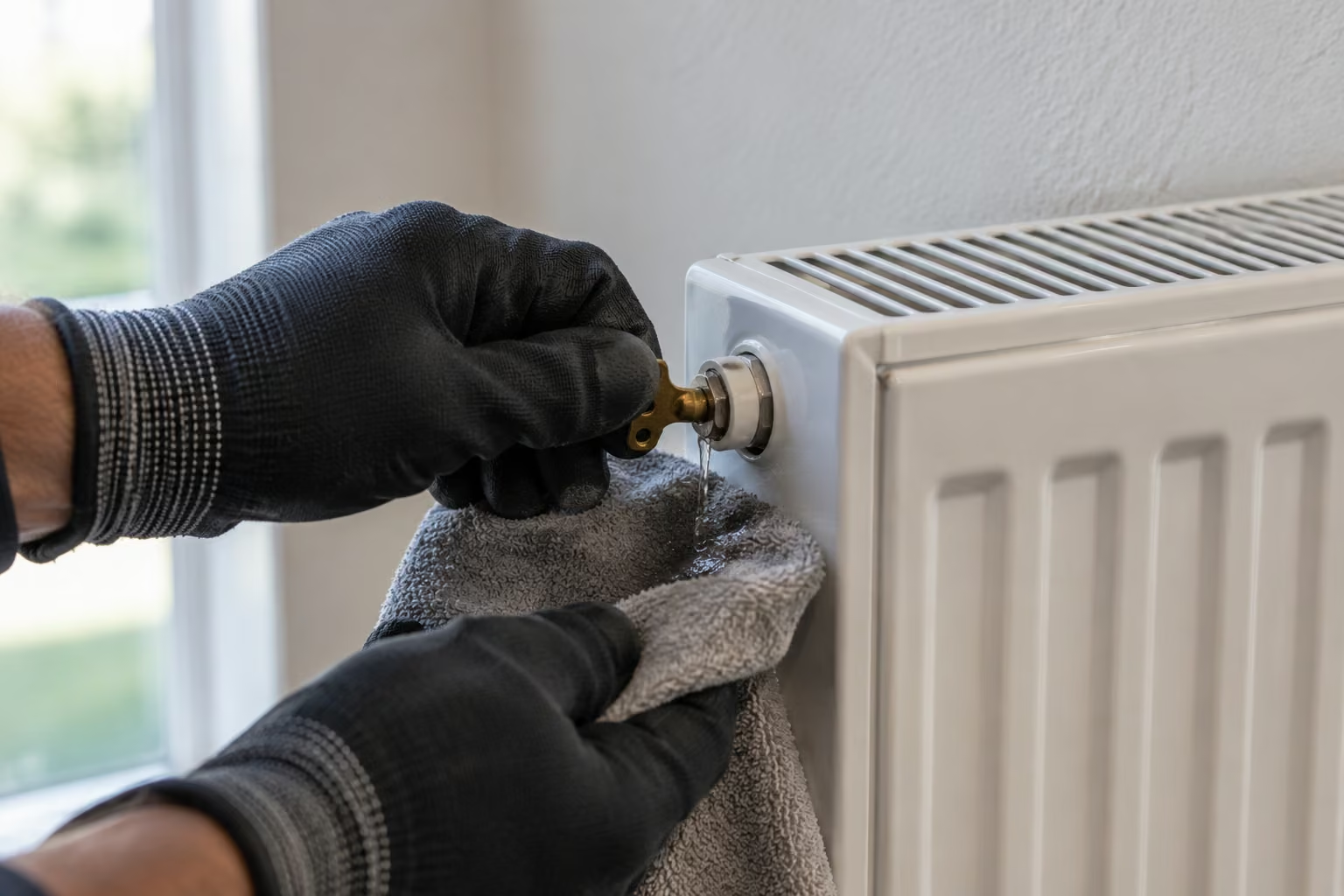
Air collects at the top of a radiator, so one that's warm at the bottom and cold at the top often only needs bleeding. Some user manuals describe this as an owner job, so check yours first. You need a radiator key from the hardware shop and an old cloth.
Black or dark brown water from the bleed valve means sludge, which is covered below.
On a sealed system the pressure is topped up through the fill valve, usually under the boiler, which lets mains cold water into the heating. Some boiler user manuals list topping up as an owner task. Many keep filling for a licensed technician. If yours does tell the owner how, follow it exactly: open slowly, watch the gauge, close the valve fully at the cold figure in the manual, and don't overfill. If your boiler uses a removable filling hose, take it off once the valves are closed, as the manual says. If the manual doesn't cover it, or the system keeps needing a top-up, leave it to a plumber. Every top-up brings in fresh water and oxygen that help sludge form.
Only do what your own boiler manual tells the owner to do, and leave everything else to a licensed plumber. That includes undoing fittings, opening the boiler case, or working on the pump, valves or expansion vessel. Our guide to what plumbing you can do yourself explains where the line sits in Victoria.
That's air. Bleed it and check the pressure. If the same radiator needs bleeding again within weeks, air is getting in somewhere, or corrosion inside is giving off gas, and a plumber should look at it.
Turn the TRV head to its highest number, and check the valve at the other end hasn't been closed. If it's still cold, the pin inside the TRV may be stuck, which is common after the valve has sat closed all summer. On most TRVs the head unscrews by hand with no water coming out, and the pin underneath should spring up and down when pressed. If it's stuck fast, don't lever it or grab it with pliers. A plumber can free it or replace the valve.
This points to sludge. Steel panel radiators corrode a little on the inside over the years, and the black sludge settles low in the radiators and in the boiler. Black water when you bleed is another sign. Bleeding won't fix it. A plumber cleans the system out, refills it with the right inhibitor, and often fits a magnetic filter so it doesn't build up again.
Each radiator has a lockshield valve, normally at the opposite end from the TRV under a plain cap, which sets how much flow it gets. Out of balance, the radiators nearest the boiler take most of the hot water. Balancing means adjusting each lockshield and checking temperatures across the house, so it's plumber work. A weak pump or sludge can cause the same pattern.
Check that zone's thermostat first. At the manifold, each loop often has an actuator (a small electric head on the valve) and sometimes a flow meter. A failed actuator, air in a loop, or a loop turned off at the manifold can leave one area cold. A slab warms slowly, so give it a good while after any change.
If nothing is heating and the power, timer, thermostat and gauge are fine, the boiler is either not firing or not getting its heat out to the house. The display or lights often tell you which.
Most sealed-system boilers shut down when the pressure falls too low. If the gauge is low and a fault is showing, that's likely your answer. A top-up, if your manual allows it, may get the heat back on, but the water went somewhere, so read the pressure section below.
If your hydronic heating boiler tries to light and shows a flame or ignition fault, check other gas appliances work and the gas valve to the boiler is open. If the valve is off and you don't know why, or there's a warning tag on it or the boiler, leave it off and call a gasfitter. Past that, it's the igniter, flame sensor, gas valve or gas pressure. That's licensed gasfitting work.
If the boiler fires, gets hot fast, then cuts out, the heat isn't getting away. Likely causes are a stopped or seized pump, a blocked filter or heat exchanger, sludge, or closed valves. A pump that hums but doesn't turn, or pipes hot at the boiler and cold a metre away, point at the pump. Codes mean different things on different brands, so when you ring, give the plumber the code plus the make and model off the boiler's data plate.
| Cooktop Type | Typical Layout | Best Suited For | Planning Considerations |
|---|---|---|---|
| Standard 4-Burner | One large, two medium, one small simmer burner | Everyday family cooking | Fits most standard bench cut-outs and kitchens |
| Wok Burner (High Output) | Five burners with a double or triple-ring flame | High-heat cooking and stir-frying | Requires wider cut-out and stronger ventilation |
| Fish or Griddle Burner | Elongated oval burner | Long pans and cast-iron griddles | Needs additional horizontal space |
| Modular (Domino) Cooktops | 1 or 2 burners, approx. 30cm wide | Custom kitchen layouts | Often combined with induction or other modules |
| Dual Fuel Setups | Gas cooktop with electric oven below | Flexible cooking and baking | Requires gas and electrical planning |
| Cooktop Width | Common Use | Notes |
|---|---|---|
| 60cm | Standard kitchens | Common in apartments and existing homes |
| 75cm | Larger cooking zones | Popular in renovated family kitchens |
| 90cm | Five-burner layouts | Requires ample bench space and ventilation |
| 30cm (Modular) | Custom layouts | Used in modular cooking stations |
A sealed system shouldn't lose water. If the gauge drifts down again over days or weeks after a top-up, water is getting out. Look for a crusty white or green mark on radiator valves and bleed valves, check the pipework under the boiler and the end of the relief valve pipe outside, and watch for damp patches, warm spots on a slab floor, or ceiling stains near pipe runs. A small drop after bleeding is normal, as long as it holds once topped up.
Our guide on how to find a water leak in your house covers listening for leaks and the meter test. The meter test only helps if the heating is being topped up through an open or automatic fill valve. On a sealed system, trust the gauge and get a plumber to find the leak.
The pressure should rise only a little as the system heats. If it swings from low when cold to near the top of the gauge when hot, and the relief valve pipe drips while it's hot, the expansion vessel has most likely lost its air charge. Recharging the vessel means taking the pressure off the system first, and on many boilers it's inside the case, so it's licensed work.
If the gauge climbs while the system is cold, mains water is getting in. The fill valve may not be fully closed, or it may be worn and letting water by. On a boiler that also heats your tap water, an internal fault can do the same. Check the fill valve is fully closed, and if it still climbs, call a plumber.
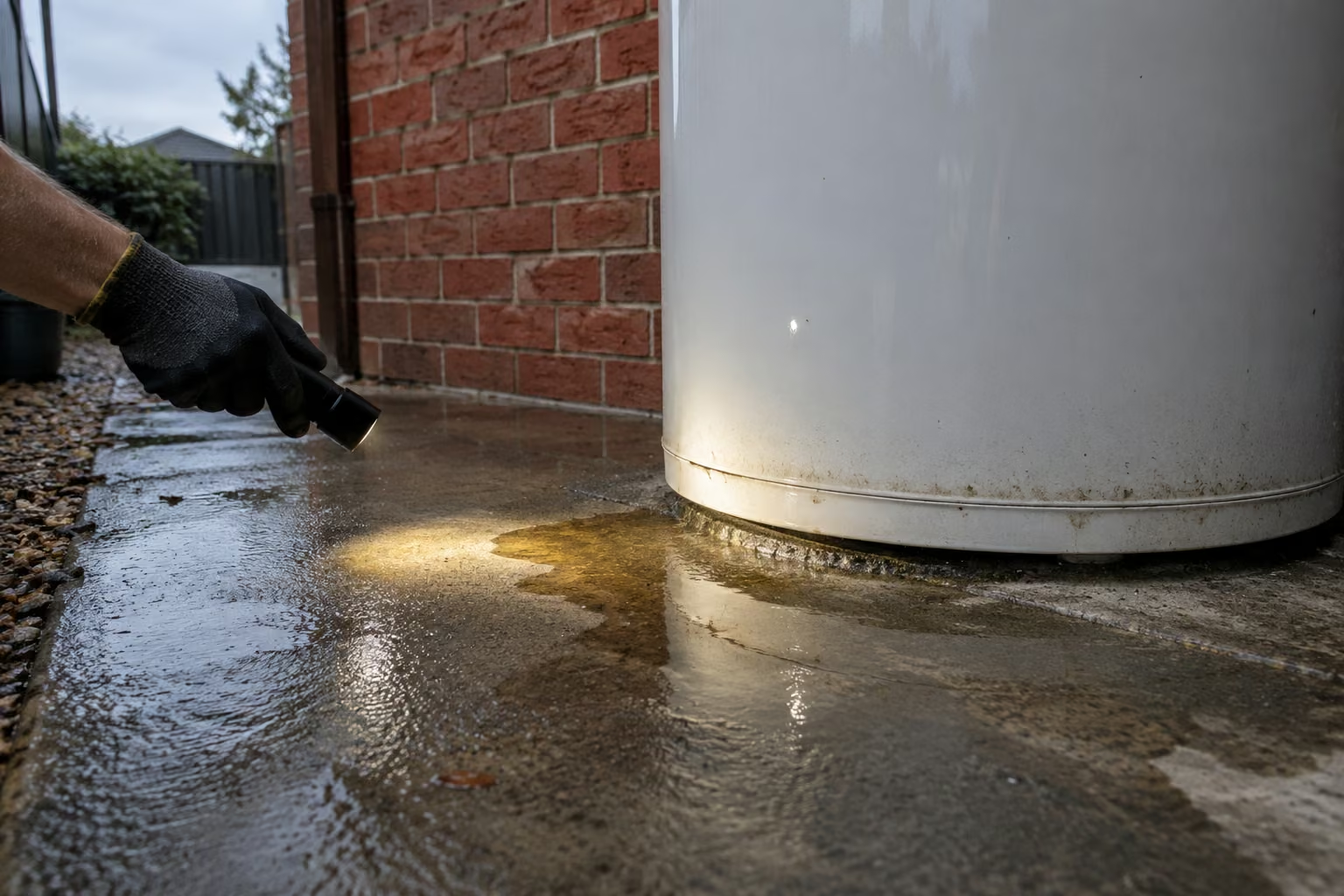
Water from the relief valve pipe means the pressure reached the valve's limit (3 bar on many boilers), or the valve is worn. Never cap or block that pipe, because it's a safety outlet. Note whether it drips only when hot, all the time, or after a top-up, and tell the plumber.
A healthy hydronic system is close to silent, so note any new noise, where it is and when it happens.
Hydronic heating repairs follow roughly the same order as your checks, just further into the system:
Pumps, valves, expansion vessels, igniters and sensors can all be replaced on their own. If the heat exchanger has failed or parts are no longer made, a new boiler can make more sense, and the plumber can talk you through both. How often the boiler needs a service is set by the manufacturer in its manual, so check that first. For safety checks on the rest of your gas appliances, see how often gas appliances should be checked in Victoria. Our hydronic heating page has more on our hydronic work, and the boiler's gas side falls under gas fitting. Gasfitters are licensed by the Building and Plumbing Commission (BPC), and Energy Safe Victoria is the gas safety regulator.
Low pressure isn't dangerous in itself, but most boilers lock out once it drops far enough. A system that keeps losing water also takes in fresh water with every top-up, which speeds up corrosion inside. Top up if your manual allows it, and get a plumber to find where the water is going.
Air is getting in, or gas is forming inside the system. Possible causes are a small leak that draws air in, pressure that runs too low, frequent top-ups, or corrosion inside the radiators and pipes, which gives off gas. A radiator that needs bleeding every few weeks is worth a plumber's visit.
Only if your boiler's user manual tells the owner how to. Many manuals keep filling for a licensed technician, so if yours doesn't cover it, leave it to a plumber. Needing regular top-ups means there's a leak or fault to find.
Slab heating is slow by nature, because it has to warm a lot of concrete before you feel it, and it's meant to run on a steady schedule rather than be switched on when you get cold. If it's slower than it used to be, or one area never warms, have a plumber check the zone actuators, the flow at the manifold, air in the loops and the boiler.
No. Reset it once if the manual allows. If it locks out again, write down the code and leave it off. Repeated resets on a boiler that can't light or keeps overheating can do more damage, and with a gas appliance it isn't worth the risk.
Most of the parts that fail can be replaced on their own, so repair is often the sensible first step. Replacement starts to make sense when the heat exchanger has failed, parts are no longer made, or the boiler keeps breaking down. A licensed plumber or gasfitter can tell you which side of that line yours is on.
Having these ready makes the visit go faster: