Heat Pump Hot Water Noise: How Loud Are They and What Can You Do About It?
heat pump hot water noise: How loud is a heat pump hot water system? Typical decibel levels, where noise comes…
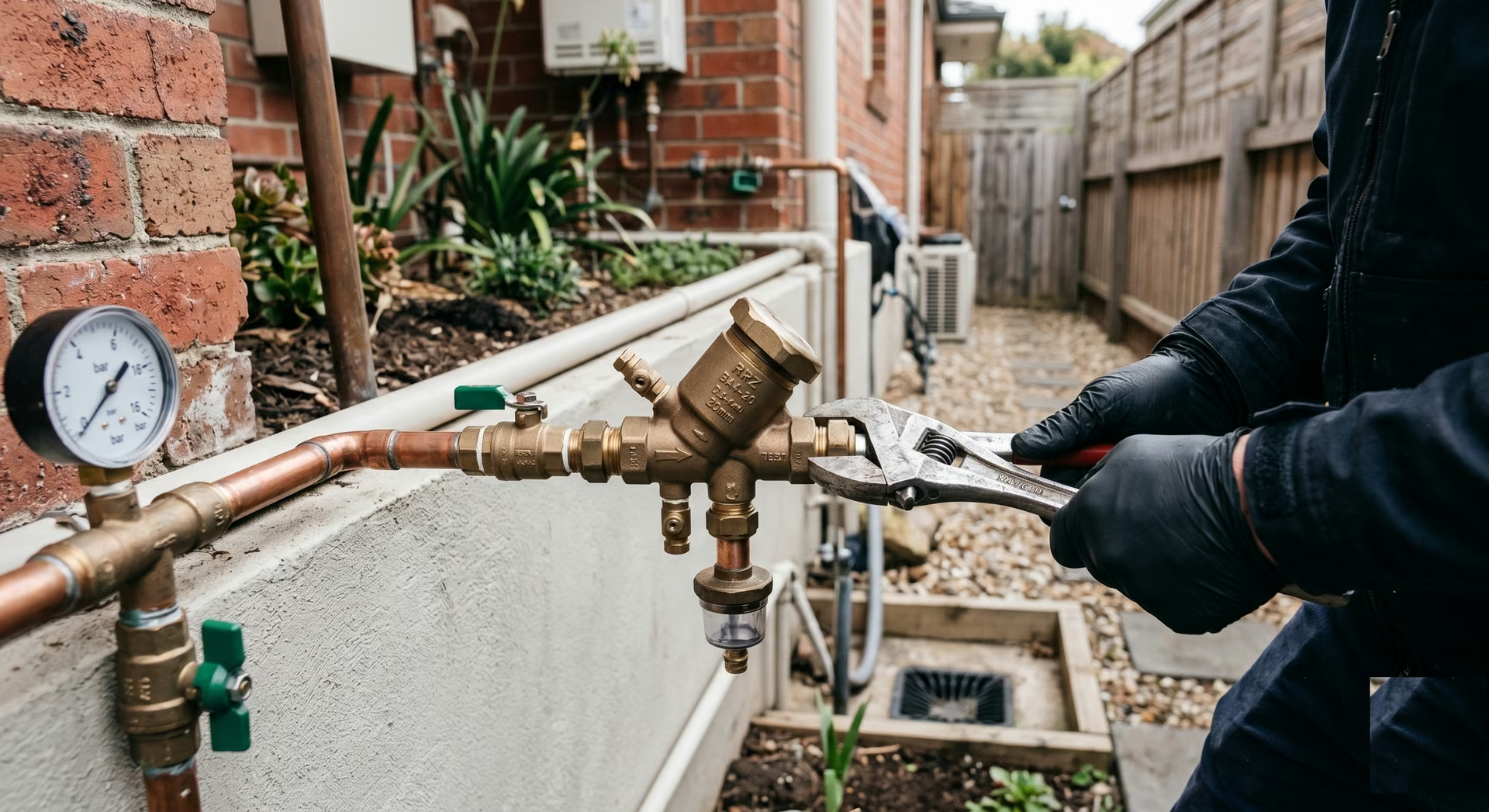
What Is Backflow Prevention? A Plumber's Guide for Melbourne Properties, a Prime Plumbing & Gasfitting plain-English guide to what is backflow prevention for Melbourne homeowners. Below we cover what works, what doesn't, and when to call a licensed plumber.
Quick answer: Backflow prevention is the use of mechanical devices to stop water from flowing the wrong way through your plumbing, back from your property into the public water supply. Backflow can occur during pressure drops (water main break, fire-hydrant use nearby) or back-pressure events (boiler over-pressure, pumped systems). Without backflow prevention, contaminants from your property, chemicals, cleaning products, animal waste, fertilisers from irrigation, can get sucked into the public water supply and contaminate other properties' drinking water. Australian Standard AS 3500.1 requires backflow prevention devices on hazardous applications, and AS 2845.3 requires annual testing by an accredited plumber for testable devices.
If your water retailer has sent you a backflow prevention compliance notice, or you're building/renovating a commercial property and the plumber has mentioned backflow devices, here's what's actually going on and what you're committing to.
Public drinking water in Melbourne flows from the reservoir to your tap under positive pressure. Most of the time that pressure keeps water flowing one direction only. But two things can reverse it:
If pressure in the public main suddenly drops, a water main break nearby, a fire brigade drawing heavily on a fire hydrant, scheduled maintenance, water inside your property's plumbing can be siphoned backwards into the public supply. Anything in your pipes (chemicals, cleaning products, hose-end attached to a fertiliser sprayer, garden water with herbicide) goes with it.
The classic example: someone has a garden hose submerged in a bucket of weed killer, the council's water main breaks 2km away, and the negative pressure pulls weed killer up the hose, into the property's plumbing, and out into the public main. Other properties on the same main then drink the contaminant.
If pressure inside your property exceeds public main pressure, usually from a pumped system (boiler, irrigation pump, hot water re-circulation) or a chemical injection system, water can be pushed backwards out of your property into the main.
Common in commercial settings with boilers, cooling towers, pressurised cleaning systems, or industrial chemical handling.
A backflow prevention device is a one-way mechanical valve installed on your property's water service line that physically stops water from flowing back toward the main. There are several types of device, with different protection levels for different hazard ratings.
Australian Standard AS 3500.1 classifies water-use hazards on a 3-level scale:
| Hazard rating | Risk level | Examples |
|---|---|---|
| High hazard | Could cause death or serious illness | Hospitals, mortuaries, sewage treatment, chemical plants, abattoirs, photo labs |
| Medium hazard | Could cause illness | Commercial irrigation, restaurants, dental practices, food processing |
| Low hazard | Aesthetically objectionable but not unsafe | Residential garden taps with hose, residential irrigation |
The hazard rating determines which device type is required.
| Device | Protection level | Testable? |
|---|---|---|
| Reduced Pressure Zone (RPZ) device | High hazard | Yes, annually |
| Double Check Valve (DCV) | Medium hazard | Yes, annually |
| Single Check Valve | Low hazard | No (no test cocks) |
| Atmospheric Vacuum Breaker (AVB) | Low hazard, point-of-use | No |
| Hose Connection Vacuum Breaker (HCVB) | Low hazard, on garden taps | No |
The device hierarchy is: higher hazard requires more sophisticated device with more rigorous testing.
The short answer: almost every commercial property and many residential properties with specific hazardous fixtures. The water retailers (Yarra Valley Water, South East Water, City West Water) enforce it through annual compliance notices.
If your water retailer sends you a notice, you're on the schedule. Even if not, AS 3500.1 places the duty on the property owner.
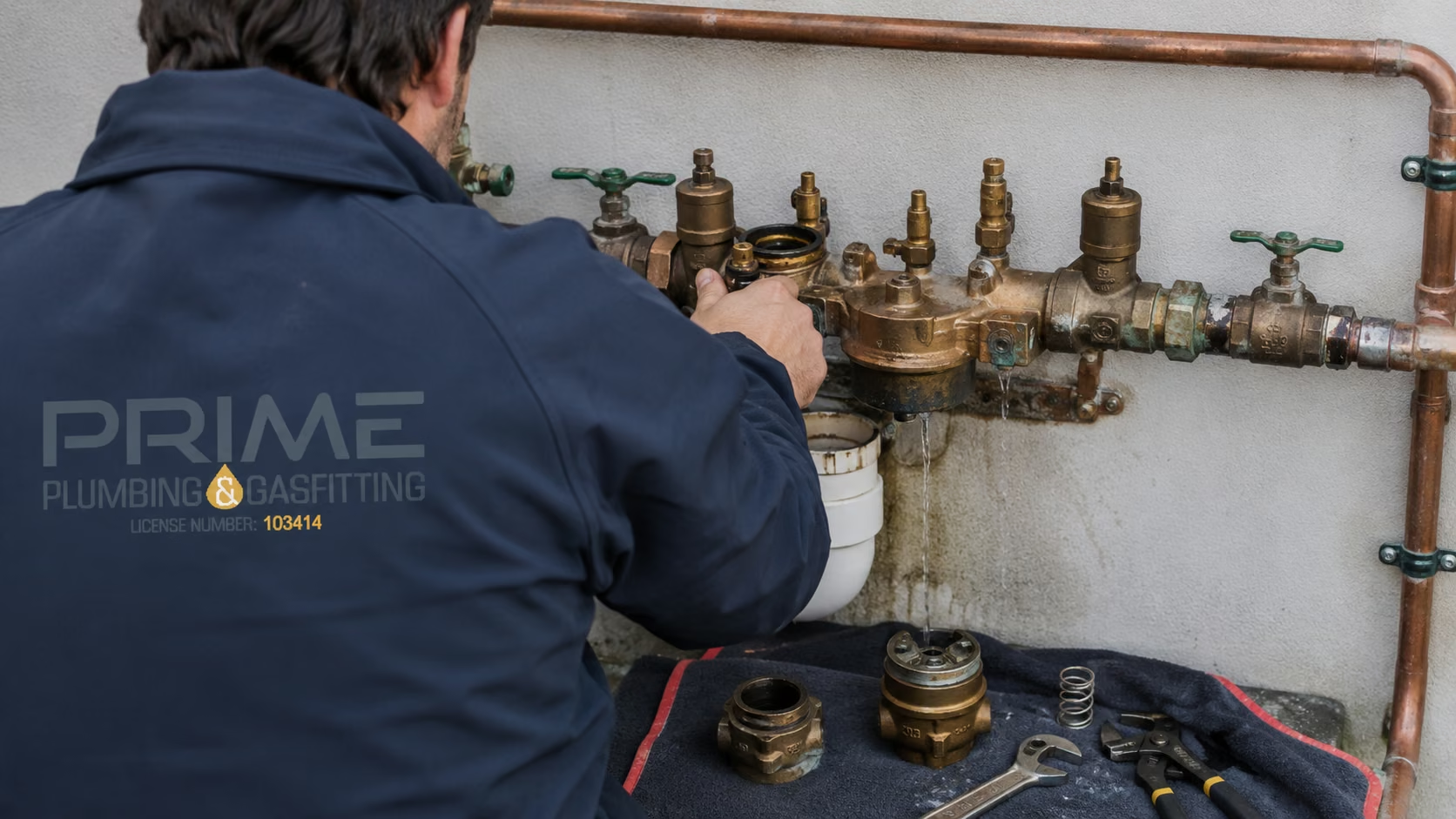
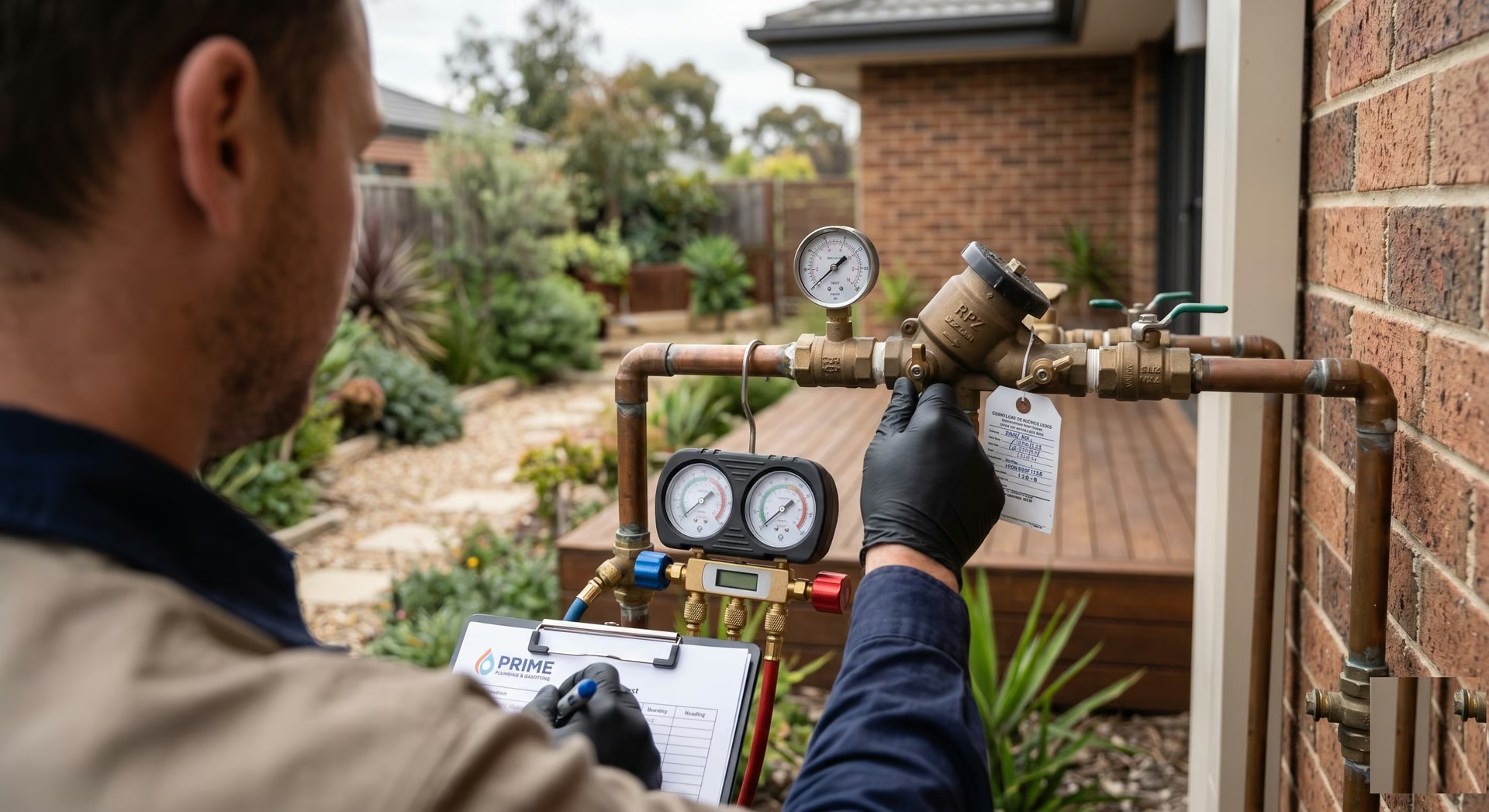
For testable devices (RPZ and DCV), AS 2845.3 requires annual testing by an accredited backflow tester. The test:
The retailer holds the database. If you don't lodge an annual test, you'll start getting compliance notices and eventually an enforcement action (water service can be disconnected on extended non-compliance).
Book a backflow service if:
Prime Plumbing & Gasfitting tests, services and installs backflow prevention devices across Melbourne, particularly across the eastern, south-eastern, inner-east and bayside corridor. See all suburbs we service
Send your address, retailer (Yarra Valley Water / South East Water / City West Water) and any compliance notice details through the contact form, or call 0475 407 670.
Related: Backflow Prevention Testing Melbourne · TMV Testing Melbourne
About the author
Alister Williams is the founder and lead plumber of Prime Plumbing & Gasfitting. He's been licensed under BPC #103414 for over a decade, is licensed for gasfitting with the Building and Plumbing Commission, is accredited with the Backflow Prevention Association of Australia, and is a member of the Master Plumbers Association of Victoria.
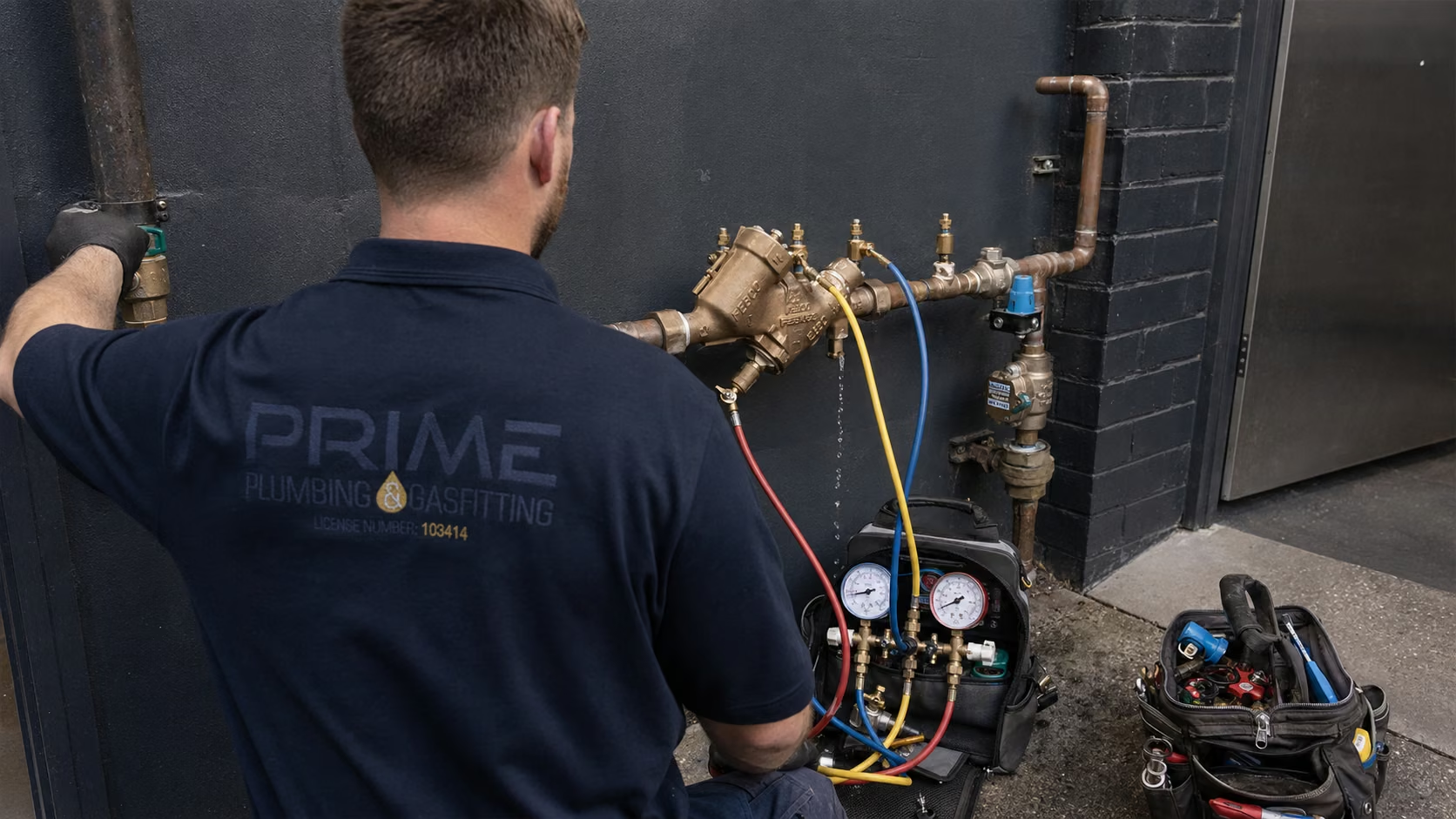
Common failures we see on Melbourne callouts:
Repair vs replace decision is similar to other plumbing fixtures, under 30% of replacement, repair; over, replace. Our backflow prevention testing service covers both.
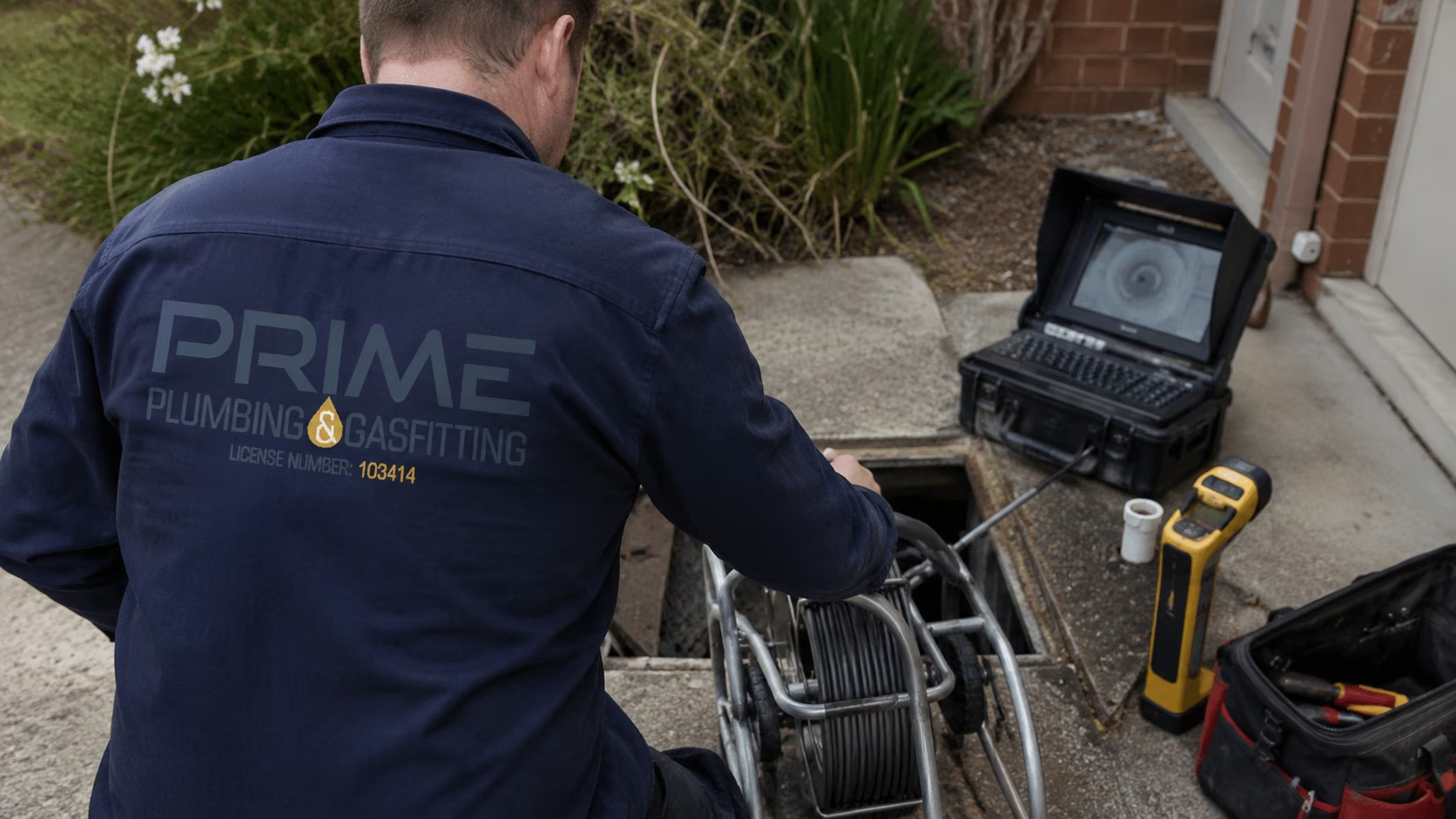
Caulfield restaurant: annual RPZ testing on a commercial kitchen's mains supply. Test passed; relief valve dripping slightly under high mains pressure. Recommended a pressure-limiting valve upstream to extend the RPZ's service life. Test report lodged with retailer same day.
Camberwell aged-care facility: fire-service backflow prevention (DCV on the fire sprinkler line) plus general supply backflow (RPZ on the kitchen and laundry feeds). Annual test across both, written report retained for facility compliance documentation.
Brighton domestic property: homeowner had a chemical-injection irrigation system fitted by a previous owner with no backflow prevention. We installed an RPZ on the irrigation tee (high hazard due to fertiliser injection) and lodged the install with the retailer.
Some plumbing problems are DIY-friendly; others need a licensed professional under Victorian law.
Anything involving gas, sewer drainage, hot water units, backflow prevention, or work behind tiled walls must be handled by a licensed plumber or gasfitter.
The water retailers (Yarra Valley Water, South East Water, City West Water in Melbourne) own the public water supply and are responsible for protecting it from contamination. The retailers maintain the backflow compliance database and issue testing notices. Councils enforce other plumbing compliance items (drainage, sewer connections) but backflow specifically is the retailer's domain.
The property owner. Backflow prevention is part of the cost of having a water service connection that uses water in any non-trivial way. For commercial premises this is built into operating costs; for landlords, it's owner responsibility (not the tenant's, in most leases).
Per-device testing is the smallest cost. Most properties have 1-3 devices. We quote annual contracts based on device count, type (RPZ tests longer than DCV) and access. Single residential RPZ on irrigation is at the cheapest end; multi-device commercial property is bigger.
If you've genuinely removed the hazardous use (e.g. disconnected the chemical injection system, sealed off the fire service), the device requirement is reassessed but the device itself usually stays in place, the retailer's records show the device exists, and removing it requires a documented application and an as-built variation. Easier to keep testing it than to remove.
The RPZ relief valve is designed to discharge a small amount of water during a back-pressure or back-siphonage event, it's the safety release. A small intermittent drip is normal, especially during pressure shifts in the main. Continuous heavy discharge is a fault, usually a worn check valve allowing back-pressure to push past, which the relief valve has to vent. That needs service.
Probably yes, if you ever attach a hose with a chemical sprayer (weed killer, fertiliser), the AS 3500.1 requirement is for a Hose Connection Vacuum Breaker (HCVB) on that tap. They're cheap, screw on, and don't need annual testing. We can supply and fit them.
RPZ (Reduced Pressure Zone) = highest level of testable backflow protection, used for high-hazard applications. Has a relief valve and is more sensitive to pressure shifts. DCV (Double Check Valve) = medium-hazard testable device, simpler design with two check valves in series but no relief valve. Application is determined by hazard rating per AS 3500.1.
Most new domestic builds in Melbourne have a low-hazard scenario covered by HCVBs on outdoor taps and standard fixture-side check valves. Higher hazards (irrigation with chemical injection, dual-use mains/tank systems, fire services) need specific devices. Your plumber on the new build should have specified this in the design.
The device is taken out of service, repaired or replaced, and re-tested. The retailer is informed of the failure. For high-hazard properties, the supply may be interrupted until compliance is restored.
Quality devices last 10-20 years with annual testing and routine internal service. Cheaper devices wear faster. The replacement cost is offset by the avoided cost of repeated repairs on a failing device.
A quick checklist to share with your plumber when you book:

If you're unsure, Prime Plumbing & Gasfitting can inspect the issue and explain the options before any work starts. Call 0475 407 670 or request a quote online.