Heat Pump Hot Water Noise: How Loud Are They and What Can You Do About It?
heat pump hot water noise: How loud is a heat pump hot water system? Typical decibel levels, where noise comes…

Backflow Prevention Device Types: RPZ, DCV, Single Check, Dual Check Explained, a Prime Plumbing & Gasfitting plain-English guide to backflow prevention device types for Melbourne homeowners. Below we cover what works, what doesn't, and when to call a licensed plumber.
Quick answer: There are four common backflow prevention device types in Australia, each rated for a different hazard level under AS/NZS 3500.1 and tested to AS 2845.3. From most to least protective: a reduced pressure zone (RPZ) device for high hazard (industrial, hospitals, irrigation with chemicals); a double check valve (DCV) for medium hazard (commercial properties, fire services); a single check valve for low hazard (residential service connections); and a dual check valve (small two-check device, sometimes confused with a DCV) for low-to-medium residential applications. RPZ and DCV must be tested annually by a licensed plumber and lodged with the water authority. Single and dual checks usually don't need annual testing but should be replaced when they leak or fail.
Your drinking water mains are pressurised so water flows from the street into your property. Most of the time that pressure is steady and water only flows the right direction. But pressure can drop, a burst main upstream, a fire-hydrant being flushed, a pump shutdown, and when it drops, water inside your property can be siphoned back into the public supply.
If the water inside your property is contaminated (chemicals, sewage, garden hose left in a bucket of dirty water, irrigation system with fertiliser injection, hospital decontamination wash, industrial process water), backflow into the mains contaminates the public drinking water of everyone connected to that main downstream. That's a serious public health risk.
A backflow prevention device sits at the boundary between your property and the mains and stops water flowing the wrong way. Different hazard levels need different devices, set out in AS/NZS 3500.1 (the Australian water supply standard) and tested to AS 2845.3.
AS/NZS 3500.1 grades each property's potential to contaminate the mains as high, medium, or low hazard.
The water authority (Yarra Valley Water, South East Water, City West Water in metro Melbourne) assesses each property and tells you what device you need. You can also work it out from AS/NZS 3500.1's hazard tables, but the water authority makes the final call for connection approval.
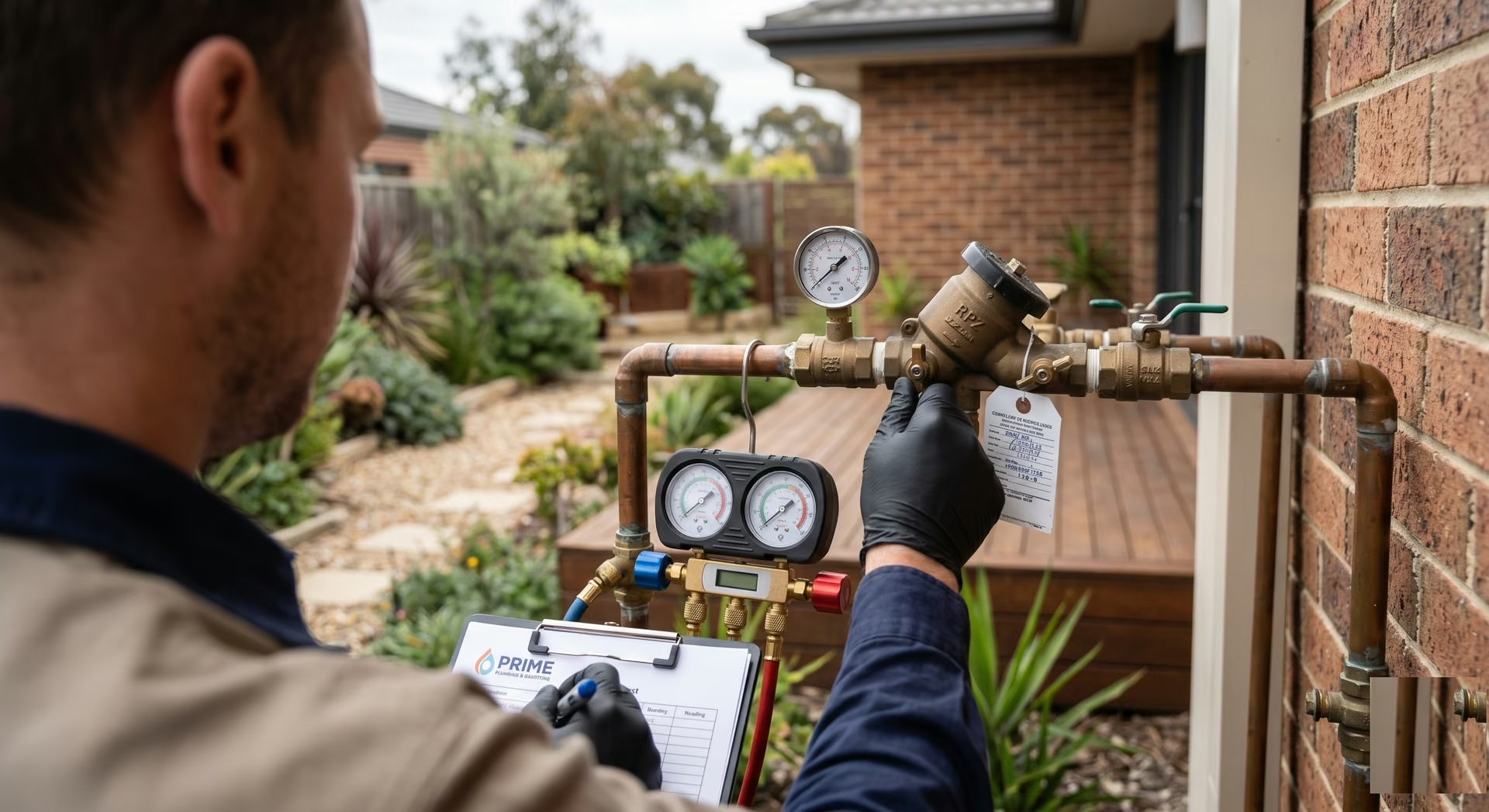
The RPZ is the most protective and most complex device. It has two independent check valves with a relief valve between them, all in a single body. The relief valve is the trick: if the upstream check valve fails AND mains pressure drops, the relief valve opens and dumps the contaminated water out of the device to atmosphere, so it physically can't enter the mains.
Where you see them:
Key features:
The RPZ is the only device approved for high hazard properties. If your property's hazard rating is high, no other device is acceptable.
The DCV has two independent check valves in series in a single body, with test cocks between and outside them. If the first check valve fails, the second still holds, and the test cocks let a plumber verify each valve independently every year.
It doesn't have a relief valve to atmosphere, so the protection isn't as bulletproof as an RPZ, but for medium hazard it's the standard.
Where you see them:
Key features:
A single check valve is a simple one-way valve at the boundary. Water flows in, water can't flow out. There's no relief, no second check, and no test ports, it's a passive device.
Where you see them:
Key features:
The water authority decides whether your property's classification needs a separate single check at the boundary, or whether the meter's built-in check is sufficient.
A dual check valve is a small, in-line device with two check valves in a single compact body. It's often confused with a DCV, but the two are different in scale and certification, a dual check is a residential-scale device, a DCV is the larger commercial/industrial body.
Where you see them:
Key features:
For residential backflow assessment and installation, our backflow prevention testing service covers Melbourne metro.

| Device | Hazard rating | Annual test required | Typical use | Indicative device cost |
|---|---|---|---|---|
| RPZ | High | Yes (AS 2845.3) | Hospital, irrigation w/ chem | $1,200-$3,500 |
| DCV | Medium | Yes (AS 2845.3) | Commercial, multi-dwelling | $400-$1,200 |
| Dual check | Low/medium | Sometimes | Residential w/ rainwater | $80-$250 |
| Single check | Low | No | Simple residential | $50-$150 |
Call 0475 407 670 or send through the contact form.

When your property is connected (or reconnected after major works), the water authority does a hazard rating assessment. They look at:
They'll send a letter or notice with the device requirement. If you don't comply, the water authority can disconnect the supply, they're entitled to do so under their Customer Charter.
If you want to challenge a rating, you can, but get a licensed plumber's assessment first. We'll inspect the property and write up a hazard analysis you can submit.


Prime Plumbing & Gasfitting services backflow installation and testing across Melbourne's eastern, south-eastern, inner-east and bayside suburbs. See all suburbs we service
Backflow installation and annual testing must be done by a plumber licensed to install backflow devices and qualified for AS 2845.3 testing. The Building and Plumbing Commission maintains a plumbing licence search so you can verify any plumber.
It depends on your hazard rating. Most single residential dwellings only need a single check valve, usually built into the water meter assembly, and no annual test. Properties with rainwater tanks plumbed to the toilet or laundry, garden tap chemical dosing, or other cross-connections need a dual check or higher and may need annual testing. The water authority is the source of truth for your property.
Look at the meter assembly, the check valve is normally integrated. For dual check, RPZ or DCV, the device is typically visible in an above-ground enclosure or pit at the property boundary. If you've never noticed one and your property is residential with no rainwater plumbing, you probably don't have a separate device beyond the meter check.
The water authority records non-compliance. After repeated missed tests, they can disconnect supply or issue a formal compliance notice. Insurance can also be affected, a backflow incident traced to an untested device often voids cover. The annual test is non-negotiable for high and medium hazard properties.
No, generally not. Fire service supply has its own backflow requirements and the device sizing is different. A property with both will have separate protection on each service. We'll work with you and your fire-service contractor to coordinate the design.
A small, occasional discharge during a pressure event is normal, that's the relief valve doing its job. Continuous dumping isn't normal and means the upstream check valve has failed. Get the device tested and rebuilt or replaced. Continuous discharge wastes water and shows up on your bill.
No. Backflow installation is regulated work that requires a licensed plumber, and the device must be commissioned and tested before the water authority will accept it. Annual testing also requires AS 2845.3 qualification. This is one of the genuinely non-DIY plumbing tasks.
Indicative ranges only, actual cost depends on hazard rating, device type, location of the device, and what existing pipework needs to change to accommodate it:
We quote in writing first, after looking at the existing connection.