Heat Pump Hot Water Noise: How Loud Are They and What Can You Do About It?
heat pump hot water noise: How loud is a heat pump hot water system? Typical decibel levels, where noise comes…


What Is a Thermostatic Mixing Valve? A Plumber's Guide for Australian Homes and Facilities, a Prime Plumbing & Gasfitting plain-English guide to what is a thermostatic mixing valve for Melbourne homeowners. Below we cover what works, what doesn't, and when to call a licensed plumber.
Quick answer: A Thermostatic Mixing Valve (TMV) is a safety valve that mixes incoming hot water with cold water and limits the outlet temperature to a fixed safe maximum (usually 38-50°C depending on the application). It's required by Australian regulation in any premises where vulnerable people use hot water, childcare centres, aged-care facilities, schools, hospitals, public buildings, to prevent scald injuries. The valve uses a temperature-sensitive wax element that automatically adjusts the hot/cold mix as temperatures shift. TMVs need annual testing per AS 4032.3 to confirm they're still operating within tolerance, and they have a service life of about 5 years before the wax element typically needs replacement.
If you've been told your property needs a TMV, or you've heard the term mentioned for a renovation or compliance audit, here's what they actually do, why they exist, and what owning one means for ongoing maintenance.
Hot water from a storage tank typically runs at 60°C or higher. That's hot enough to cause third-degree burns in seconds on bare skin, a serious risk for young children, elderly residents, anyone with reduced mobility or sensation, and people with disabilities.
A Thermostatic Mixing Valve sits between the hot water supply and the outlet (basin, shower, bath) and automatically blends in cold water to bring the temperature down to a safe maximum. The valve responds to temperature shifts in milliseconds, if cold water pressure drops elsewhere in the building (someone flushes a toilet, the irrigation cycle starts), the TMV instantly adjusts to maintain safe outlet temperature.
The temperature ceiling depends on the application:
| Application | Max outlet temperature |
|---|---|
| Aged-care, hospitals, healthcare | 45°C |
| Childcare centres, primary schools | 45°C |
| Public buildings, commercial bathrooms | 50°C |
| General domestic | 50°C |
These ceilings are set by AS/NZS 3500.4 and AS 4032 family of standards.
Every Victorian property that has hot water reticulated through tempering or thermostatic mixing valves to outlets must have those valves comply with AS 4032 family of standards. The two specific requirement zones:
Under AS/NZS 3500.4 Section 1.9.5 and Plumbing Regulations 2018:
These premises require TMVs (not just tempering valves) because TMVs respond faster and more accurately to pressure/temperature shifts. They're also required to be tested annually per AS 4032.3 with a written report retained on-site.
For ordinary residential properties:
This article focuses primarily on commercial/healthcare TMVs because those are the ones most often searched. For domestic tempering valves, see our hot water systems page.
The internal mechanism is a wax-filled thermostatic element: same principle as a car's thermostat. As the outlet water temperature rises above the set point, the wax expands, pushing a piston that closes the hot inlet and opens the cold inlet, increasing cold water proportion and dropping the outlet temperature back to the set point. As outlet temperature drops below set point, wax contracts, opens the hot inlet, bringing temperature back up.
The response time is fast: usually under a second. That's why TMVs are required in critical-care environments where someone with reduced sensation can't react fast enough to a sudden temperature shift.

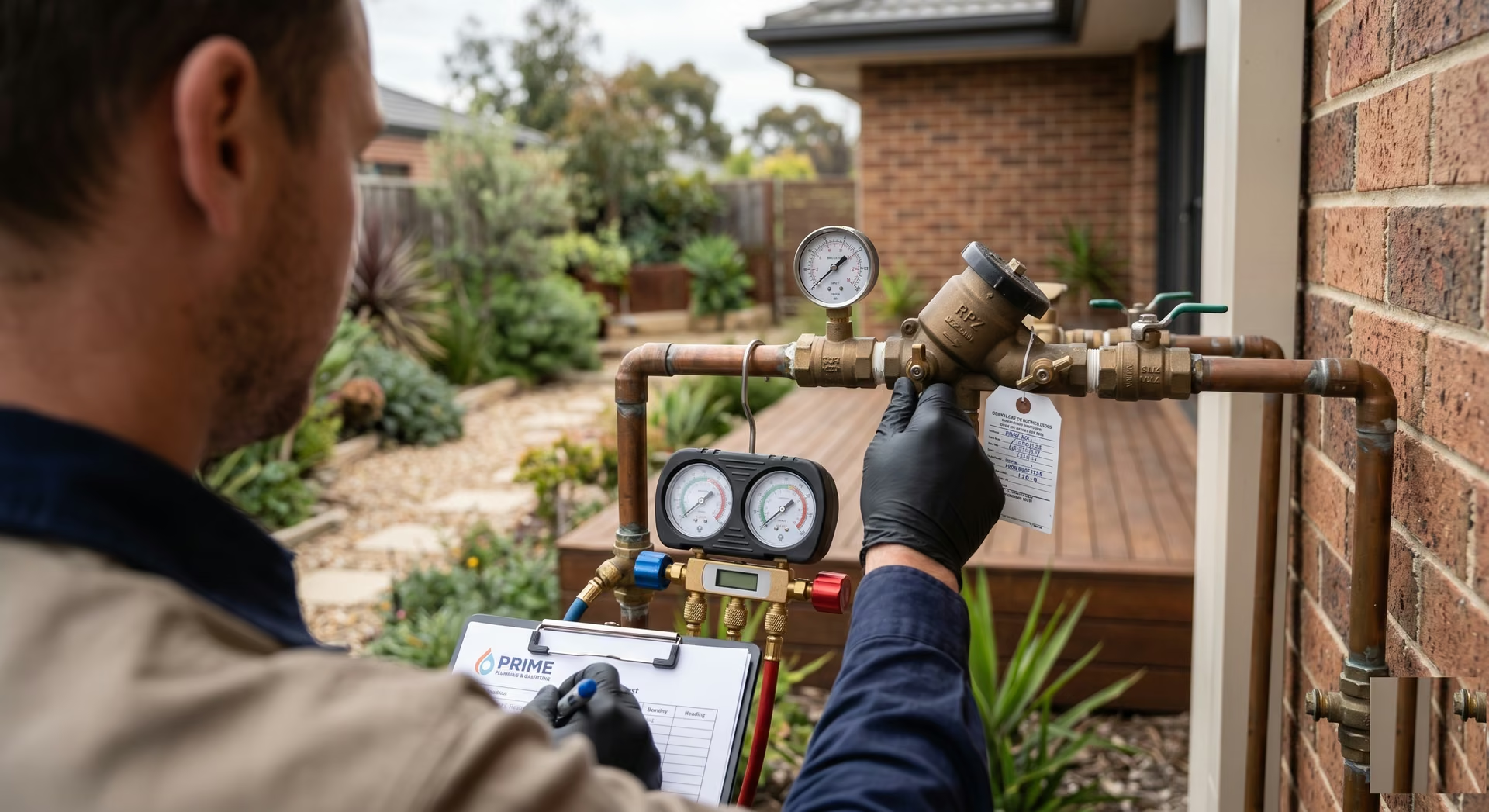
Annual testing per AS 4032.3 is required for all installed TMVs in regulated premises. The test involves:
A TMV that fails any test must be serviced or replaced before being returned to service. Properties operating with a failed TMV are non-compliant and the duty-of-care implications are significant.
We hold the relevant accreditation for TMV testing and issue compliant test reports per AS 4032.3, see our TMV testing service for the full details.
Prime Plumbing & Gasfitting tests, services and replaces TMVs across Melbourne, particularly across the eastern, south-eastern, inner-east and bayside healthcare and education corridor. See all suburbs we service →
Need an AS 4032.3 test, valve replacement, or new TMV install? Call 0475 407 670 or send your facility details + valve count through the contact form.
Related: TMV Testing Melbourne · Tempering Valve Replacement Melbourne · Hot Water Systems Melbourne
About the author
Alister Williams is the founder and lead plumber of Prime Plumbing & Gasfitting. He's been licensed under BPC #103414 for over a decade, is licensed for gasfitting with the Building and Plumbing Commission, is TMV-accredited for AS 4032.3 testing, and is a member of the Master Plumbers Association of Victoria.

TMVs have a typical service life of 5 years before the internal wax element starts drifting outside tolerance. Some properties get longer; some need replacement sooner due to:
When a TMV starts drifting, the typical pattern is gradual rather than sudden: outlet temperature creeps up over months, and the next annual test catches it. If a TMV is found drifting on test, replacement is usually more cost-effective than service (the wax cartridge itself is most of the unit cost).
For a tempering valve replacement on a residential property, see our tempering valve replacement page.


Caulfield aged-care facility: Annual AS 4032.3 testing across 32 TMVs serving 28 resident bathrooms. Three valves failed the pressure-shift test (outlet temperature drifted to 49°C when cold pressure dropped, outside the 45°C max for aged-care). Three replacements + retest, written compliance report retained on-site. Took half a day on-site for the full audit.
Bayside childcare centre: TMV at the staff/child handwash basin had been installed 7 years prior with no testing record. Annual test found outlet creeping to 47°C, over the 45°C childcare limit. Replacement plus a service plan to ensure annual testing going forward.
Glen Iris school refurbishment: New TMVs installed during a renovation. Compliance certificate (BPC #103414) lodged for the install plus initial AS 4032.3 commissioning test. Annual testing scheduled going forward.
Book a TMV service or test if:
We coordinate annual testing schedules across multi-valve facilities so you only get one technician visit per year covering everything.
Both limit hot water outlet temperature, but TMVs are more accurate, faster-responding, and required in regulated premises (healthcare, childcare, schools). Tempering valves are simpler fixed-ratio devices used in general domestic settings. TMVs are field-testable to AS 4032.3; tempering valves typically aren't tested but are inspected at hot water unit replacement.
Annually per AS 4032.3 for any TMV installed in a regulated premises (healthcare, aged-care, childcare, schools, public buildings). Test must be by a qualified plumber with a written report retained on-site.
No, AS 4032.3 testing requires calibrated equipment and a written report from a qualified plumber. The DIY equivalent is feeling the outlet for unusual heat shifts and checking a thermometer reading, but that's not a substitute for compliance testing.
Per-valve testing is the smaller cost, most facilities have multiple valves and the cost scales. We quote annual contracts based on valve count and access. Small healthcare practices with 2-4 valves are at the cheaper end; large aged-care facilities with 30+ valves are bigger contracts.
If a TMV fails an AS 4032.3 test, it must be taken out of service or repaired/replaced before continuing. Operating a non-compliant TMV in a regulated premises exposes the operator to liability for any scald injury, and may breach licensing conditions for the facility (childcare licence, aged-care accreditation, etc.).
Yes, they work fine domestically and many older homes with elderly or vulnerable occupants benefit from TMV-grade safety. They cost more than a tempering valve and aren't strictly required, but the safety margin is meaningful for at-risk users.
Type A is the simpler residential-style valve (fixed ratio, typically 50°C max). Type B is the more advanced TMV (active thermostatic feedback, used in regulated premises). Some manufacturers use slightly different naming.
The strainer (a small mesh filter on each inlet) catches sediment that would otherwise clog the wax element or the seat surfaces, causing temperature drift or full failure. Strainer inspection is part of annual AS 4032.3 testing.
A quick checklist to share with your plumber when you book:

If you're unsure, Prime Plumbing & Gasfitting can inspect the issue and explain the options before any work starts. Call 0475 407 670 or request a quote online.